Bank of Korea: “Won-Denominated Stablecoins Should Be Issued by Banks” — Rebuts Industry’s Rosy Outlook

Authored On
Modified
BOK Identifies Seven Major Risks Including Depegging and Coin Runs
Issuance by Big Tech Firms Would Undermine the Banking–Commerce Separation Principle
“Not About Blocking Innovation — Stability and Trust Must Be Anchored in Bank-Led Management”

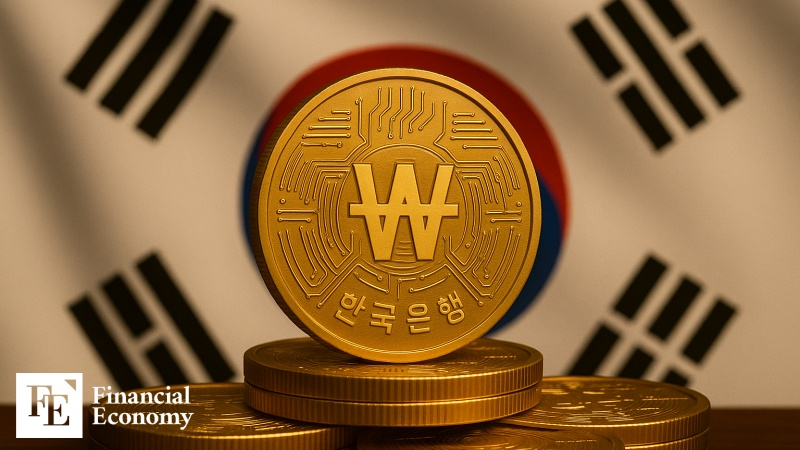
As financial authorities push ahead with legislation to institutionalize won-denominated stablecoins, the Bank of Korea (BOK) has issued a stark warning about their potential risks. The central bank cautioned that maintaining parity in the value of a won-based stablecoin would be highly uncertain and that its actual use cases remain unclear — suggesting that only a few issuers might ultimately reap operational profits. This stance effectively refutes much of the cryptocurrency industry’s argument for introducing a won stablecoin and aligns with BOK Governor Rhee Chang-yong’s long-held position advocating prudence.
“Who Guarantees the 1 Coin = 1 Won Promise? Bank-Led Model Is Preferable”
In its report titled “Key Issues and Policy Responses for Stablecoins” released on the 27th, the BOK stated: “Won-denominated stablecoins could be a key to unlocking new possibilities for the Korean economy, but they may also sow the seeds of new instability. Institutional safeguards are therefore essential to ensure trust that can support innovation in a stable manner.” The 141-page document is effectively a “BOK-issued white paper on stablecoins.”
The report explained, “The Bank of Korea currently manages liquidity through mechanisms such as the reserve requirement system, open market operations, and liquidity lending to banks, but it has no tools to regulate stablecoins.” It went on to warn, “The ‘1 coin = 1 won’ commitment is merely a private contract between issuers and users, not a legal or institutional guarantee by the state or central bank. If an issuer fails to honor its redemption promise, stablecoin holders — unlike bank depositors — would not be protected under the Depositor Protection Act.”
The central bank repeatedly proposed a bank-centered issuance model for won stablecoins. “If banks themselves issue stablecoins, or if issuance takes place through a bank-led consortium, many of the identified risk factors can be effectively managed within the existing regulatory framework,” the BOK said. “Non-bank entities such as IT companies can also participate in such consortia to contribute to innovation and growth under a stable system.”
The BOK further proposed establishing a statutory policy coordination body among relevant ministries to determine key matters such as issuer licensing, issuance volume, reserve composition, and asset structure. Additionally, it suggested operating a deposit token alongside won-denominated stablecoins. A deposit token would represent a digital asset backed by bank deposits, issued and managed by banks on a blockchain platform operated by the central bank. Consumers could use these deposit tokens for payments in goods and services.
Non-Bank Issuance Equivalent to Permitting “Narrow Banking”
The BOK cited foreign precedents and analyses to illustrate potential instability. Stablecoins, by design, promise to maintain a one-to-one value peg with fiat currency, but in early 2023, USDC (issued by Circle) temporarily fell to $0.88 after the collapse of Silicon Valley Bank (SVB). Although Circle’s deposits with SVB accounted for only 8% of its total reserves, the incident triggered redemption requests totaling $7.8 billion — 18% of USDC’s total market capitalization — as confidence in the company’s reserve backing was shaken.
Moreover, allowing IT or other non-bank corporations to issue stablecoins would, in effect, grant them monetary issuance and payment settlement powers — a form of narrow banking — violating Korea’s long-standing principle of separating industrial and financial capital. The BOK argued that such a model risks enabling industrial capital to operate de facto banking functions, effectively turning corporations into private treasuries.
Concerns are also mounting that stablecoins could become channels for bypassing foreign exchange and capital controls. For instance, a domestic investor could transfer won-denominated stablecoins to an anonymous private wallet and then convert them into dollar-based stablecoins or other digital assets to move funds overseas — a process that currently faces no explicit restrictions. Stablecoin issuance could also heighten short-term interest rate volatility, as the purchase of government bonds and other reserve assets by issuers would place downward pressure on short-term rates. The BOK estimated that if wholesale deposits from stablecoin issuers represented 10% of total bank deposits, issuance of won-denominated stablecoins worth $100 billion would expand the overall money supply by approximately $93.3 billion.
Principle of “Same Function, Same Risk, Same Regulation”
Analysts view the BOK’s latest report as reaffirming its stance in response to remarks by Financial Services Commission Vice Chairman Lee Ok-won, who announced at a recent parliamentary audit that a related bill would be introduced within the year. On October 20, Lee stated before the National Assembly’s Political Affairs Committee that the “second-stage virtual asset bill,” which includes stablecoin regulations, would be submitted by year’s end. The stablecoin industry now sees policy coordination with the BOK — which prioritizes monetary stability — as a key variable in the legislative process.
Earlier this year, the BOK also told the National Assembly that stablecoin reserve assets should be mandatorily deposited with the central bank. The proposal aims to minimize monetary expansion outside the banking system, strengthen user protection through safeguards against large-scale redemption runs, and ensure that seigniorage profits from stablecoin issuance accrue to the public domain. While such a rule would largely erode the economic incentive to issue won-based stablecoins, it would substantially mitigate the risk of a systemic “coin run,” as the central bank would directly manage the reserve assets.
The BOK concluded that stablecoin reserve holdings should ideally cover “the full value of issuance.” Drawing on the example of prepaid electronic funds regulations, it recommended requiring issuers to deposit or entrust reserves equivalent to 100% of their outstanding stablecoins. Since a won-denominated stablecoin functions much like a prepaid balance, the BOK stressed that the regulatory framework should adhere to the principle of “same function, same risk, same regulation.”
Similar Post