China Sweeps Global Shipbuilding Orders with Low Prices; Korea Shifts Focus to ‘Strategic Vessels’

Stefan Schneider brings a dynamic energy to The Economy’s tech desk. With a background in data science, he covers AI, blockchain, and emerging technologies with a skeptical yet open mind. His investigative pieces expose the reality behind tech hype, making him a must-read for business leaders navigating the digital landscape.
Authored On
Modified
Low Labor Costs and State Financing Widen the Gap
Partial Recovery in LNG Carrier Orders
Urgent Need for Structural Shift Toward High-Value Ships
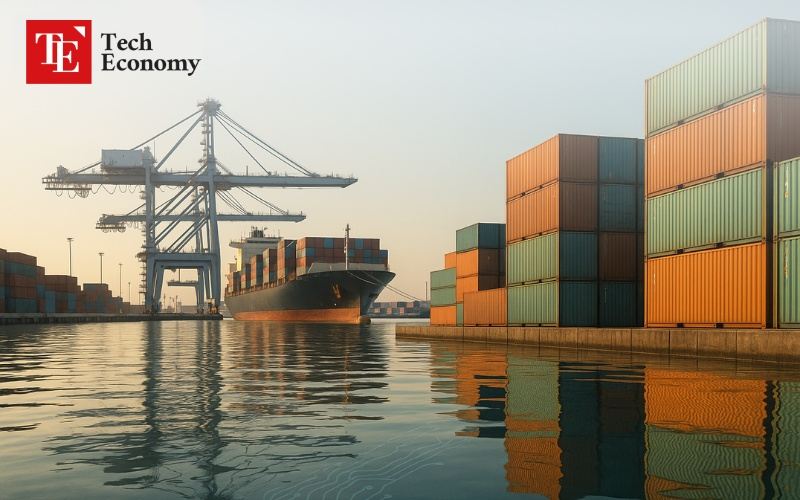
China’s shipbuilding industry is in the midst of an unprecedented boom, solidifying its dominance in bulk carriers—cargo ships that require relatively less sophisticated technology. For years, the global shipbuilding sector has been defined by a three-way contest among Korea, Japan, and China. But with China benefiting from lower labor costs and massive government-backed financial aid, the competitive balance has tilted sharply. While Japan pivoted early toward high-value, technology-driven vessels, experts say Korea now faces an urgent need to shift from short-term volume battles to a technology-centered industrial model.
Short-Term Race on Bulk Carriers
According to British shipping research firm Alphaliner, as of this month, global container ship order backlogs have reached a record 10 million TEU (20-foot containers). Of that, Chinese shipbuilders account for 74%, or 7.49 million TEU, while Korean shipyards hold 20.2%, or 2.04 million TEU. China has effectively captured three-quarters of all new orders. Whereas Korean-built ships once made up more than half of the world’s operating fleet, the recent reversal in order trends underscores China’s rise to dominance.
The surge of China’s shipbuilding sector is largely underpinned by aggressive state support through financing and subsidies. Beijing, centered on state-owned carrier COSCO, has driven up market share by promoting replacement of aging fleets and new orders for eco-friendly ships, coupled with low-interest loans and tax incentives. The government has also built a specialized ship-financing system that recycles demand between domestic shipping companies and shipyards, boosting efficiency. This contrasts sharply with Korea, where limited financial capacity at policy lenders such as the Export-Import Bank and the Industrial Bank of Korea has made it difficult to secure large-scale, low-interest contracts—further widening the gap between the two countries.
Japan, by contrast, abandoned the bulk-carrier race as early as the 2000s and shifted decisively to high-value vessels. Korea, however, remains heavily tied to commoditized segments. “China has already achieved economies of scale through a state-driven industrial model,” said one industry insider, adding, “For Korea to sustain competitiveness, structural reform around technology, not short-term order volume, is essential.” Analysts argue that, like Japan, Korea must scale back in standard bulk carriers and pivot decisively toward high-value segments such as LNG carriers, defense vessels, and eco-friendly propulsion ships.
Temporary Windfall from U.S.-China Tensions
Notably, China’s rapid expansion has occurred under the shadow of growing U.S. scrutiny. While Chinese shipyards have accounted for more than 70% of the global container ship market since the 2010s, rising trade tensions with Washington have complicated the landscape. In February, the U.S. Trade Representative (USTR) announced a plan to impose port-entry fees of up to $1.5 million on shipping companies using Chinese-built ships or Chinese carriers. The measure was approved in April and is set for phased enforcement beginning in October. The policy directly targets China’s shipbuilding and shipping industries, prompting global shipping firms to diversify their sourcing to reduce geopolitical risk.
This shift has yielded unexpected benefits for Korean shipyards, particularly in the small and mid-sized feeder ship market below 3,000 TEU. HD Hyundai Mipo Dockyard recently secured a $150 million order for three container ships from an Oceania-based carrier, following earlier contracts in April for ten 2,800-TEU ships and six 1,800-TEU vessels. Feeder ships, which connect smaller ports not accessible to large liners, are in growing demand as aging vessels over 20 years old are replaced.
In the LNG carrier segment, Korea’s technological dominance is even clearer. Of the 16 LNG carriers ordered worldwide through August, 14—about 88%—went to Korean yards, while China failed to secure a single one. The remaining two orders went to U.S. firms but were effectively placed through Hanwha Shipping, a local subsidiary of Korea’s Hanwha Ocean, meaning Korean companies in practice captured the entire market. Each LNG carrier, priced at roughly $250 million, represents a high-value, technology-intensive product that China still struggles to produce with competitive quality or reliability.
A similar pattern holds in the crude tanker segment. In September alone, Daehan Shipbuilding won contracts for eight 157,000-DWT Suezmax-class crude carriers, while Samsung Heavy Industries added two more from an Oceania-based owner—ten vessels in total, all claimed by Korean yards. Though such results have raised hopes of a short-term rebound in Korean competitiveness, experts caution that these gains are “temporary windfalls driven by U.S. policy variables.” Without deeper structural reform, they warn, Korea remains vulnerable to China’s scale-driven pricing offensive.
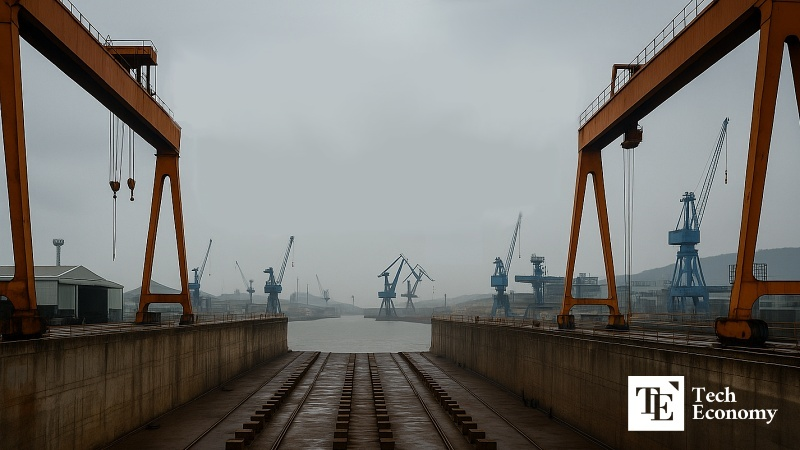
Long-Term Strategy: Technology and Defense-Centric Transition
Industry consensus is converging on two pillars for Korea’s shipbuilding future: LNG carriers and defense vessels. Both fields allow Korea to compete on technological strength rather than price. LNG carriers, designed to safely transport liquefied gas at –163°C over long distances, require advanced insulation, airtight cargo containment systems, high-pressure pipelines, reliquefaction units, and propulsion systems compliant with environmental standards—all integrated into a single engineering package. Moreover, because financing for such large-scale projects depends on a shipyard’s proven quality record, price alone cannot secure contracts in this market.
The concentration of LNG carrier demand is also linked to U.S.-driven projects. Major American energy companies plan to nearly double LNG export capacity by 2028 and are expanding liquefaction facilities along the Louisiana and Gulf Coast, driving a surge in carrier orders. Hanwha Ocean’s recent deal through its U.S. subsidiary marked the first resumption of orders from North American owners in years. The move reflects a convergence of interests between Washington’s push to reconfigure maritime logistics around allied supply chains and Korea’s role as a trusted “infrastructure partner.”
Defense shipbuilding represents an extension of this strategic transformation. Korean shipyards already have experience producing and upgrading next-generation frigates and destroyers for the Republic of Korea Navy, integrating multi-layer missile defense, anti-submarine warfare (ASW), and long-range strike capabilities. This month, Hanwha Ocean launched the first KSS-III Batch-II submarine, named Jang Young-sil, incorporating advanced features such as air-independent propulsion (AIP) and long-range cruise missile systems—earning recognition as Korea’s first indigenously designed strategic submarine. The model is now being marketed to foreign navies, including Canada’s.
Analysts say the long-term sustainability of Korea’s shipbuilding sector depends on breaking free from low-cost, mass-production models and capturing leadership in strategic, energy, and defense-related vessel types. Competing on price in commoditized markets like crude carriers or container ships will inevitably erode profitability, whereas LNG carriers and naval vessels allow Korea to leverage its proprietary engineering strengths. These ship types also serve as critical infrastructure underpinning energy security, defense capability, and supply-chain resilience. Some industry voices now argue that “shipbuilding should no longer be viewed as a manufacturing industry but as a strategic industry.”
Stefan Schneider brings a dynamic energy to The Economy’s tech desk. With a background in data science, he covers AI, blockchain, and emerging technologies with a skeptical yet open mind. His investigative pieces expose the reality behind tech hype, making him a must-read for business leaders navigating the digital landscape.
Similar Post