Toyota Sets Record Sales, Fueled by Surging Demand for Hybrids

Aoife Brennan is a contributing writer for The Economy, with a focus on education, youth, and societal change. Based in Limerick, she holds a degree in political communication from Queen’s University Belfast. Aoife’s work draws connections between cultural narratives and public discourse in Europe and Asia.
Authored On
Modified
Toyota Posts Record Earnings Again for April–September After Strong First Half
Hybrid Demand Drives Growth Amid EV Market Slowdown
Hyundai Announces Expansion of Hybrid Lineup to Close the Gap

Toyota, the world’s largest automaker, recorded its highest-ever sales for the first half of fiscal 2025 (April to September). Strong demand for hybrid electric vehicles (HEVs) has continued to drive its sales growth.
Toyota Continues Strong Sales Momentum
On the 27th, Toyota announced that its sales for April to September this year, including its premium brand Lexus, rose 5% year-on-year to 5.27 million units. This marks the company’s highest-ever sales for the first half of the Japanese fiscal year. Toyota stated, “We expect to sell a record 10.4 million vehicles in fiscal 2025 (April 2025 to March 2026), and first-half sales have progressed as planned.”
Overseas sales during the same period also hit an all-time high of 4.55 million units, up 6% from a year earlier. In the United States, sales climbed 11% to 1.30 million units, while vehicles exported from Japan to the U.S. surged 21% to 304,151 units. In China, where Toyota’s performance had previously lagged, sales rose 6% to 914,342 units, driven by strong demand for the newly launched electric vehicle bZ3X and hybrid models.
Earlier, in its earnings report released on July 30, Toyota revealed that global sales for January to June 2025 grew 5.5% year-on-year to 5.16 million units, a record high for the first half of any year. During the same period, global production increased 5.8% to 4.92 million units, setting a new record for the first time in two years.
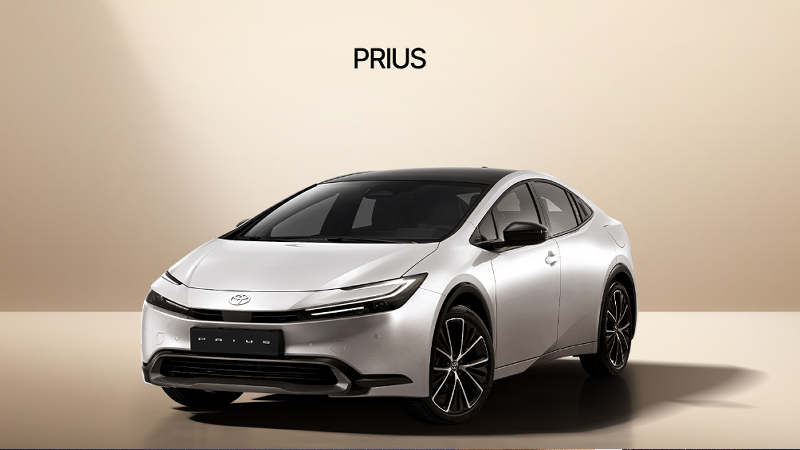
Hybrid Models Drive Toyota’s Growth
Industry experts point to hybrid vehicles as the main driver behind Toyota’s sustained sales growth. Demand for Toyota’s hybrid models has remained strong since last year. In the third quarter of fiscal 2024 (April 2024–March 2025), hybrids accounted for nearly 42.4% of Toyota’s global new car sales.
By region, Europe recorded the highest hybrid share at 67.1%, followed by Japan at 59.4%. In China, the ratio surged by 14 percentage points year-on-year, the largest increase among all regions. Toyota attributed the growth in HEV sales to delays in charging infrastructure and the limitations of electric vehicles in extreme climates. In cold or desert regions, hybrids are seen as a more practical alternative to full EVs.
This trend continued in the first half of this year. Between January and June, Toyota sold 2.49 million electrified vehicles—including hybrids and EVs—up 19.1% from a year earlier, accounting for roughly half of its total sales. In North America, Toyota’s key export market, hybrid sales jumped about 40% year-on-year, underscoring the tangible results of the company’s electrification strategy.
Hyundai’s Catch-Up Strategy
As Toyota expands its dominance in the hybrid market amid the slowdown in EV demand, rival Hyundai Motor is accelerating its own hybrid-focused strategy. At its “2025 CEO Investor Day” held last month at The Shed in Manhattan, New York, Hyundai announced plans to expand its hybrid lineup to more than 18 models by 2030, covering entry-level, mid-size, large, and luxury segments. This would more than double its current hybrid offerings.
Hyundai plans to launch its first rear-wheel-drive luxury hybrid model under the Genesis brand next year, followed by the development of more affordable entry-level hybrids. The company will also roll out the next-generation hybrid system—first applied to the Palisade—across additional models, featuring “Stay Mode” and V2L functions that allow power use without starting the engine.
In 2027, Hyundai will introduce an extended-range electric vehicle (EREV) as part of its broader strategy to bridge the EV adoption gap. The EREV uses an internal combustion engine as a generator to recharge the battery, allowing for a 55% smaller battery compared to a pure EV, thus improving cost efficiency. With this model, Hyundai aims to reduce customers’ charging concerns while offering a more affordable alternative to traditional EVs.
Aoife Brennan is a contributing writer for The Economy, with a focus on education, youth, and societal change. Based in Limerick, she holds a degree in political communication from Queen’s University Belfast. Aoife’s work draws connections between cultural narratives and public discourse in Europe and Asia.
Similar Post
















