From Robotaxis to Batteries, China’s “Hard-Tech” Capital Floods Hong Kong

Stefan Schneider brings a dynamic energy to The Economy’s tech desk. With a background in data science, he covers AI, blockchain, and emerging technologies with a skeptical yet open mind. His investigative pieces expose the reality behind tech hype, making him a must-read for business leaders navigating the digital landscape.
Authored On
Modified
IPO Funding Fuels Push for Technological Edge
Capital Inflows Driven by Tech and Manufacturing Startups
Regulatory Shadows Loom Over Listing Boom
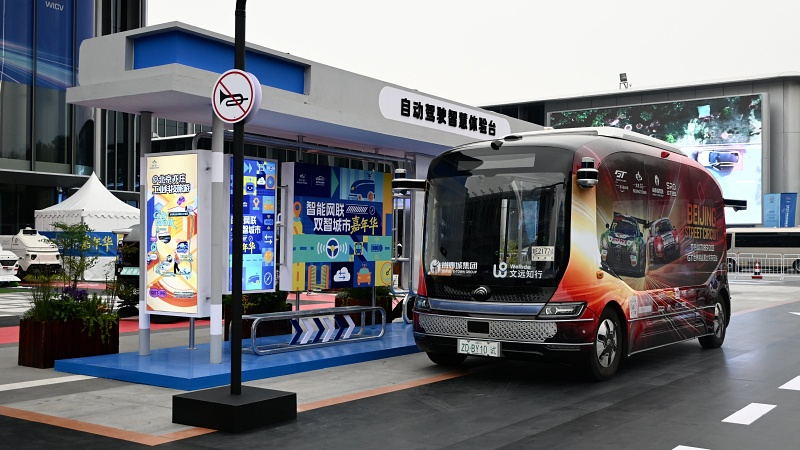
China’s autonomous driving, smart vehicle, and battery companies are rushing to go public in Hong Kong, turning the city into the de facto offshore hub for Chinese tech stocks. From mainland giants like CATL and Hansoh Pharmaceutical to autonomous driving startups such as Pony.ai and WeRide, a growing wave of Chinese firms is seeking Hong Kong IPOs. As these companies look to overcome the structural barriers of China’s closed domestic markets, Hong Kong has emerged as the key channel for foreign capital inflows.
Autonomous Driving IPOs Spotlight China’s Technological Competitiveness
According to Nikkei Asia on the 28th (local time), Chinese companies Pony.ai, WeRide, and Ningbo Joyson Electronic have all announced plans to list on the Hong Kong Stock Exchange. Each aims to begin trading on November 6, with combined fundraising expected to exceed $1.8 billion. This follows Seres Group’s $1.7 billion Hong Kong IPO plan announced on the 27th, underscoring surging capital demand across China’s autonomous driving and smart mobility sectors.
Pony.ai and WeRide are pursuing dual listings in Hong Kong and on the Nasdaq to enhance both technological credibility and access to global investors. Pony.ai plans to issue 42 million new shares at up to $26 each to raise about $968 million, while WeRide aims to issue 88 million shares at up to $4.5 for approximately $380 million. Pony.ai stated that half of the proceeds would fund commercialization of its Level 4 autonomous driving projects, with the remainder devoted to R&D over the next five years.
Industry analysts view this wave of IPOs as part of China’s broader race for technological dominance. With government-led infrastructure and city-level regulatory sandboxes, China is accumulating real-world driving data faster than the U.S. or Europe, enhancing investor confidence in its technology. Beijing, Shanghai, and Shenzhen have all approved Level 4 pilot programs, and cumulative robotaxi driving mileage in urban areas has surpassed 100 million kilometers. This combination of road testing and data validation has dramatically accelerated the commercialization of autonomous driving technology in China.
These companies are also transparent about their global ambitions, as seen in their underwriter selections. Pony.ai appointed Goldman Sachs, Bank of America, Deutsche Bank, and Huatai International as joint lead managers, while WeRide enlisted CICC, Morgan Stanley, and JPMorgan. The participation of both Western and Chinese investment banks reflects a dual-track strategy to strengthen international partnerships and overseas expansion. “In the past, Chinese tech IPOs focused on internet and content platforms,” said one investment industry insider. “Now, the trend has shifted toward hardware-based ‘hard tech.’”
Hong Kong Stock Exchange Rises to No. 1 in Global IPO Rankings
A key trend is that most of these companies are choosing Hong Kong—not the mainland—as their primary fundraising venue. China manages Hong Kong as an offshore financial hub, allowing foreign capital to reach domestic enterprises through an open channel. Unlike the mainland’s A-share market, Hong Kong permits relatively free participation by foreign institutional investors and provides a platform for companies restricted from U.S. markets due to national security or accounting regulations.
Data confirms the trend. According to KPMG, global IPO fundraising in the first half of this year reached $60.9 billion, up about 9% from a year earlier, with the Hong Kong Stock Exchange capturing $13.9 billion to rank first worldwide. Nasdaq followed with $9.2 billion, and the New York Stock Exchange with $7.8 billion. Hong Kong has thus evolved beyond being merely a venue for Chinese listings, becoming the world’s top destination for new equity capital.
The surge has been driven primarily by Chinese firms. The three largest IPOs globally this year were all from the mainland. CATL raised $5.27 billion through its Hong Kong listing—the world’s largest single IPO deal—followed by Hansoh Pharmaceutical with $1.47 billion and Haitian with $1.3 billion. These firms, spanning batteries, biotech, and consumer manufacturing, appealed to investors with tangible strengths such as production capacity, supply chain efficiency, and cost competitiveness rather than abstract software narratives.
This system was made possible by regulatory design. In 2023, the Hong Kong Stock Exchange introduced Chapter 18C, allowing unprofitable tech companies to list under special exemptions. In May this year, it opened dedicated channels for generative AI, autonomous driving, and electronics companies, even accepting pre-IPO filings. The message was clear: while the mainland remains cautious about AI, semiconductors, and autonomous technologies, Hong Kong offers a more flexible environment. As a result, about 220 companies are currently awaiting listing approval, and EY projects total IPO fundraising in Hong Kong could surpass $25.7 billion this year.
Beijing Signals a “Controlled Pace” for New Listings
Still, it remains uncertain whether this optimistic outlook will materialize. Beijing has begun to signal caution, wary of an overheated IPO surge. The China Securities Regulatory Commission (CSRC) has long exercised de facto pre-approval authority over mainland companies seeking overseas listings, but that process has recently slowed sharply. From July 1 to August 15, only three Hong Kong IPOs received official approval from Beijing—compared with 70 approvals in the first half of the year.
Market observers interpret the CSRC’s shift as an attempt at “quality control.” Gary Ng, senior economist at Natixis, noted, “Many of the latest IPO candidates show ownership structures highly concentrated in a few shareholders, increasing the risk of speculative trading and arbitrage.” Regulators appear concerned that IPOs are being consumed as speculative financial products rather than vehicles for sustainable industrial growth. As Ng put it, the new emphasis is “quality over quantity.”
Jefferies made a similar assessment, reporting that the CSRC has started to moderate IPO reviews and capital-raising activity in the mainland A-share market as well. While Beijing is unlikely to shut the window for overseas capital completely, it intends to manage the timing and scale of access directly. The message is clear: maintaining control over strategic industries, revitalizing domestic capital markets, and curbing speculative IPOs remain top priorities. Whether Hong Kong’s listing boom becomes a one-off event or evolves into a long-term trend in China’s global capital strategy will depend on how Beijing enforces that balance.
Stefan Schneider brings a dynamic energy to The Economy’s tech desk. With a background in data science, he covers AI, blockchain, and emerging technologies with a skeptical yet open mind. His investigative pieces expose the reality behind tech hype, making him a must-read for business leaders navigating the digital landscape.
Similar Post