Korea to Invest $20 Billion Annually in the U.S. Using Foreign Reserves, Raising Concerns Over Potential Currency Pressure

Authored On
Modified
Foreign Reserve Gains Estimated at $15 Billion Annually
Additional Funding via Sovereign Funds and Bonds
Won Weakness Poses Long-Term Risk
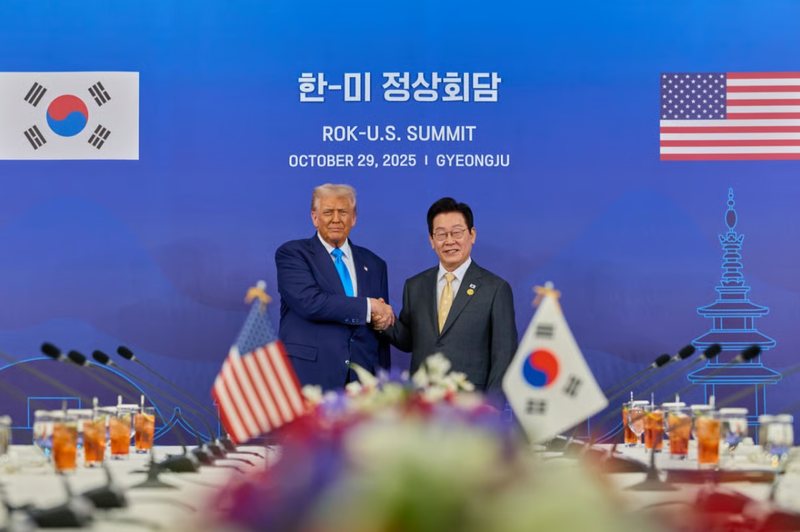
South Korea has agreed to directly invest up to $20 billion a year in the United States—amounting to a total of $200 billion—as part of its new tariff negotiation framework with Washington. While experts welcomed the inclusion of an annual investment cap as a safeguard, some warned that excessive exposure to high-risk assets could unsettle markets. Since the funding partly relies on debt, analysts cautioned that it could exert long-term upward pressure on the won–dollar exchange rate.
Details of the Bilateral Investment Cap
Following the summit between the two leaders, the Presidential Office announced on the 30th that Korea would channel a total of $350 billion into the U.S.—$200 billion in cash investments and another $150 billion in shipbuilding cooperation projects. Presidential Policy Chief Kim Yong-beom explained, “The $200 billion investment will not be made in a lump sum but within an annual limit of $20 billion, depending on project progress,” adding that only initial payments will be remitted at the outset.
The $20 billion annual installment sits at the upper threshold of what the Bank of Korea and the Ministry of Economy and Finance have previously cited as the “maximum feasible funding level ($15–20 billion annually) without disrupting the FX market.” Kim noted that the government plans to rely primarily on returns from foreign assets rather than direct market sourcing. “Interest and dividend income from reserve operations are substantial, and if necessary, the government may issue dollar-denominated guaranteed bonds,” he said.
Investment projects will be selected by a U.S.-led investment committee chaired by the Secretary of Commerce, while Korea’s Minister of Trade, Industry, and Energy will co-chair the joint consultative body. Kim added, “Only commercially viable projects with guaranteed principal and stable cash flows will proceed, as explicitly stated in the memorandum of understanding.”
Policy Banks to Mobilize Additional Dollar Funding
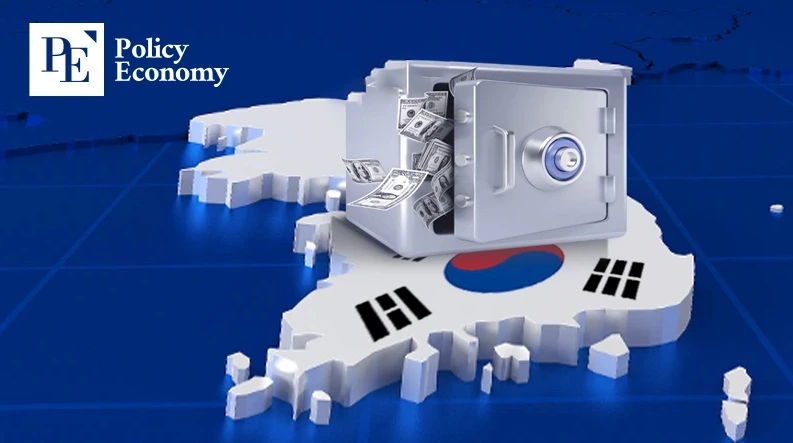
As of the end of September, South Korea’s foreign exchange reserves stood at $422 billion, of which about 90% ($360 billion) is invested in U.S. Treasuries and other securities, generating roughly $15 billion in annual returns. These returns, previously reinvested in global markets, will now be redirected into the U.S. investment fund. Another $5 billion will come from sovereign fund bonds, structured as government-guaranteed dollar securities backed by a loan from the Bank of Korea.
Before the negotiations, the government assessed the overseas funding capacity of its policy banks, including the Export-Import Bank of Korea (KEXIM) and Korea Development Bank (KDB). KEXIM estimated it could raise an additional $3 billion through foreign bond issuances, on top of its existing $42 trillion ($30 billion) annual funding volume, of which about 45% is in foreign currency. Market demand suggests the volume could increase to roughly $50 trillion ($35 billion) without major strain.
KDB typically raises $80–90 trillion ($55–65 billion) annually, with around $12 trillion ($8–9 billion) in foreign borrowings. Government officials believe KDB could expand its external funding by a similar margin as KEXIM. A senior official stated, “Given Korea’s strong credit rating, policy banks should be able to secure substantial funding overseas.” Finance Minister and Deputy Prime Minister Koo Yoon-cheol also told the National Assembly that the U.S. investment will be financed through a combination of foreign reserve income, policy bank issuance, and, if necessary, external borrowing.
Potential for Renewed Won Weakness
The market’s initial reaction has been cautiously optimistic. On the 30th, the won closed at 1,426.5 per dollar, down 5.2 won from the previous session, and analysts see potential for further strengthening toward the 1,300 range. However, concerns remain that large-scale outbound investment could trigger medium- to long-term depreciation pressures. Risky projects such as Alaska’s LNG pipeline development, for example, could provoke adverse market sentiment.
Analysts also warned that the initiative could indirectly tighten Korea’s foreign exchange supply. Shinhan Investment Corp. stated, “An additional $20 billion in annual outflows could worsen net foreign currency liquidity conditions.” Citibank similarly warned that “a decrease in dollar repatriation by exporters may heighten won depreciation risks over the next several years,” particularly as Korean firms reinvest their dollar earnings directly in U.S. projects.
Most economists are withholding judgment on the long-term macroeconomic implications. “While installment payments reduce short-term risk, the global appetite for Korean sovereign guarantees remains uncertain,” one economist said. Another noted, “Even if the government avoids direct domestic borrowing, foreign-currency funding by policy banks ultimately constitutes external debt that taxpayers will bear.”
In response, Deputy Prime Minister Koo stated, “We have secured flexibility to adjust payment timing and volume based on FX market conditions,” emphasizing that the investment commitments extend through January 2029 and will be disbursed gradually. On the issue of a currency swap deal not being included, he said, “Swaps would have cost about 4% in interest, whereas this structure allows us to reduce costs and adjust investment limits in line with market stability, which is far more advantageous to national interest.”
Similar Post