China Retreats from Electric Vehicles After Abandoning Real Estate: “Will There Be a Second Evergrande?”

Oliver Griffin is a policy and tech reporter at The Economy, focusing on the intersection of artificial intelligence, government regulation, and macroeconomic strategy. Based in Dublin, Oliver has reported extensively on European Union policy shifts and their ripple effects across global markets. Prior to joining The Economy, he covered technology policy for an international think tank, producing research cited by major institutions, including the OECD and IMF. Oliver studied political economy at Trinity College Dublin and later completed a master’s in data journalism at Columbia University. His reporting blends field interviews with rigorous statistical analysis, offering readers a nuanced understanding of how policy decisions shape industries and everyday lives. Beyond his newsroom work, Oliver contributes op-eds on ethics in AI and has been a guest commentator on BBC World and CNBC Europe.
Authored On
Modified
China’s EV Growth Myth Ends
Market-Driven Restructuring Accelerates
Government Shifts Focus to AI and Semiconductors
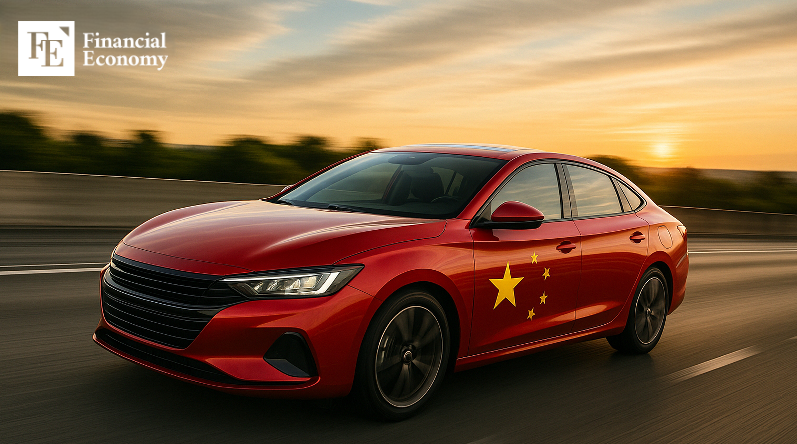
China has removed electric vehicles (EVs) from its list of strategic industries in the 15th Five-Year Plan, signaling that the government no longer believes it can control the glut of supply and market saturation. Once a pillar of its technological ambitions, China’s EV industry has entered a harsh correction phase, marking the end of its growth myth. The decision underscores the side effects of unchecked quantitative expansion, as Beijing seeks to dismantle a distorted market structure and redirect resources toward next-generation high-tech sectors such as artificial intelligence (AI). However, this industrial restructuring implies a massive transfer of capital and labor, raising concerns about labor market instability and regional economic disruption as the enormous resources once funneled into EVs shift toward emerging industries.
EVs Excluded from Strategic Industry List
According to Reuters on the 30th, new energy vehicles (NEVs), including EVs, were not included in the list of key strategic industries in the 15th Five-Year Plan outline released by the Chinese Communist Party on the 28th. This marks the first time since the 12th Five-Year Plan in 2010 that EVs have been omitted from Beijing’s strategic industrial agenda.
China’s industrial strategy traditionally operates through a top-down system in which the central government sets targets while local governments and state-owned enterprises make massive investments to achieve them. Generous subsidies are provided to attract new market entrants, while purchase incentives help absorb the resulting production. As competition among firms drives down prices, market demand expands, leading a few large enterprises to eventually dominate through mergers and acquisitions (M&A). Industries such as solar panels, 5G networks, and batteries gained global competitiveness through this process.
The problem, however, is the continual accumulation of overcapacity. Analysts interpret China’s decision to drop EVs from the strategic industry list as recognition that the sector now faces severe supply glut and market saturation. Beijing had long anticipated the advent of the EV era and extended sweeping fiscal benefits to domestic manufacturers. According to the Center for Strategic and International Studies (CSIS), China poured a total of $231 billion in subsidies into the EV industry between 2009 and 2023. Long-term policy goals such as “carbon neutrality by 2060” further supported steady expansion, with the government setting EV penetration targets of 20% by 2025, 40% by 2030, and 50% by 2035, backed by aggressive incentives.
Battery and Supply Chain Ecosystem Also Hit
Such policies gave rise to BYD, the world’s leading EV manufacturer, and a vast domestic supply chain ecosystem. China has also become the world’s largest EV market, with electric cars accounting for more than 50% of all vehicle sales by July 2024—over a decade ahead of the government’s original target.
But rapid growth inevitably led to overproduction. In response, Beijing has drastically scaled back subsidies, while local governments, burdened by debt and fiscal strain, have halted indiscriminate support. By late 2023, the National Development and Reform Commission (NDRC) declared it would “phase out noncompetitive EV companies and concentrate resources on core enterprises.”
The policy amounted to a de facto death sentence for smaller players. Jidu Auto—a joint venture launched in 2021 by tech giant Baidu and China’s second-largest automaker Geely—collapsed under weak sales and now teeters on bankruptcy. Startup Neta laid off all its staff late last year before shutting down. According to the Ministry of Commerce, while 13 new EV companies were established in China last year, 16 have gone bankrupt so far this year.
This domino effect is rippling beyond automakers to the broader ecosystem of parts, batteries, and supply chains. Small battery and module producers, as well as semiconductor suppliers for vehicles, are facing plummeting orders and mass insolvencies, with some entering court receivership. Venture capital (VC) firms are also suffering. Dozens of funds that poured money into EV startups between 2015 and 2020 are now restructuring amid poor returns and limited exits, as the IPO market for tech firms remains largely shut.
End of Support for EVs, Steel, and Petrochemicals — Focus Shifts to Advanced Industries
The ripple effects are expected to be far-reaching. Experts warn that China’s withdrawal from EVs could mirror the collapse of its real estate sector. Over the past decade, Beijing had fueled growth through massive liquidity injections into property markets. Following the global financial crisis, the government mobilized local authorities and state banks to unleash multi-trillion-dollar stimulus packages, dramatically expanding mortgage lending. At its peak, the real estate sector accounted for a quarter of China’s gross domestic product (GDP).
But starting in late 2022, the bubble burst rapidly. Alarmed by overheating, the government withdrew support and imposed strict debt caps on developers. The result was a wave of defaults, culminating in the bankruptcy of industry giant Evergrande. Once the golden goose of China’s economy, the property sector was swiftly relegated to pariah status.
Likewise, the EV industry—whose rise depended on policy-driven growth—now faces the risk of collapse once liquidity dries up. Despite its massive scale, much of China’s EV market is viewed as speculative froth. Even state-run media have admitted that “behind the illusion of an EV powerhouse lies speculation, not industry.”
In a bid for survival, Chinese EV firms are now accelerating overseas expansion, but the challenges are formidable. According to a report by Rhodium Group, China’s outbound investment in EVs reached $16 billion last year—surpassing the $15 billion invested domestically for the first time. Battery makers are building factories across Europe, the U.S., and Mexico to strengthen their presence in local markets. Yet overseas projects rarely deliver immediate returns. While domestic plants are completed within months, overseas facilities take years due to complex regulations and political risks. Rhodium Group found that only 25% of Chinese overseas investment projects have been completed, compared to a 45% completion rate for domestic ones.
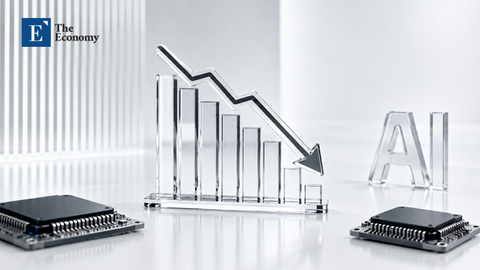
Against this backdrop, Beijing has declared that it will leave the EV industry to market forces while channeling state support toward new strategic sectors such as AI and semiconductors—areas deemed vital for self-reliance in its rivalry with the United States. Quantum technology, biomanufacturing, hydrogen, and nuclear fusion energy have also been designated as new pillars in the upcoming Five-Year Plan. Simultaneously, the government is pushing for production cuts in steel, petrochemicals, batteries, and solar power, with policies centered on eliminating zombie firms, closing outdated plants, and restricting excessive local subsidies.
The key challenge lies in managing the upheaval that will accompany this transformation. As one economist noted, “The large-scale migration of capital and labor from traditional manufacturing to emerging industries will inevitably bring labor instability and deepen regional disparities. Ultimately, China’s ability to absorb the shock of transition will determine the sustainability of its economy over the next five years.”
Oliver Griffin is a policy and tech reporter at The Economy, focusing on the intersection of artificial intelligence, government regulation, and macroeconomic strategy. Based in Dublin, Oliver has reported extensively on European Union policy shifts and their ripple effects across global markets. Prior to joining The Economy, he covered technology policy for an international think tank, producing research cited by major institutions, including the OECD and IMF. Oliver studied political economy at Trinity College Dublin and later completed a master’s in data journalism at Columbia University. His reporting blends field interviews with rigorous statistical analysis, offering readers a nuanced understanding of how policy decisions shape industries and everyday lives. Beyond his newsroom work, Oliver contributes op-eds on ethics in AI and has been a guest commentator on BBC World and CNBC Europe.
Similar Post