“Trump’s Tariff Wall Backfires, Strengthening China’s Manufacturing Power”

Authored On
Modified
Eight Years of U.S.-China Trade War, Strategic Misfire for Washington
China’s $1 Trillion Trade Surplus Reinforces Manufacturing Obsession
“The U.S. Has No Capacity to Influence China’s Macroeconomic Strategy”
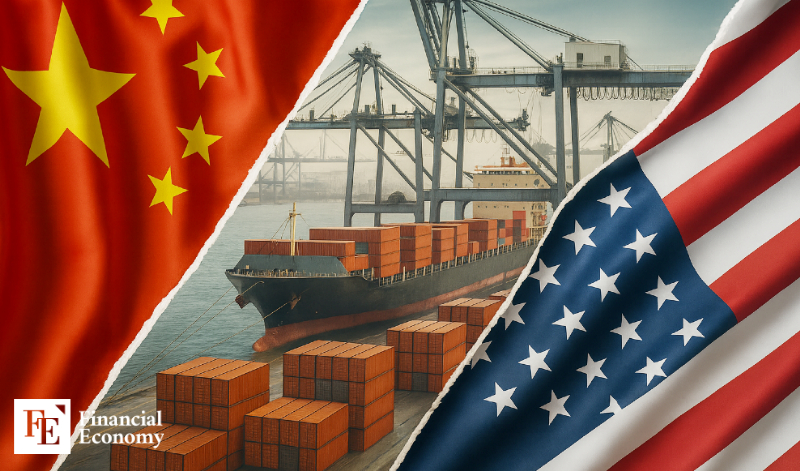
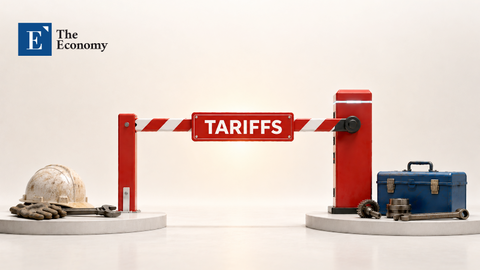
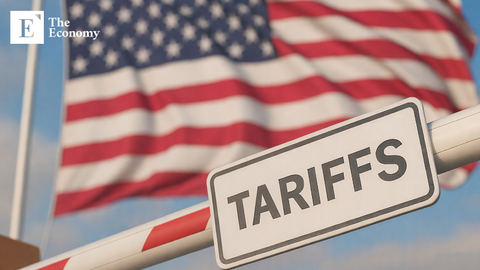
U.S. President Donald Trump’s tariff offensive, designed to force structural reform in China’s economy, has instead produced the opposite effect. Rather than weakening its manufacturing base, Beijing has doubled down on industrial expansion, driving its trade surplus to an all-time high. The consumption-driven growth Washington had hoped to induce has failed to materialize. Instead, the tariff campaign has accelerated China’s pivot toward import substitution and technological self-sufficiency.
China Expands Exports to India, Africa and Beyond
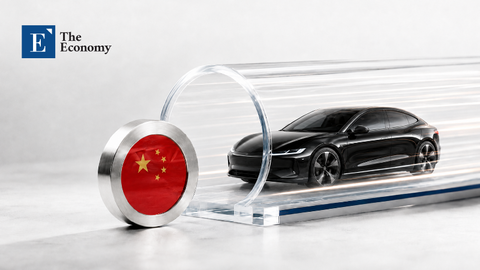
According to China’s General Administration of Customs, the country posted a record trade surplus of $990 billion last year, and is expected to surpass $1 trillion this year. From January through October, the surplus reached $785 billion, up 16% from a year earlier. China now records surpluses with more than 170 countries worldwide. In South Africa, Chinese automobile exports have nearly doubled this year, while sales of Chinese goods in Southeast Asia have surpassed even pandemic-era peaks. In Chile and Ecuador, monthly active users of Chinese e-commerce platform Temu surged 143% this year.
China’s buoyant export performance beyond the U.S. suggests that even Trump’s threat of 100% tariffs will have limited impact. Much of this resilience stems from Beijing’s deliberate diversification of trade routes in response to U.S. pressure. The export boom also reflects increased transshipment through third countries such as Vietnam and Mexico. Chinese firms, facing higher tariffs, have adapted by rerouting products through alternative markets or indirectly supplying U.S. demand via third-party countries. Exports to Africa jumped 56% last month, with Latin America showing similar growth.
Weak Social Safety Nets Push China Toward Saving, Not Spending
This trajectory runs counter to Washington’s original intent of forcing China to shift from export-led to consumption-driven growth. The U.S. had sought to dismantle China’s mercantilist policies that suppress domestic spending and to encourage greater household consumption through healthcare and social welfare reforms. Instead, tariffs have deepened China’s manufacturing fixation.
According to consulting firm Trivium China, Beijing has refocused its industrial strategy on producing not only finished goods like smartphones and cars but also key components and materials—further entrenching itself in global supply chains.
Eswar Prasad, Cornell trade economist and former IMF China division head, noted that “China is crowding out manufacturing elsewhere,” from emerging economies trying to build their industrial base to advanced nations facing competitive pressure. China has bolstered capabilities in high-value sectors such as automobiles, aerospace, and semiconductors, while refusing to yield even low-end manufacturing to developing countries. “The U.S. has almost no capacity to influence China’s macroeconomic strategy,” Prasad said. “Their economic philosophies differ fundamentally—America prioritizes consumption, while China prioritizes production.”
Unlike Americans, who tend to spend, Chinese households overwhelmingly save. According to CEIC Data, China’s gross savings rate—representing the share of unspent income in GDP—stands at 46.46%, far above the U.S. (17.3%), Germany (25.81%), Japan (28.78%), and South Korea (34.26%). This is not simply a matter of thrift. Economic pessimism and anxiety over China’s inflated property market are key drivers. A survey by the People’s Bank of China found that 21.1% of respondents across 50 cities expected home prices to fall, outnumbering the 12.5% who anticipated an increase.
An Yu-hwa, president of the China Capital Market Institute, explained that even during years of double-digit GDP growth, Chinese deposit rates rarely exceeded 3%. “High savings reflect a low time preference—people favor future over present consumption,” she said. “With inadequate welfare and weak income redistribution, households prefer to hold cash.” In a 2023 op-ed, Adam Posen of the Peterson Institute for International Economics described this as China’s “economic long COVID”—a post-pandemic mindset where liquidity preference outweighs investment or spending.
Production, Not Consumption, Is Beijing’s Growth Formula
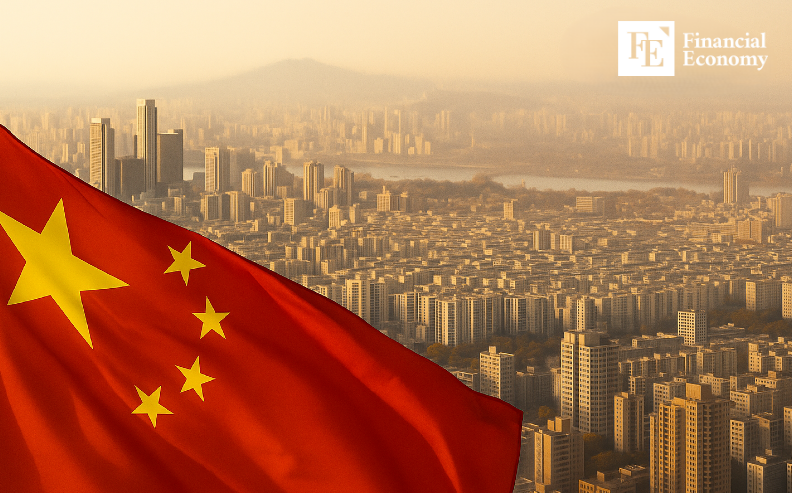
China’s high savings rate, conversely, signals weak consumption and sluggish domestic demand. With consumer spending subdued, Beijing has leaned on investment and exports to sustain growth—fueling its formidable industrial productivity. According to the UN Industrial Development Organization (UNIDO), China accounts for 29% of all manufactured goods produced globally in 2024—outpacing the U.S. by 12 percentage points and exceeding the combined output of all European economies.
The U.S. blames China for its own trade deficits and manufacturing decline. Cheap Chinese imports have hollowed out American industries and eliminated factory jobs. Moreover, Beijing’s industrial subsidies and investment-led growth have intentionally suppressed household consumption. China’s strategy hinges on supply-side reinforcement rather than demand stimulus—on production, not consumption.
But this approach carries risks. While Chinese leaders publicly promise to boost domestic spending, policies that raise wages or ease savings constraints remain unlikely given fiscal limits. Instead, the government views industrial upgrading and export competitiveness as its economic safety net. So long as China sustains technological edge and production capacity, it can weather external demand shocks.
That outlook has global implications. As China’s current-account surpluses and import-substitution strategies persist, the U.S. tariff war has done little to contain Beijing’s economic rise—if anything, it has entrenched China’s dominance in global supply chains.
Similar Post