OPEC+ Caught in the ‘Overproduction Trap,’ Adjusts Pace as Trump’s Low-Price Oil Policy Gains Momentum

Authored On
Modified
Output to increase by 137,000 barrels next month, suspended in Q1 2026
Move aims to defend prices and maintain unity amid supply glut fears
U.S.-U.K. sanctions on Russia also factored into decision
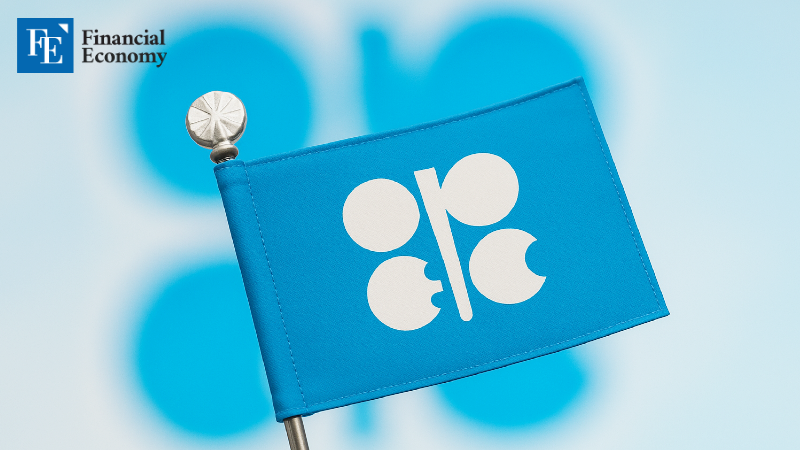
The Organization of the Petroleum Exporting Countries (OPEC) and its allies in OPEC+ have decided to halt additional output hikes for the first quarter of next year, following a sharp reduction in their fourth-quarter production increase. After months of boosting supply to reinforce market dominance, the alliance now faces the unintended consequences of falling prices and weakening demand. Crude prices have tumbled to their lowest levels in five years, as a global slowdown collides with swelling supply, forcing OPEC+ to recalibrate under the mounting influence of the Trump administration’s low-oil-price strategy.
Saudi Arabia and Russia Agree to Suspend Additional Output
According to Bloomberg on November 2 (local time), the eight OPEC+ members—Saudi Arabia, Russia, the United Arab Emirates, Iraq, Kuwait, Oman, Kazakhstan, and Algeria—agreed in a virtual meeting to increase production by 137,000 barrels per day in December but pause further hikes in the first quarter of 2026. The December quota remains the same as in October and November. Market watchers had earlier expected a larger boost of up to 500,000 barrels per day.
The decision follows a month of steep price declines and heightened volatility. Continued OPEC+ production increases, coupled with global economic uncertainty, have driven oil to a five-year low. West Texas Intermediate (WTI) crude has fallen over 15% this year, weighed down by fears of oversupply as the group expanded output to reclaim market share.
Until last year, OPEC+ had maintained coordinated production cuts to defend prices. But with growing concerns over slowing demand amid electric vehicle adoption, a weaker dollar from U.S. tariff policies, and signs of economic stagnation, the group reversed course to ramp up production. Between April and September alone, the alliance restored nearly all 2.2 million barrels per day previously cut in 2023.
Analysts describe the move as counterintuitive—expanding supply in a downturn risks accelerating price declines. Yet insiders note that Saudi Arabia’s calculus is rooted in internal OPEC+ politics: punishing noncompliant members like Kazakhstan and Iraq who breached quotas, and pressing Russia, which had resisted cuts, claiming they only benefitted high-cost U.S. shale producers. Riyadh’s aggressive production stance aims to discipline fellow members, absorb short-term losses, and squeeze out competitors to preserve OPEC’s long-term market leverage. Controlled overproduction, in effect, serves to keep prices low enough to deter rival expansion while retaining manageable stability.
Trump: “Oil Will Soon Fall Below $60—Expanding Coal and Nuclear Power”
However, the global balance has tilted toward oversupply as China’s crude demand weakens and Western Hemisphere output surges. The International Energy Agency (IEA) forecasts global oil supply will exceed demand by over 3 million barrels per day this quarter, with 2026 poised for record surplus levels. JPMorgan Chase and Goldman Sachs predict prices could drop below $60 a barrel, while Sevens Report Research warns WTI could slide into the mid-$30 range if physical oversupply persists.
Adding to the pressure is President Donald Trump’s deliberate pursuit of lower oil prices. Since returning to the White House in January, Trump has dismantled the Biden administration’s renewable-energy initiatives and revived a fossil fuel–first agenda under the slogan “Drill, baby, drill.” Declaring a national energy emergency, he has vowed to restore U.S. energy supremacy.
In August, Trump told a Cabinet meeting that “oil is nearing $60 a barrel and will soon dip below that,” emphasizing that “we are expanding coal and nuclear power plants—nuclear is now safe, cheap, and fantastic.” His administration’s broader goal is to push crude below $50 a barrel by lifting drilling restrictions, rolling back regulations, and achieving full U.S. energy independence. During his first term, average WTI prices hovered around $58 a barrel, with inflation at 2.1% and interest rates near 1.5%. The administration aims to recreate similar macroeconomic conditions, seeing low oil prices as a tool to tame inflation, ease borrowing costs, and weaken Russia’s war financing.
U.S. Producers Endure Losses Amid Record Output
Trump’s policies have driven U.S. oil output to record highs. According to the Energy Information Administration (EIA), U.S. crude production reached 13.64 million barrels per day in late October, the highest since records began in 1983. The EIA expects production to average 13.5 million barrels per day in both 2025 and 2026.
WTI has fallen into the $60 range, but such levels threaten the profitability of U.S. shale producers—Trump’s own political base. The industry’s breakeven point averages around $65 per barrel, meaning further declines compress refining margins and erode profits. Companies holding high-priced crude inventories also face accounting losses.
During the pandemic crash of 2020, when oil fell below $45 a barrel, Saudi Arabia and Russia engaged in a price war that bankrupted dozens of U.S. producers. Now, American firms are bracing for another low-price era, cutting jobs to survive. ExxonMobil recently announced layoffs of 2,000 employees—about 3% of its global workforce—while Chevron, ConocoPhillips, and BP have followed with similar cost-cutting measures. Market participants increasingly view Trump’s engineered price suppression as a durable policy stance, forcing OPEC+ to weigh production restraint against political headwinds from Washington.
New sanctions imposed by the United States and the United Kingdom on Russia’s state oil giants Rosneft and Lukoil further complicate OPEC+ output planning. The measures limit Moscow’s ability to expand production, tightening its maneuvering space within the alliance. Yet some analysts argue that any disruption in Russian exports could prompt OPEC+ to revert to higher output in an effort to capture market share.
Indeed, OPEC+ members confirmed during this week’s meeting that should market conditions shift significantly next year, they may restore part or all of the previously suspended production increases. For now, however, the group remains trapped in a delicate balancing act—caught between defending prices, maintaining cohesion, and navigating the geopolitical reverberations of Trump’s resurgent low-oil doctrine.
Similar Post