U.S.–China Port Fee War Marks “One-Year Truce,” Easing Tensions in Global Shipping

Niamh O’Sullivan is an Irish editor at The Economy, covering global policy and institutional reform. She studied sociology and European studies at Trinity College Dublin, and brings experience in translating academic and policy content for wider audiences. Her editorial work supports multilingual accessibility and contextual reporting.
Authored On
Modified
U.S. and China agree to suspend port-entry fees for one year
Trans-Pacific sailings fell amid cost shock on North Pacific routes
Hopes rise for softer freight rates and supply-chain recovery
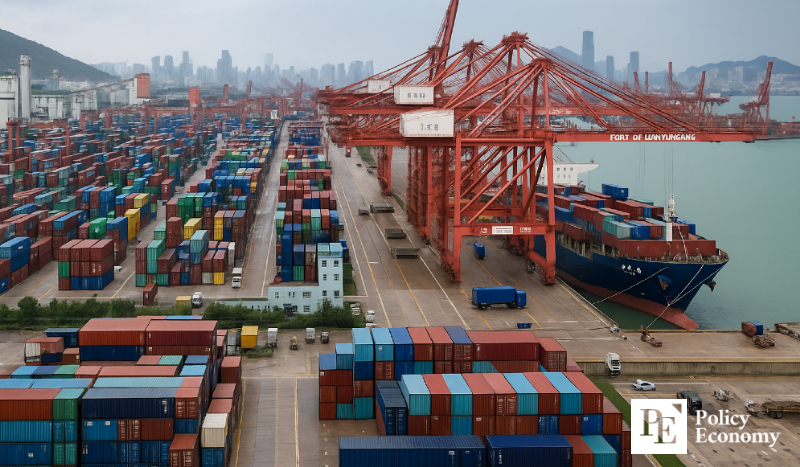
The United States and China have abruptly agreed to suspend reciprocal port fees for one year. According to details released by the White House, the step aims to ease tensions in global shipping and shipbuilding and normalize bilateral trade, temporarily waiving about $3.2 billion in annual port charges. Industry players view the move as a positive signal for supply-chain stability, expecting relief from surging logistics costs and sailing uncertainty that had intensified in recent months.
Port fees emerge as a bigger risk than tariffs
On the 3rd (local time), Reuters and other outlets reported that a White House fact sheet on the Nov. 1 U.S.–China leaders’ economic and trade agreement confirmed a one-year suspension of port-use fees imposed on China-linked vessels. “In response to Section 301 findings, the United States will pause implementation starting on the 10th,” the White House said, adding that “China will withdraw its retaliatory steps and lift sanctions it had imposed on several shipping companies.” It also said, “During this period, the United States will continue talks with China while pursuing historic cooperation with South Korea and Japan to revitalize U.S. shipbuilding.”
Earlier, starting Oct. 14, the United States began levying entry fees on China-related ships calling at U.S. ports. Implemented under an April USTR policy to deter China’s shipbuilding and maritime sectors and encourage U.S. ship construction, the measure charged China-flagged or China-owned vessels $50 per net ton (with a possible increase to $140). Even when non-Chinese carriers operated the voyage, ships built in China faced either $33 per ton or $250 per container—whichever was higher.
U.S. retail and cargo owner groups and global carriers pushed back, calling the impact “greater than tariffs,” while pointing to growing transshipment schemes that masked ship origin and registry. A recent report by global logistics platform Tradelings noted patterns such as finely edited shipping papers, time-charters via joint-venture entities, and “paper ownership” by third-country firms to dilute effective China linkages. The result, it said, was eroding schedule reliability on key North Pacific lanes, longer customs/inspection queues and document checks, and greater lead-time volatility.
Tradelings also flagged an acceleration in detour routing. “Chinese-affiliated carriers, for example, have added direct services to Mexico’s Pacific coast,” the report said. “Cargo discharged in Mexico is then redistributed to smaller U.S. ports by truck, rail, or feeder vessels.” As these workarounds accumulate, direct calls to the U.S. West Coast decrease while Mexico and Central America strengthen as transshipment hubs—evidence, critics argue, that Washington’s move to check China distorted global flows and shifted trade activity to offshore ports.
Chinese retaliation magnifies cascading losses for carriers
China compounded the strain by imposing retaliatory entry fees on U.S.-related ships. Citing violations of international trade norms and bilateral maritime agreements, the Ministry of Transport introduced a “special port service fee” on U.S.-linked vessels, set at roughly $55 per cargo ton initially and slated to rise to about $155 per ton in 2028—around 10% higher than the comparable U.S. levy.
China’s scope covered vessels in which U.S. firms, organizations, or individuals directly or indirectly hold 25% or more equity, U.S.-flag vessels, and ships built in the United States—an effort to close loopholes such as “shell-company” ownership. The announcement triggered significant schedule disruptions at major North Pacific gateways, and some U.S. West Coast volumes diverted to transshipment hubs in Japan and Southeast Asia. With contract renegotiations multiplying between large shippers and carriers, average rates on North Pacific lanes rose about 12% within a month.
These dueling fee regimes imposed direct financial pressure on carriers. U.S. Customs stated that payment liability rests entirely with vessel operators and warned that delinquent ships could be denied discharge or even clearance. It required payment through the Treasury website at least three days before U.S. arrival. Smaller carriers with thinner liquidity struggled to avoid delays, further eroding efficiency across the global liner network.
Fleet, contracts, and transshipment networks need a reset
Industry groups welcomed the mutual suspension. After roughly half a year of voyage delays and cash-flow strain since the policy surfaced, operators expect relief. With advance fee payments and supporting documentation paused, carriers face less upfront cash outflow and more room to normalize network and capacity plans. The International Chamber of Shipping called the move “a positive step toward reducing uncertainty in global maritime supply chains and restoring the free flow of trade.”
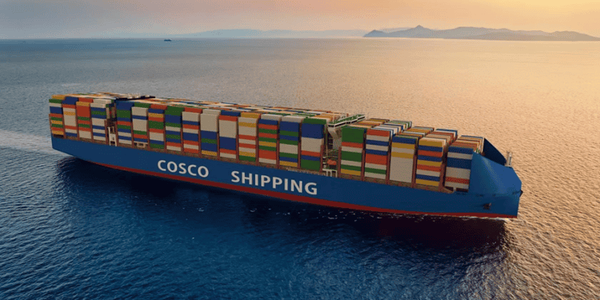
By temporarily waiving an estimated $3.2 billion in reciprocal port charges, the truce should immediately cut operating costs for global carriers. Major players such as China’s COSCO and the U.S. line Matson—both of which had been paying hundreds of thousands of dollars per vessel under the measures—stand to see direct easing of cost burdens. Singapore-based analyst firm High Trend International called the decision “a turning point that softens policy risk,” forecasting lower sailing costs and improved investor confidence.
Skeptics, however, stress that the relief may be temporary. Washington paused implementation for one year but left the framework intact, and Beijing likewise only deferred retaliation without pledging permanent repeal. Without substantive rule changes, much of the benefit could prove short-lived.
For the maritime sector, the truce is both opportunity and warning. Near-term tailwinds include steadier rates and restored service reliability, with knock-on gains for shipbuilding, ports, and carriers. The White House’s nod to deeper cooperation with South Korea and Japan during the grace period could also revive newbuild orders. But with core rules still on the books, companies must proactively rework (1) contract structures (surcharges and pass-throughs), (2) fleet composition (diversifying build origin), and (3) transshipment networks (broadening hubs). In short, the industry must plan around unresolved policy and operational vulnerabilities that a one-year suspension alone will not fix.
Niamh O’Sullivan is an Irish editor at The Economy, covering global policy and institutional reform. She studied sociology and European studies at Trinity College Dublin, and brings experience in translating academic and policy content for wider audiences. Her editorial work supports multilingual accessibility and contextual reporting.
Similar Post
















