Political Deadlock Triggers U.S. Federal Government Shutdown, Widening Social Fallout Amid Stalemate in Congress

Authored On
Modified
Shutdown Halts Assistance Programs for Low-Income Families
Airports Plagued by Staff Shortages, Flights Delayed or Canceled
Republicans and Democrats Locked in a Standoff with No Compromise in Sight
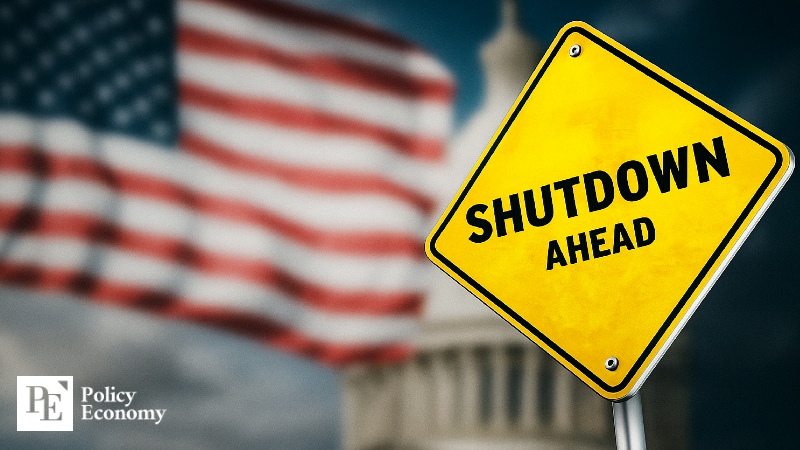
The U.S. federal government has entered its longest-ever “shutdown,” surpassing the 35-day record set during Donald Trump’s first term, casting a dark shadow over the American economy. Economic data releases have been delayed, transportation and logistics are in disarray, and the New York Stock Exchange is showing limited gains as uncertainty drags on. The Congressional Budget Office (CBO) estimates that the nation could suffer as much as $14 billion in irrecoverable losses. However, with ideological divisions deepening under President Trump’s second administration and Republicans and Democrats fiercely divided over the extension of the Affordable Care Act (ACA) subsidies, a resolution appears unlikely in the near term.
Mounting Fatigue from the Prolonged Shutdown
According to Reuters and other foreign outlets on the 4th (local time), the federal government shutdown that began on October 1 has now reached its 35th day, tying the longest shutdown in U.S. history. As the clock passes midnight between the 4th and 5th, the country will officially enter its longest shutdown ever. The previous record was from December 22, 2018, to January 25, 2019, during Trump’s first presidency.
Under a shutdown, federal funding is suspended. As a result, most government agencies—except for critical operations such as law enforcement, border control, and essential welfare services—cease functioning until new appropriations are approved. Federal employee paychecks are halted, forcing essential personnel to work without pay while nonessential workers are placed on unpaid furlough.
The social toll of the shutdown continues to deepen. The most heavily affected are low-income families. The Supplemental Nutrition Assistance Program (SNAP), better known as “food stamps,” has run out of funds, leaving some 42 million Americans living below the poverty line at risk of losing food aid this month. In response to mounting criticism, the Department of Agriculture announced the release of $4.65 billion in emergency funds to allow states to partially issue November SNAP benefits, though that amounts to only half of normal allocations—fueling further controversy.
Federal employees have begun taking second jobs to survive. The Washington Post reported that some government workers, having gone weeks without pay, are resorting to side jobs such as food delivery, substitute teaching, notary work, or launching small businesses. Some have even taken to writing fantasy novels about cats or starting marketing firms to make ends meet. Households where both spouses work for the government are hit especially hard. One aviation official in the Eastern U.S. said, “I’ve been working without pay since the shutdown began on October 1, and my wife is on furlough. It’s been over four weeks since my last paycheck, and my savings are nearly gone.”
Disruptions to air travel have become another major symptom. Around 13,000 Federal Aviation Administration (FAA) employees classified as essential are currently working without pay, but staffing is still about 3,500 short of target. Absences and leave requests are increasing amid burnout, causing widespread flight delays and cancellations. On October 31 alone, 6,200 flights were delayed and 500 canceled across the country—65% due to air traffic controller shortages. Delays continued through the weekend, with 4,600 flights delayed on November 1, 5,800 on November 2, and another 2,900 by the afternoon of November 3.
Economic Damage Estimated at Up to $14 Billion
The extended shutdown is also weighing heavily on the U.S. economy. In a recent report analyzing the impact under three scenarios—lasting four, six, or eight weeks—the CBO warned that delayed federal spending would have a significant negative effect, with some losses likely to become permanent even after the government reopens. Reduced public spending could curb consumption, lower aggregate demand, and dampen private-sector output.
Depending on the duration, the CBO projects real GDP growth to fall by between 1 and 2 percentage points, with total economic losses estimated between $7 billion and $14 billion. Specifically, a four-week shutdown would cut growth by 1 percentage point and reduce cumulative GDP by $7 billion through 2026; six weeks would lower growth by 1.5 points and cost $11 billion; and eight weeks would slash growth by 2 points, causing $14 billion in losses. These figures far exceed the $3 billion loss (around 0.02% of GDP) recorded during the 2018–2019 shutdown. Additionally, furloughed federal employees are classified as “short-term unemployed,” which the CBO expects to raise the national jobless rate by at least 0.4 percentage points.
The shutdown’s ripple effects are also rattling global financial markets. On the 4th, New York stocks closed sharply lower as risk aversion intensified. The Dow Jones Industrial Average dropped 0.53%, while the S&P 500 and Nasdaq Composite declined 1.17% and 2.04%, respectively. The dollar index (DXY), which measures the greenback against six major currencies, topped 100 for the first time in six months amid a flight to safety. The U.S. housing market is suffering as well: according to Reuters, an estimated 3,619 daily home sales nationwide are at risk because would-be buyers cannot access government-backed mortgage insurance, translating into $1.59 billion in potential economic losses.
The federal debt crisis is worsening too. Last month, the Treasury Department announced that U.S. national debt had surpassed a record $38 trillion for the first time, up from $37 trillion in August. The Joint Economic Committee of the Senate reports that the national debt has been increasing by $71,253.90 every second over the past year. The U.S. has run annual deficits since 2001, and the gap has widened since 2016 due to pandemic-era spending. The International Monetary Fund (IMF) projects that by the end of 2030, the U.S. debt-to-GDP ratio will reach 143.4%, surpassing levels once seen in crisis-stricken Italy and Greece.
Partisan Standoff Shows No End in Sight
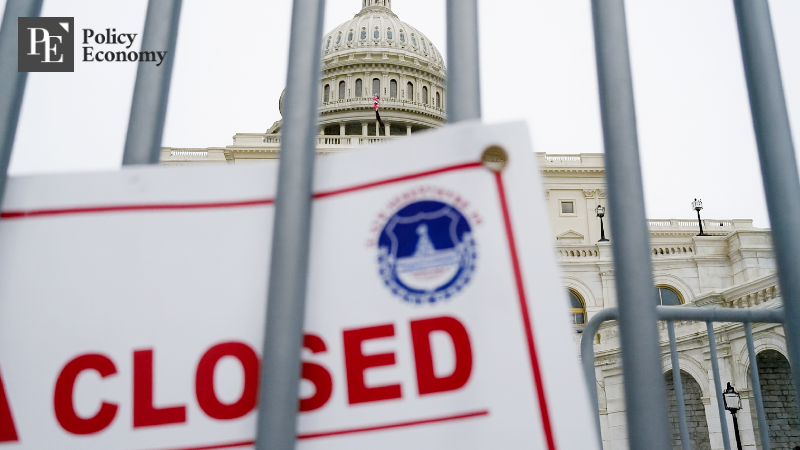
Despite the damage, there are no signs of compromise. The impasse stems from partisan conflict over the 2026 fiscal year budget. Republicans advocate for a temporary resolution to keep the government running at last year’s funding levels while negotiating contentious issues later, whereas Democrats insist they will not approve any budget without extending ACA subsidies. Although Republicans hold a 53–47 majority in the 100-member Senate, at least 60 votes are required to pass the measure—making unilateral approval impossible.
All 13 Senate votes so far have failed. President Trump recently escalated tensions by publicly releasing Senate Minority Leader Chuck Schumer’s phone number, urging supporters to “demand the government reopen.” On November 2, he called on Republicans to invoke the so-called “nuclear option” to unilaterally change Senate voting rules, lowering the threshold for passage.
Republicans have long resisted using the nuclear option, fearing backlash, but Trump argued, “If we fail to pass any bills for three years, the public will blame us. We must keep winning policy victories to ensure Democrats lose.” He reiterated this stance on his Truth Social account on October 30. Still, many within the party remain cautious, warning that dismantling the Senate’s bipartisan framework could backfire if control shifts in the future.
Analysts say the prolonged shutdown reflects a convergence of political calculations on both sides. Many close to Trump view the crisis as an opportunity to advance the conservative goal of a “smaller government.” Russell Vought, Director of the Office of Management and Budget (OMB) and a key Trump ally, even told the courts he intends to “lay off up to 10,000 employees.” Democrats, meanwhile, see a chance to rally morale after their presidential defeat and reassert leadership, giving them little incentive to compromise. Until this partisan gridlock breaks, experts see virtually no prospect for Congress to reach a deal.
Similar Post