Too Valuable to Sell, Too Risky to Keep: Inside SK hynix’s Solidiigm Dilemma

Stefan Schneider brings a dynamic energy to The Economy’s tech desk. With a background in data science, he covers AI, blockchain, and emerging technologies with a skeptical yet open mind. His investigative pieces expose the reality behind tech hype, making him a must-read for business leaders navigating the digital landscape.
Authored On
Modified
Headwinds for a New York IPO Add Weight to Sale Rumors
Earnings and Valuation Recovery Create a Window to Sell
Inside the Company: “Hard to Give Up a Growth Option”
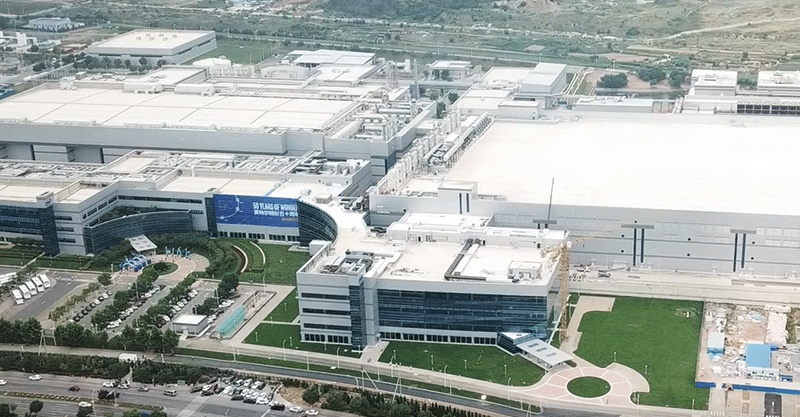
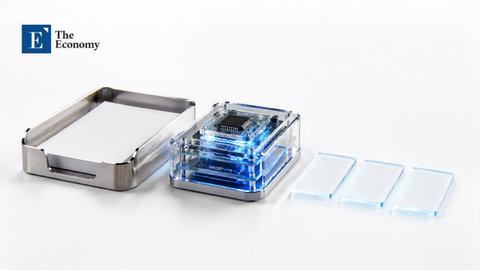
SK hynix is reportedly considering selling its subsidiary Solidigm, yet the company has not found the right moment to act. Formed after SK hynix invested more than $7.1 billion to acquire Intel’s NAND assets, Solidigm has seen an earnings rebound thanks to improving market conditions. Even so, listing uncertainty and restrictions tied to its manufacturing base in China complicate any decision. Industry observers summarize the paradox as follows: “It’s a business you’d want to keep for synergy, but one you might have to sell for geopolitical reasons”—a case of having to sell precisely when it feels most painful to do so.
Production Tied to Dalian, China Becomes a Drag
According to industry sources on the 4th, SK hynix has been reviewing several options for Solidigm’s future, with reports suggesting the company is leaning toward a sale. Solidigm, established in the United States in 2021 as part of SK hynix’s phased acquisition of Intel’s NAND and SSD businesses, handles planning, design, and sales of NAND-based SSDs. SK hynix took over Intel’s NAND fabrication facility in Dalian, China, in December 2021 and paid the remaining $1.93 billion in the first half of this year to complete the asset transfer.
Originally, SK hynix had envisioned integrating manufacturing and sales under Solidigm and pursuing a U.S. IPO. However, with Washington tightening export and investment restrictions on China, keeping production under Solidigm became unviable. As a result, manufacturing remained with SK hynix’s Chinese subsidiary (SK hynix Semiconductor Dalian), while Solidigm was left as a sales-centered company with no manufacturing assets. Investment bankers point to this as the main reason for its weakened IPO appeal: a sales-only structure without direct production capabilities makes it difficult to build a compelling listing narrative.
The geopolitical risk of maintaining production in China has further constrained the company. During the approval process for the Intel Dalian acquisition, SK hynix accepted six conditions from Chinese authorities related to pricing and capacity expansion. Later, the U.S. Commerce Department defined “commodity memory” in NAND terms as “128 layers or below,” restricting technology upgrades. The CHIPS Act also increased export-control scrutiny, effectively banning the import of advanced semiconductor equipment such as EUV lithography tools. As a result, SK hynix’s initial plan to expand and upgrade the Dalian fab effectively stalled.
Investment delays stemmed from the same issues. Although a groundbreaking ceremony for the Dalian No. 2 fab was held in 2022, the project never advanced to the stage of major tool installations. While SK hynix had hoped that obtaining Verified End User (VEU) status from the U.S. government would ease restrictions, key equipment imports and expansion remain unresolved. One industry source noted, “Growing Solidigm internally would be the ideal strategy, but it’s no longer feasible when the Chinese production base can’t operate as planned.”
A Market Rebound Creates a Moment When a Sale Is Possible
What makes the situation more complicated is that Solidigm’s performance has only just begun to turn around. In the first quarter, SK hynix returned to profitability for the first time in seven quarters, posting consolidated revenue of about $8.86 billion and operating profit of $2.06 billion, both exceeding market expectations. Analysts cited Solidigm’s recovery as a key driver of NAND profitability, as rising demand for AI server storage boosted enterprise SSD sales and NAND average selling prices climbed as much as 28% quarter-over-quarter.
That stands in stark contrast to just a year or two ago. In the first half of 2023, SK hynix recorded a consolidated operating loss of about $4.49 billion, with roughly 80% of that stemming from the NAND segment. Solidigm posted revenue of about $0.91 billion and a net loss of $1.60 billion, reinforcing the then-prevailing assessment that “unlike DRAM, NAND is harder to differentiate technologically and far more competitive, so the downcycle hit it hardest.” Some analysts even labeled the deal an “unfortunate acquisition.”
Financial concerns also mounted. The state-run lenders that financed the acquisition—KDB, Korea Eximbank, and NongHyup Bank—formed a task force to monitor SK hynix’s debt-repayment risks. They feared that if U.S. restrictions on equipment exports to China persisted, tool conversions at Dalian would stall, yield improvements would slow, and financial soundness would erode. There was even speculation of a fire sale, but Solidigm denied any plans to sell its China fab, emphasizing that it intended to maintain normal operations under relaxed CHIPS Act guardrail provisions (allowing up to 5% capacity expansion in China over 10 years) and extended regulatory exemptions.
Against that backdrop, the current NAND recovery is significant because it provides SK hynix with an opportunity to exit a previously loss-making business. Still, structural constraints persist—dependence on Chinese production, U.S.–China tech rivalry, and heavy borrowing all remain obstacles. While improving profitability has created a “sellable” moment, unresolved geopolitical and financial risks mean the window may be narrow.
Taking Stock of the Sell-Versus-Keep Choices
This is also why SK hynix cannot indefinitely delay a decision on Solidigm. Despite clearer earnings momentum since last year, investor sentiment on a potential IPO remains skeptical. Industry projections call for companywide revenue of about $6.43 billion this year and $7.86 billion next year, buoyed by NAND tailwinds and Solidigm’s performance, yet fundamental constraints—such as production dependence on China and a limited IPO narrative—are expected to persist.
Two main scenarios are being weighed. The retention scenario rests on synergy gains and financial stabilization. Solidigm recorded its first annual profit since the acquisition and escaped capital impairment. The company has scaled back its consumer SSD segment to focus on high-capacity data-center drives, improving its NAND portfolio with QLC-based large-capacity products. On that basis, the case for retaining Solidigm appears solid. However, its continuing reliance on Chinese production leaves it vulnerable to global policy and regulatory volatility.
The sale scenario, by contrast, would leverage Solidigm’s current recovery and valuation momentum to mitigate policy and production-base risks while monetizing the asset. This approach would avoid IPO uncertainty and secure liquidity, but at the cost of forfeiting future synergy opportunities. It would also require intricate structuring of valuation, technology and brand continuity, long-term supply, and workforce transition. In essence, whether SK hynix chooses to hold or sell, both paths demand navigating the same fundamental constraints—policy exposure and dependence on a Chinese production base.
Stefan Schneider brings a dynamic energy to The Economy’s tech desk. With a background in data science, he covers AI, blockchain, and emerging technologies with a skeptical yet open mind. His investigative pieces expose the reality behind tech hype, making him a must-read for business leaders navigating the digital landscape.
Similar Post