[Productivity Diagnosis] South Korea Trapped in the ‘Low-Productivity Vortex’: Capital Flees, Growth Stalls

Authored On
Modified
Declining labor productivity cuts domestic investment and GDP
Even high-value-added sectors like finance and telecoms mired in stagnation
Shorter working hours without productivity gains become an economic burden
The South Korean economy remains mired in the shadow of low productivity. A slowdown in productivity is eroding domestic investment returns, spurring capital outflows, and further entrenching a vicious cycle of sluggish growth, according to recent analyses. In particular, following the COVID-19 pandemic, the prolonged slump in the service sector, coupled with weak domestic demand and a high-wage, high-cost structure, has rapidly drained corporate investment capacity and undermined competitiveness across industries.
A 0.1% drop in productivity cuts GDP by 0.15%
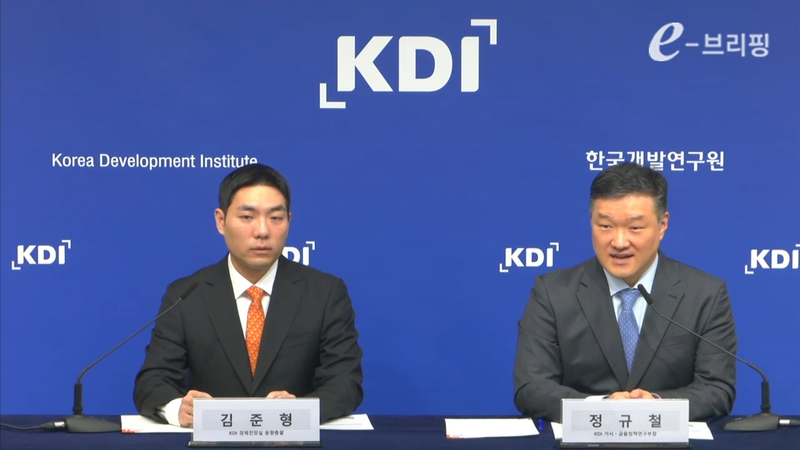
On the 4th, the Korea Development Institute (KDI) released a report titled “Macroeconomic Background and Implications of Increasing Overseas Investment,” analyzing how declining productivity drives overseas investment by corporations and households, amplifying its negative impact on gross domestic product (GDP). According to the report, the share of net overseas investment relative to national income (GDP plus net factor income) surged from 0.7% between 2000 and 2008 to 4.1% between 2015 and 2024—an increase of nearly sixfold. KDI attributed the rise in overseas investment to declining domestic productivity, noting that total factor productivity (TFP) had sharply slowed since the 2000s, depressing domestic returns on investment.
Domestic investment returns began falling below overseas returns in the mid-2000s. From that point, households shifted from selling domestic stocks and bonds to buying foreign assets, fueling the “West Korean retail investor” phenomenon in overseas markets. Corporations likewise expanded foreign facility investments and cross-border mergers and acquisitions (M&A). In essence, the productivity slump has driven capital flight abroad. Japan experienced a similar trajectory: since the 1980s, declining capital profitability reversed the yield gap between domestic and overseas investments, boosting outbound investment. As economic vitality waned, a growing share of national income became dependent on foreign investment returns.
KDI estimated that when domestic productivity falls by 0.1%, corporations increase overseas investment while reducing domestic capital input by an average of 0.05%, leading to a 0.15% contraction in GDP. This implies that domestic capital stock (the total fixed capital at a given time) declines by about 1.5 times the rate of productivity loss. The decline in productivity thus directly drags down GDP while simultaneously shrinking domestic capital, compounding the downturn. The report noted that such shocks disproportionately hurt those who rely more on labor income, as capital income lost domestically is offset by gains abroad, leaving the aggregate unchanged.
Service-sector productivity slump deepens post-pandemic
The COVID-19 crisis, which began in 2020, further exacerbated this trajectory. As domestic demand weakened, productivity losses became particularly pronounced in the service sector. According to the Bank of Korea, per-capita labor productivity in private service industries—such as information and communications and wholesale and retail trade—was only 39.7% of that in manufacturing last year. It has stagnated at roughly 40% of manufacturing productivity for nearly two decades since 2005. Quantitatively, services now account for 44% of nominal GDP and 65% of total employment, but qualitatively, the sector continues to underperform.
Even high-value-added service industries have only achieved fleeting growth. During the pandemic, productivity surged due to increased demand for non-contact services and digital transformation, but it has since reversed course and remains below pre-pandemic levels. The sector’s contribution to economic growth fell from 1.7 percentage points in 2014–2019 to 1.1 percentage points in 2020–2024, a decline of 0.6 percentage points. Experts attribute this prolonged stagnation to the service sector’s long-standing role as a mere adjunct to manufacturing, failing to develop an independent demand base.
Sectors such as finance, insurance, and information and communications—despite being high value-added—are overly dependent on domestic demand. In knowledge-intensive services, 98% of total sales were concentrated domestically as of 2021, while only 2.2% of firms had any overseas presence. This stands in sharp contrast to the United States, where, since the pandemic, startups and job creation have flourished in cutting-edge service industries. Furthermore, as South Korea’s population began to decline after 2020, shrinking domestic demand has collided with accelerating market entry by global big tech firms like Google and Apple, intensifying the competition for survival.

Wage growth outpacing labor productivity
Wage growth that far outstrips productivity has become another structural burden on the South Korean economy. Since 2018, the nation’s wage growth rate has significantly outpaced labor productivity gains, widening the gap. Between 2000 and 2017, average annual wage growth and labor productivity growth both stood at 3.2%, maintaining equilibrium. However, since 2018, wages have risen by an annual average of 4.0%, while labor productivity has increased by only 1.7%. As wages have climbed without corresponding productivity gains, labor costs have surged, eroding corporate profitability and triggering a vicious cycle of declining investment and employment.
This dynamic has hit labor-intensive industries and small and medium-sized enterprises (SMEs) particularly hard, as sectors with low productivity face higher labor cost burdens. Indeed, since 2018, the return on assets (ROA) of labor-intensive firms has declined far more steeply than that of capital-intensive firms. The ROA drop among SMEs and mid-sized enterprises—1.5 percentage points—was nearly four times that of large corporations (0.4 percentage points). While large firms could offset rising labor costs through automation and digital transformation, smaller firms lacked such capacity, leading to rapid deterioration in profitability. Some sectors have already begun workforce downsizing and hiring freezes.
Experts warn that without productivity improvements, continued wage hikes and reduced working hours will make it increasingly difficult for South Korea to narrow its income gap with advanced economies. They emphasize that boosting productivity through digital transformation and technological innovation must take precedence. As of 2023, South Korea’s GDP per employed person stood at $65,000, ranking 22nd among 36 OECD member countries. This figure is barely half that of Belgium ($125,000) and Iceland ($144,000), both of which have adopted four-day workweeks, and lags far behind France ($99,000), Germany ($99,000), and the United Kingdom ($101,000), which are also trialing four-day workweek systems.
Similar Post