U.S. Accelerates ‘Resource Alliance’ Against China’s Weaponization of Rare Earths, Strengthening Ties with Central Asia, Australia, and Japan

Oliver Griffin is a policy and tech reporter at The Economy, focusing on the intersection of artificial intelligence, government regulation, and macroeconomic strategy. Based in Dublin, Oliver has reported extensively on European Union policy shifts and their ripple effects across global markets. Prior to joining The Economy, he covered technology policy for an international think tank, producing research cited by major institutions, including the OECD and IMF. Oliver studied political economy at Trinity College Dublin and later completed a master’s in data journalism at Columbia University. His reporting blends field interviews with rigorous statistical analysis, offering readers a nuanced understanding of how policy decisions shape industries and everyday lives. Beyond his newsroom work, Oliver contributes op-eds on ethics in AI and has been a guest commentator on BBC World and CNBC Europe.
Authored On
Modified
President Trump Holds C5+1 Summit with Central Asian Leaders
Washington Expands Multilateral Cooperation on Rare Earths with Australia and Japan
Analysts Warn China’s 40-Year Strategy Cannot Be Undone Overnight
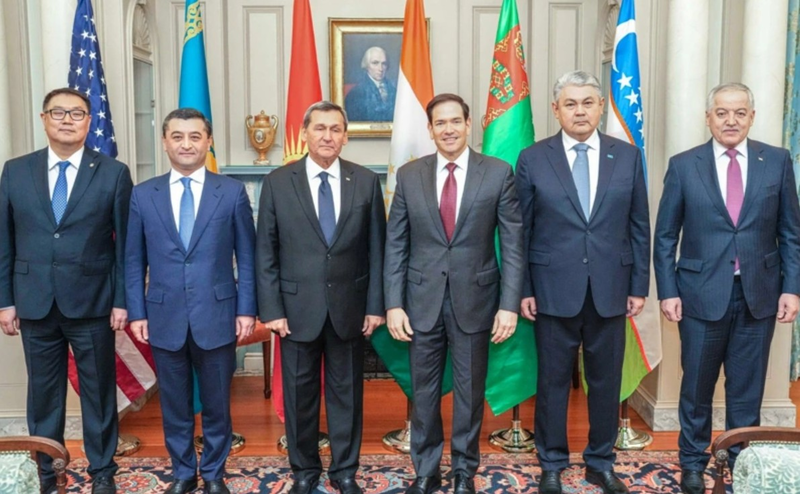
The United States is accelerating efforts to restructure global resource supply chains in response to China’s dominance over rare earths. President Donald Trump hosted the leaders of five Central Asian nations at the White House to discuss cooperation on mineral development and supply diversification, while simultaneously deepening trilateral coordination with Australia and Japan through a series of rare earth and critical mineral agreements. Yet experts caution that dismantling the supply-chain resilience China has built over four decades will not be achieved in the short term.
Kazakhstan Discovers 20 Million-Ton Rare Earth Deposit
According to the Associated Press on November 6 (local time), President Trump held a summit and dinner with the presidents of Kazakhstan, Kyrgyzstan, Tajikistan, Turkmenistan, and Uzbekistan at the White House. The meeting marked the 10th anniversary of the C5+1 diplomatic framework between the U.S. and Central Asia — and was the first time a U.S. president had hosted these leaders in Washington. Foreign media characterized the event as a strategic bid to secure alternative supply routes for critical minerals essential to advanced manufacturing and weapons systems, bypassing China’s control.
The summit took place shortly after President Trump reached a temporary truce with Chinese President Xi Jinping on rare earth export restrictions. China currently dominates 70% of global rare earth mining and 90% of refining, wielding substantial influence over the world’s supply chain. Since April, Beijing has imposed strict export restrictions on seven key rare earth elements — including dysprosium, yttrium, and samarium — in retaliation for U.S. tariffs, effectively halting exports. However, following last week’s U.S.-China summit in Seoul, China agreed to suspend the restrictions for one year.
Against this backdrop, Central Asia is emerging as a key strategic partner for Washington. The region boasts abundant rare earth deposits and supplies nearly half of the world’s uranium used for nuclear power. Yet its economies remain heavily dependent on China and Russia for mineral exports. In 2023, Kazakhstan exported $3.07 billion worth of critical minerals to China and $1.8 billion to Russia, while shipments to the United States totaled just $544 million.
In April, Kazakhstan announced the discovery of a rare earth deposit estimated to exceed 20 million tons, located 420 kilometers from the capital, Astana. According to the Ministry of Industry and Construction, the site contains neodymium, cerium, lanthanum, and yttrium, with a rare earth content of approximately 700 grams per ton. Details on the developer and project timeline have yet to be disclosed, but once verified, Kazakhstan would rank third globally in rare earth reserves, following China and Brazil.
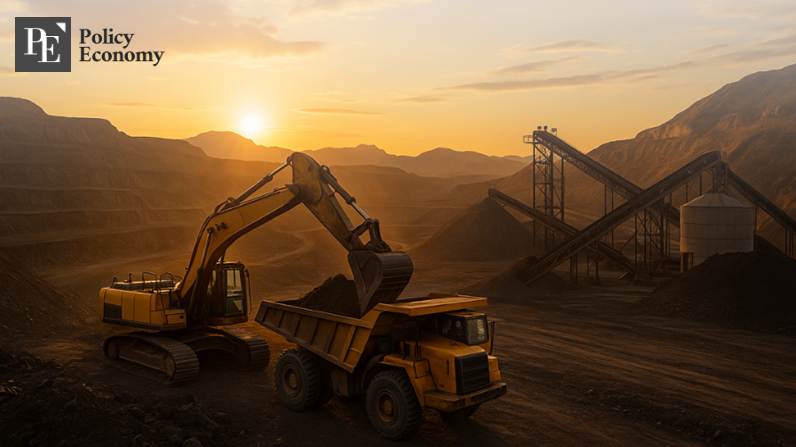
$3 Billion U.S.-Australia Cooperation in Rare Earth Mining and Refining
Washington’s push to secure rare earth supplies extends beyond Central Asia. The United States has also deepened cooperation with resource-rich Australia. On October 20, President Trump and Australian Prime Minister Anthony Albanese signed the “U.S.-Australia Framework for Securing Critical Mineral and Rare Earth Supply Chains” at the White House. The agreement states that both nations aim to strengthen “resilience and stability across mining, separation, and processing of critical minerals and rare earths.”
The two governments will mobilize a range of financial instruments — including guarantees, loans, equity investments, and regulatory incentives — to finance extraction and refining projects. According to a White House fact sheet, more than $3 billion will be invested over the next six months. The U.S. Export-Import Bank will contribute $2.2 billion, while the Department of Defense will directly invest in a new gallium refinery in Australia with an annual capacity of 100 tons. The value of resources secured through these projects is projected to reach $53 billion.
The U.S. has also signed a rare earth cooperation framework with Japan to counter China’s resource weaponization. On October 28, President Trump and Japanese Prime Minister Sanae Takaichi met in Tokyo and adopted a framework for “joint mining and processing of critical minerals and rare earths.” According to the White House document released at the time, the accord’s objective is to “accelerate stable supply of critical minerals and rare earths through coordinated investment and cooperation,” underscoring the shared intent to resist China’s strategic leverage over resources.
U.S. Rare Earth Industry Collapsed After 2000s Environmental Crackdown
Despite Washington’s rapid response, experts note that America cannot easily reverse China’s decades-long advantage. Unlike the United States, which relies heavily on foreign imports, China has long recognized the strategic importance of resource self-sufficiency and has methodically strengthened its domestic ecosystem. U.S. Treasury Secretary Scott Besant remarked in a CNN interview on November 2 that “China has been preparing this plan for 25 to 30 years while the U.S. grew complacent.”
The U.S. was once the world’s top rare earth producer. However, after a radioactive wastewater leak at the Mountain Pass refinery in California in 1998 and the subsequent tightening of environmental regulations in the 2000s, nearly all U.S. mines and processing plants shut down. The industry effectively collapsed as policymakers viewed rare earths merely as niche industrial metals rather than national security assets. Although Washington later attempted to revive the sector through the reopening of Mountain Pass, efforts were repeatedly thwarted by China’s export controls and price undercutting.
Meanwhile, Beijing’s concentration strategy has been systematically advanced over four decades. In 1986, China enacted the “Mineral Resources Law,” designating rare earths as strategic national assets. By 1991, foreign companies were banned from independent exploration and development, and mining rights were restricted to government-approved entities. A year later, in 1992, Deng Xiaoping famously declared, “The Middle East has oil; China has rare earths,” calling them “the oil of the 21st century.” Since then, through policies such as the “12th Five-Year Plan for Rare Earth Industry Development” and “Made in China 2025,” Beijing has institutionalized rare earths as a central pillar of national industrial and security strategy.
Oliver Griffin is a policy and tech reporter at The Economy, focusing on the intersection of artificial intelligence, government regulation, and macroeconomic strategy. Based in Dublin, Oliver has reported extensively on European Union policy shifts and their ripple effects across global markets. Prior to joining The Economy, he covered technology policy for an international think tank, producing research cited by major institutions, including the OECD and IMF. Oliver studied political economy at Trinity College Dublin and later completed a master’s in data journalism at Columbia University. His reporting blends field interviews with rigorous statistical analysis, offering readers a nuanced understanding of how policy decisions shape industries and everyday lives. Beyond his newsroom work, Oliver contributes op-eds on ethics in AI and has been a guest commentator on BBC World and CNBC Europe.
Similar Post
















