Seven Years After Workforce Regularization, Incheon Airport Faces Profitability Crisis — The Fall of the ‘World’s No.1 Airport’

Matthew Reuter is a senior economic correspondent at The Economy, where he covers global financial markets, emerging technologies, and cross-border trade dynamics. With over a decade of experience reporting from major financial hubs—including London, New York, and Hong Kong—Matthew has developed a reputation for breaking complex economic stories into sharp, accessible narratives. Before joining The Economy, he worked at a leading European financial daily, where his investigative reporting on post-crisis banking reforms earned him recognition from the European Press Association. A graduate of the London School of Economics, Matthew holds dual degrees in economics and international relations. He is particularly interested in how data science and AI are reshaping market analysis and policymaking, often blending quantitative insights into his articles. Outside journalism, Matthew frequently moderates panels at global finance summits and guest lectures on financial journalism at top universities.
Authored On
Modified
Aftermath of the Moon Administration’s ‘Zero Irregular Workers’ Policy
Revenue up only 5%, while subsidiary service costs surge 88%
Plunging profitability and declining global competitiveness
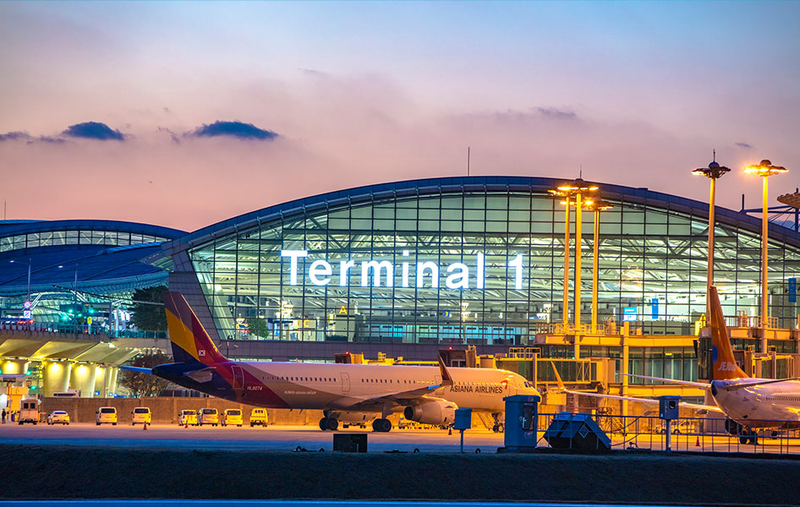
Once hailed as the premier hub of Northeast Asia and one of the world’s leading airports, Incheon International Airport is now facing a severe profitability crisis. While revenue has inched up, net income has plunged to less than half, and the surge in fixed costs following mass workforce regularization is squeezing its financial structure. The politically driven “Zero Irregular Workers” policy, promoted under the banner of enhancing public service, has eroded operational efficiency. Mounting losses in both domestic operations and overseas projects have further shaken the airport’s global competitiveness.
Net Income Falls from $8.4 Billion to $3.6 Billion
According to Incheon International Airport Corporation (IIAC) on November 7, the airport’s revenue rose from $18.3 billion in 2017 to $19.2 billion last year, an increase of about 5%. In contrast, net income plunged from $8.4 billion in 2017 to $3.6 billion in 2024. While large-scale spending on Phase 4 expansion projects and the unforeseen COVID-19 pandemic played a role, the most significant factor has been the surge in fixed costs following the Moon Jae-in administration’s 2017 workforce regularization policy.
From 2018 to 2020, in line with the government directive, IIAC established three subsidiaries — Incheon Airport Facilities Management, Incheon Airport Operations Services, and Incheon International Airport Security — to convert 9,500 subcontracted irregular workers into full-time employees under these subsidiaries. However, the policy’s rushed implementation, focused solely on the political slogan of “Zero Irregular Workers,” has generated multiple inefficiencies.
For instance, these three subsidiaries now monopolize all Incheon Airport contracts and receive payments from IIAC proportional to their workforce size, with a guaranteed 10% profit margin. Consequently, about 120 regular employees are assigned solely to handle parking fee settlements — a task that has been automated in most other domestic parking facilities. Despite public familiarity with unmanned systems, Incheon Airport maintains 120 full-time staff for this simple function, all funded by taxpayer money. Another 20 regular employees sell bus tickets. These subsidiaries have focused more on maintaining and expanding headcount rather than improving efficiency or innovation.
This has directly increased the airport’s financial burden. Since the workforce regularization policy took effect, IIAC’s payments to subsidiaries for contracted services surged 88%, from $2.7 billion in 2017 to $5.1 billion last year. Consequently, IIAC fell into deficit. During the pandemic years from 2020 to 2022, the airport recorded a cumulative loss of $14.4 billion, while the subsidiaries posted profits — a stark contrast. The cost per work load unit (WLU) at Incheon Airport jumped 80.1%, from $8.0 in 2017 to $14.4 in 2023, exceeding the cost growth seen at other major airports such as Heathrow (25%), Changi (64%), and Frankfurt (65.6%).
Court Rules in Favor of Workers Denied Direct Employment
Amid continuing fixed-cost pressures, IIAC now faces the prospect of turning fully loss-making within a decade — and with recent court rulings favoring employees, its outlook appears even bleaker. The legal battle dates back to 2020. IIAC had been the flagship example of the Moon administration’s campaign to eradicate irregular employment in the public sector. Just two days after taking office in May 2017, then-President Moon Jae-in visited Incheon Airport as his first official engagement, pledging to convert all irregular public-sector workers to regular positions. Then-IIAC President Jeong Il-young promised regularization for roughly 10,000 workers.
However, the ensuing controversy over fairness and “reverse discrimination” — the so-called “Incheon Airport incident” — ignited fierce social debate. While the policy offered job stability for irregular workers, it became a symbol of unfairness for many younger job seekers. Consequently, in December 2017, IIAC’s first labor-management-expert council decided to directly hire about 1,900 security screening workers, but the plan was later altered in February 2020 to indirect employment through subsidiaries. In response, 1,200 of those workers filed lawsuits demanding recognition as direct employees and seeking wage differentials totaling $260 million.
The key legal issue centered on the workers’ employment status. In its 100-page appeal, IIAC argued that “the plaintiffs were employees of subcontracted firms, not under a dispatch employment relationship,” claiming the arrangement was a “legitimate service contract.” The workers countered that they were effectively working under IIAC’s supervision and control, constituting an unlawful dispatch and entitling them to direct employment. In May, after nearly four years of proceedings, the Incheon District Court’s Civil Division 11 (Presiding Judge Kim Yang-hee) ruled partially in favor of the plaintiffs, recognizing their legal status as IIAC employees.
Global Expansion Amid Fading Competitiveness
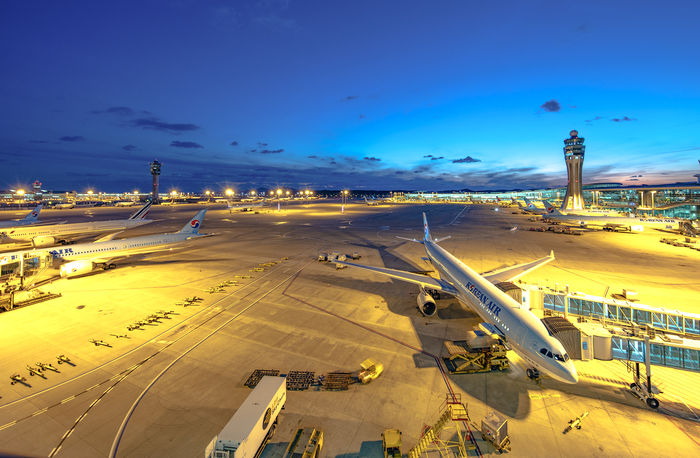
Industry analysts warn that the current state of IIAC could weaken its global competitiveness. As the airport pursues overseas expansion, the disclosure of domestic financial woes could erode its credibility and tarnish its reputation as the “world’s No.1 airport.” Traditionally focused on consulting services for other international airports, IIAC has recently sought to diversify through active participation in public-private partnership (PPP) projects abroad. Unlike consulting or technical assistance contracts, which are small in scale and difficult to expand, PPP projects allow long-term operations and dividend-based returns on equity, offering greater revenue potential.
According to IIAC, it has secured airport-related projects in six countries, including the Manila PPP in the Philippines and the Batam PPP in Indonesia, with 78 contracts currently in operation across Manila, Batam, Kuwait, and Vietnam. The company also recently signed a PPP agreement with Uzbekistan Airports for the Urgench Airport development and operation project. Under this deal, IIAC and the Korea Overseas Infrastructure & Urban Development Corporation (KIND) will jointly invest $144 million to construct a passenger terminal, cargo terminal, and related facilities capable of handling three million passengers annually, operating the airport for 19 years to generate profit.
However, IIAC has reported substantial losses even in its major consulting and investment projects. Its consulting work at Soekarno-Hatta Airport in Jakarta, Indonesia (2013–2015), posted a return of –76%, wiping out over three-quarters of the invested capital. Although it earned about $6.6 million in revenue from overseeing the airport expansion project, the costs and labor expenditures incurred in securing and executing the contract resulted in a net loss. Similar red ink was seen in Cambodia’s Siem Reap New Airport ICT consulting (–56%) and Iran’s Imam Khomeini Airport technical assistance project (–47%).
Current investment projects are faring no better. The Manila Ninoy Aquino International Airport development and operation venture, which IIAC touted as a major success early last year, is running at a –164% deficit, while the Batam Hang Nadim Airport project stands at –46%. Over the past 15 years, IIAC’s overseas operations have generated $2.3 billion in revenue, but after accounting for $2.2 billion in expenditures and $14 million in equity-method losses, cumulative operating profit amounts to just $77 million — a mere 3.4% average return. With the Kuwait International Airport Terminal 4 concession, which accounts for 90% of overseas sales, set to expire next year, the deficit is likely to deepen further. An industry economist commented, “The global competitiveness and national symbolism of an airport stem not only from its infrastructure but from managerial competence. The fact that IIAC is posting losses both domestically and overseas raises serious doubts about its ability to design and operate airports efficiently.”
Matthew Reuter is a senior economic correspondent at The Economy, where he covers global financial markets, emerging technologies, and cross-border trade dynamics. With over a decade of experience reporting from major financial hubs—including London, New York, and Hong Kong—Matthew has developed a reputation for breaking complex economic stories into sharp, accessible narratives. Before joining The Economy, he worked at a leading European financial daily, where his investigative reporting on post-crisis banking reforms earned him recognition from the European Press Association. A graduate of the London School of Economics, Matthew holds dual degrees in economics and international relations. He is particularly interested in how data science and AI are reshaping market analysis and policymaking, often blending quantitative insights into his articles. Outside journalism, Matthew frequently moderates panels at global finance summits and guest lectures on financial journalism at top universities.
Similar Post