China’s ‘Space Ambition’ Closing in on the U.S., Building a Self-Sufficient Industry Through Massive State Investment

Anne-Marie Nicholson is a fearless reporter covering international markets and global economic shifts. With a background in international relations, she provides a nuanced perspective on trade policies, foreign investments, and macroeconomic developments. Quick-witted and always on the move, she delivers hard-hitting stories that connect the dots in an ever-changing global economy.
Authored On
Modified
China, once isolated in global space development
accelerates industrialization under state-led initiatives
Becoming America’s most formidable rival in space
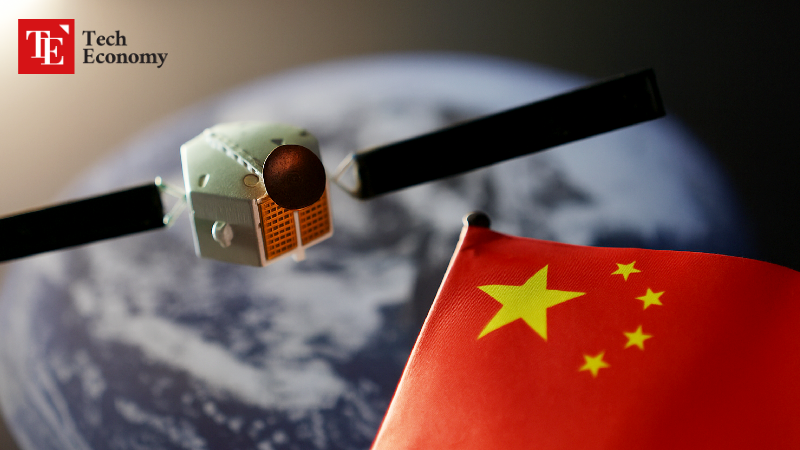
China, which has aggressively invested in the space industry under its “space power” strategy, is now emerging as the United States’ strongest competitor. Whereas the Cold War era pitted the U.S. against the Soviet Union, China has now elevated its technological capability to a level comparable with that of Washington. Through massive government investment, Beijing has built an independent industrial ecosystem that now spans reusable launch vehicles, low Earth orbit (LEO) satellites, and deep-space exploration — a “triple-axis” model that is reshaping the global space hierarchy.
China’s Goal: Becoming a Major Space Power
According to the South China Morning Post (SCMP) on November 12, the Chinese government has defined outer space as a “new strategic frontier essential to national security” and plans to ramp up large-scale investment. In its recently announced 15th Five-Year Plan (2026–2030), China identified the establishment of itself as a “major space power” as a key national objective. This plan marks a further step beyond the previous 14th Five-Year Plan (2021–2025), which focused on becoming a powerhouse in science and technology, culture, education, talent, sports, manufacturing, quality, the internet, and digital sectors. Analysts view the emphasis on LEO satellite networks and sixth-generation (6G) communication as a direct challenge to U.S. technological dominance.
According to China’s State Council, the country is strengthening its space infrastructure and technological base through the National Space Administration (CNSA) and the China Aerospace Science and Technology Corporation (CASC), which oversee and support domestic space enterprises. Particularly in reusable launch vehicles—a field effectively monopolized by Elon Musk’s SpaceX—China is seen as the fastest-rising challenger. The CNSA developed the Long March series of rockets and successfully constructed its own space station, Tiangong. Late last year, China conducted a nine-hour extravehicular activity, setting a world record for the longest spacewalk, and became the first country to collect soil samples from the far side of the Moon, ahead of the U.S. The CNSA is currently developing the Long March 9, a reusable rocket slated for launch in 2033.
China’s state-owned aerospace giant, the Aviation Industry Corporation of China (AVIC), is also developing Haolong, a reusable rocket resembling NASA’s Space Shuttle designed for cargo transport. The first test flight is scheduled for next year. Private companies are joining the race as well. Deep Blue Aerospace conducted a vertical landing test flight of its reusable rocket Nebula-1 in September last year. The rocket ascended to about 5 kilometers before landing; although it lost balance and exploded upon touchdown, the landing sequence was deemed a technical success, demonstrating significant progress in reusable rocket technology. Deep Blue Aerospace plans to retry Nebula-1’s flight test this year. Other firms such as Space Pioneer and Galactic Energy are also gaining attention in reusable and small launch vehicle development. China now has over 430 space-related enterprises, with dozens of successful commercial launches already completed.
China is also advancing in asteroid exploration. On May 29, the country launched its first asteroid probe, Tianwen-2, from the Xichang Satellite Launch Center in Sichuan Province at 1:31 a.m., aboard a Long March 3B Y110 rocket. About 18 minutes after liftoff, Tianwen-2 entered its trajectory toward the target asteroid, 469219 Kamoʻoalewa. The CNSA later confirmed that the probe’s solar panels had fully deployed and systems were operating normally, declaring the launch a success. Tianwen-2 is expected to approach the near-Earth asteroid Kamoʻoalewa, collect samples, and return to Earth orbit by late 2027, releasing a capsule containing the samples into the atmosphere. If successful, China will become the third country—after Japan and the United States—to collect asteroid material.
Expanding into Space Tourism
Building on its rapidly maturing ecosystem, China is preparing to construct an unmanned lunar base by 2027 and conduct a crewed lunar mission by 2030, while also accelerating the commercialization of space travel. The commercial space firm CASIC Space Technology (Zhongke Yuhang) plans to conduct its first space tourism flight in 2027, with human flights beginning as early as 2028. The company’s spacecraft features four panoramic windows and seating for seven passengers, with ticket prices projected between approximately USD 280,000 and USD 430,000 per person.
Another private firm, CAS Space, supported by the Chinese Academy of Sciences (CAS), is developing commercial launch vehicles that will also carry tourists into suborbital space. The company aims to reach altitudes exceeding 100 kilometers—the Kármán line, the recognized boundary of space—providing a 10-minute experience for up to seven passengers aboard a reusable rocket. The design of CAS Space’s rocket and capsule reportedly resembles Blue Origin’s New Shepard and SpaceX’s Crew Dragon capsule. The passenger capsule will return to Earth via three parachutes.
If China’s space tourism initiatives materialize, competition with American private space firms will intensify. Currently, the major players in space tourism include Virgin Galactic, SpaceX (founded by Musk in 2002), and Blue Origin (founded by Jeff Bezos in 2000). While some analysts note that Blue Origin took six years to progress from its first uncrewed flight in 2015 to its first crewed mission in 2021—highlighting the ambitious pace of China’s plans—many believe China’s government backing could allow its firms to shorten this timeline significantly compared with their U.S. counterparts.
Not a Follower, but a Pace Setter in the Space Race
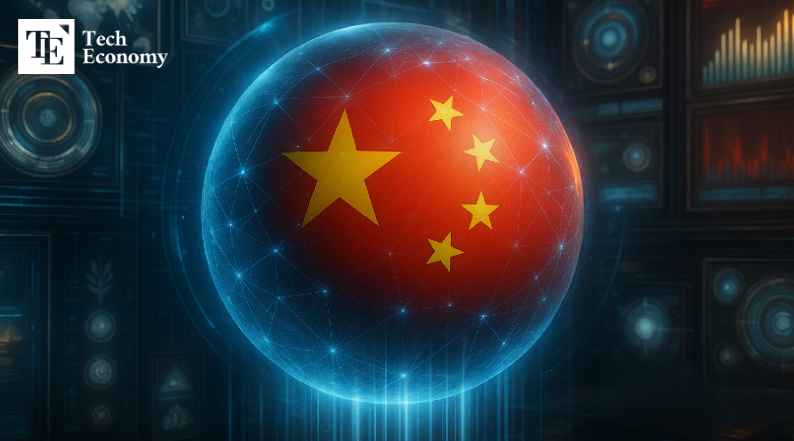
The U.S. now views China not merely as a latecomer but as a genuine pace setter in the space race. Washington increasingly sees Beijing as a rival capable of outpacing it across multiple domains. The Commercial Spaceflight Federation (CSF) stated in its September report, Redshift, that China’s rapid ascent in space stems from three pillars: sustained infrastructure investment, dominance in low Earth orbit, and breakthroughs in deep-space exploration. The report’s title, “Redshift,” refers to the phenomenon of a galaxy’s light stretching toward the red end of the spectrum as it moves away—symbolizing China’s acceleration and the shifting of the global space order. Once a peripheral player, China is now seen as a challenger to U.S. supremacy in just two decades.
In terms of infrastructure, China now operates six launch sites simultaneously and has even established sea-based launch platforms, dramatically increasing its annual launch cadence. The number of private rocket firms has risen to more than 12, and total investment in the commercial space sector between 2015 and 2024 has reached approximately USD 11.4 billion. Tiangong, China’s space station currently in LEO, is expected to become the only government-operated space station once the International Space Station (ISS) retires, further expanding Beijing’s influence.
China is also achieving notable success in deep-space exploration. In 2019, its Chang’e 4 became the first spacecraft in history to land on the far side of the Moon. Last year, Chang’e 6 again made global headlines by collecting lunar soil samples from the far side—a world first. China’s stated goals include a crewed lunar landing by 2030, a Mars sample return mission by 2031, and the construction of a lunar base by 2035. Furthermore, through its “Space Silk Road” initiative, China is promoting partnerships across Asia, Africa, and Latin America by offering integrated packages covering satellite manufacturing, launch services, ground station construction, and data centers. Western governments warn that such arrangements could leave participating nations financially dependent on Beijing’s long-term loans and maintenance support—risking alignment with Chinese digital and space standards.
To curb China’s rise, the U.S. codified the “Wolf Amendment,” prohibiting NASA from using government funds to cooperate with Chinese government agencies or companies. The policy effectively excluded China from numerous international space projects led by the U.S. However, China’s rapid advances in reusable launch technology have undermined the effectiveness of such containment efforts. According to the CSF, the speed of China’s space industry development now parallels the progress seen across the Apollo era, the ISS era, and the “New Space” commercial era—all unfolding simultaneously. From lunar exploration to LEO operations and satellite communications, China’s explosive momentum is reshaping the global space order. The report warns that unless the U.S. and its allies act swiftly, the architecture of space—both lunar and orbital—could shift decisively under Chinese leadership by the early 2030s.
Anne-Marie Nicholson is a fearless reporter covering international markets and global economic shifts. With a background in international relations, she provides a nuanced perspective on trade policies, foreign investments, and macroeconomic developments. Quick-witted and always on the move, she delivers hard-hitting stories that connect the dots in an ever-changing global economy.
Similar Post