China’s Belt and Road Initiative Sinks into $1 Trillion Debt Trap as Its Aid Diplomacy Reaches Limits

Matthew Reuter is a senior economic correspondent at The Economy, where he covers global financial markets, emerging technologies, and cross-border trade dynamics. With over a decade of experience reporting from major financial hubs—including London, New York, and Hong Kong—Matthew has developed a reputation for breaking complex economic stories into sharp, accessible narratives. Before joining The Economy, he worked at a leading European financial daily, where his investigative reporting on post-crisis banking reforms earned him recognition from the European Press Association. A graduate of the London School of Economics, Matthew holds dual degrees in economics and international relations. He is particularly interested in how data science and AI are reshaping market analysis and policymaking, often blending quantitative insights into his articles. Outside journalism, Matthew frequently moderates panels at global finance summits and guest lectures on financial journalism at top universities.
Authored On
Modified
Indonesia’s High-Speed Rail Project in Deficit Amid Unpaid Debt
Thailand and Malaysia Cut Reliance on Chinese Loans Through Renegotiation
‘Debt Trap’ Allegations Mount as Developing Nations Default on Chinese Credit
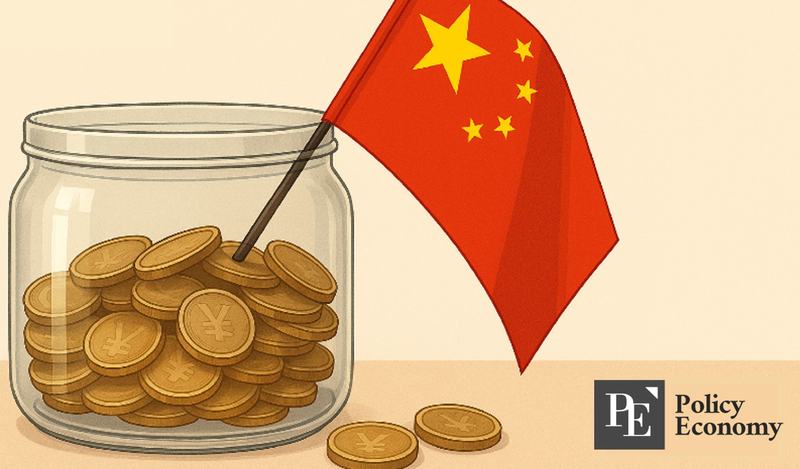
China’s ambitious Belt and Road Initiative (BRI) is now mired in a mounting debt crisis, threatening the foundations of Beijing’s flagship global strategy. Infrastructure projects across Southeast Asia and Africa, financed by Chinese capital, are struggling even to meet interest payments, pushing China’s outstanding overseas debt past $1 trillion. Experts warn that if China’s loan-based diplomacy falters alongside the United States’ retreat from international aid, the global development finance system could face systemic disruption.
Southeast Asian Nations Grapple with Debt from Chinese-Funded Infrastructure
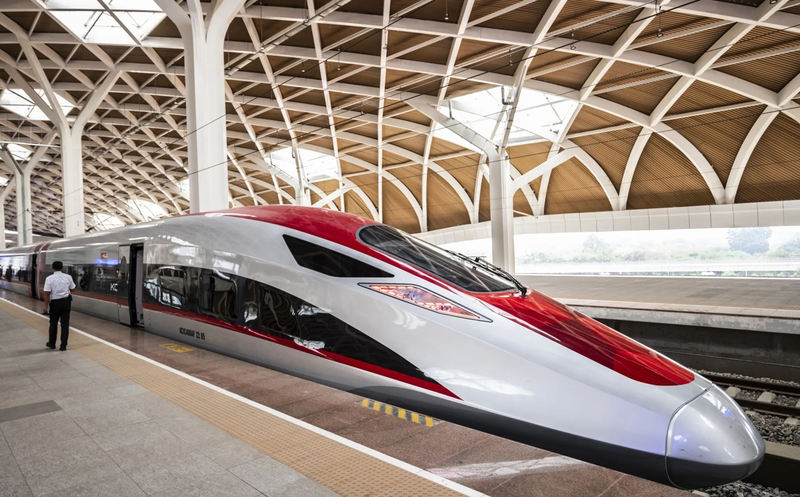
According to the Financial Times on November 11 (local time), the Indonesian government has begun debt restructuring talks with Beijing as the high-speed rail project Whoosh, built with Chinese financing, continues to post heavy losses. Opened in October 2023, the line connects Jakarta with Bandung over 145 kilometers, cutting travel time from three hours to just 45 minutes. Yet stations located far from city centers and high ticket prices have stifled ridership. Average daily passengers number around 16,400—far short of the 50,000–77,000 initially projected.
The Whoosh project exemplifies the BRI’s business model: financed largely by Chinese loans and constructed by a joint venture involving Chinese firms. The China Development Bank (CDB) provided 75% of the project’s financing. In 2015, Indonesia rejected Japan’s offer of a 0.1% interest loan with a sovereign guarantee in favor of China’s 2% interest loan that required no government backing. But construction costs ballooned from $5.6 billion to $7.4 billion, driving up debt service burdens. Annual interest payments alone now reach about $120 million.
Indonesia is not alone. Thailand and Malaysia have also moved to reduce exposure to Chinese debt through renegotiation. Thailand, ahead of approving Phase 2 of its Bangkok–Laos–Kunming rail project in February, reduced Chinese capital participation. Malaysia likewise restructured its East Coast Rail Link (ECRL) project to cut China’s stake, agreeing to split losses equally. Former Prime Minister Mahathir Mohamad, who led the talks, even threatened to cancel the project over corruption allegations tied to the previous administration’s deal with Beijing.
Rising Defaults in Africa as Zambia and Ghana Fall into Debt Distress
Launched in 2013 under President Xi Jinping, the Belt and Road Initiative sought to build a “New Silk Road” through highways, railways, ports, dams, and power plants across the developing world. More than 140 countries across Asia, Europe, and Africa have joined. In its early phase, China—through institutions like the CDB—was seen as a generous financier, offering loans without stringent conditions on governance or human rights. Yet uncontrolled lending has since fueled debt explosions in many nations, reviving allegations of Beijing’s “debt-trap diplomacy.”
Developing nations now owe China at least $1.1 trillion in outstanding obligations. Sri Lanka’s Hambantota Port and Kenya’s Standard Gauge Railway have become symbols of unsustainable debt and opaque lease agreements, while Zambia and Ghana both defaulted in 2020. Twelve African nations, including Kenya, are currently facing similar debt distress. Kenya’s so-called “Railway to Nowhere”—abandoned mid-construction in a cornfield after Chinese funding dried up—has come to epitomize the perils of overreliance on Beijing’s credit.
China’s own financial vulnerabilities are deepening. According to the International Monetary Fund (IMF), the country’s total social financing reached 309% of GDP in the first half of this year, a 6-point jump in just six months. The IMF noted that over half of the global debt-to-GDP increase since 2008 originated from China. Meanwhile, Beijing’s strategic alliances are weakening: Russia, a key BRI partner, has seen its national capacity eroded by the prolonged war in Ukraine. Chinese Foreign Minister Wang Yi recently acknowledged that “a Russian defeat would shift America’s strategic focus directly onto China,” underscoring Beijing’s growing diplomatic and security dilemma.
Global Aid Framework at Risk as Both U.S. and China Retreat
Analysts warn that the erosion of the Belt and Road Initiative’s momentum could reverberate across the global financial system. With Washington scaling back foreign assistance under President Donald Trump—most notably through cuts to the U.S. Agency for International Development (USAID)—a simultaneous contraction of China’s loan-driven aid could leave a critical vacuum in development finance. This would disrupt capital flows to emerging economies, aggravating liquidity shortages and economic instability across the Global South.
The consequences of U.S. retrenchment are already visible. The suspension of USAID programs has disrupted a wide range of initiatives in Southeast Asia, including healthcare, landmine clearance, and education. Established in 1961, USAID has long served as the primary channel for America’s bilateral foreign aid, operating in over 60 countries and supporting humanitarian programs in more than 130 developing nations. However, the Trump administration in January declared that “the foreign aid bureaucracy no longer aligns with U.S. interests,” imposing a 90-day freeze that led to the cancellation of over 80% of USAID’s programs, according to the State Department.
One stark example is the Mae Tao Clinic near the Thai–Myanmar border, which provides free medical care to refugees. The facility, USAID’s second-largest beneficiary, relied on U.S. funding for roughly 20% of its annual budget. The aid freeze has halted the purchase of essential medical equipment such as incubators and disrupted staff training. In Indonesia, USAID-backed HIV and tuberculosis prevention programs have been suspended; in the Philippines, elementary education support has been delayed; and in Vietnam, demining operations tied to the Vietnam War have been severely affected. Together, these developments underscore a growing void in global development leadership—one that neither China’s debt-laden BRI nor the U.S.’s shrinking aid apparatus appears capable of filling.
Matthew Reuter is a senior economic correspondent at The Economy, where he covers global financial markets, emerging technologies, and cross-border trade dynamics. With over a decade of experience reporting from major financial hubs—including London, New York, and Hong Kong—Matthew has developed a reputation for breaking complex economic stories into sharp, accessible narratives. Before joining The Economy, he worked at a leading European financial daily, where his investigative reporting on post-crisis banking reforms earned him recognition from the European Press Association. A graduate of the London School of Economics, Matthew holds dual degrees in economics and international relations. He is particularly interested in how data science and AI are reshaping market analysis and policymaking, often blending quantitative insights into his articles. Outside journalism, Matthew frequently moderates panels at global finance summits and guest lectures on financial journalism at top universities.
Similar Post