Korean Authorities Signal FX Action ㅡ Eye Retail-Driven Dollar Demand

Aoife Brennan is a contributing writer for The Economy, with a focus on education, youth, and societal change. Based in Limerick, she holds a degree in political communication from Queen’s University Belfast. Aoife’s work draws connections between cultural narratives and public discourse in Europe and Asia.
Authored On
Modified
Korean Financial Authorities to Prepare Measures to Stabilize the USD–KRW Exchange Rate
Strong Overseas Stock Buying by Domestic Investors Pushes the Rate Higher
Speculative Retail Investors Fueling the Trend as Illegal Trading Chatrooms Spread
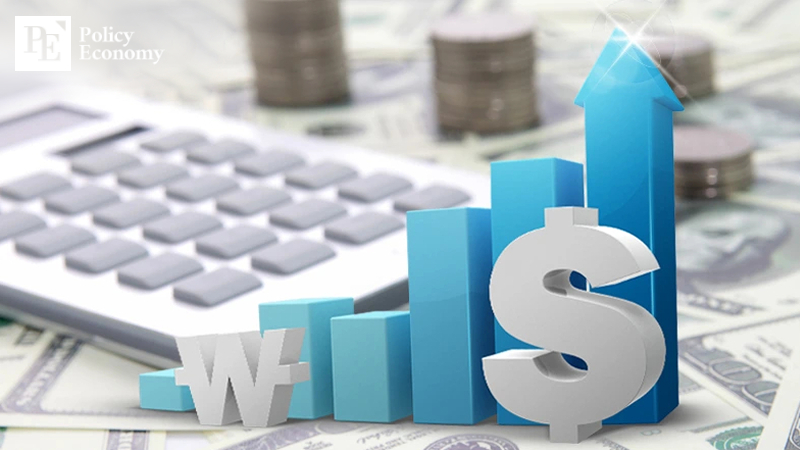
Officials from Korea’s foreign-exchange and financial authorities agreed to use all available tools if the won continues to weaken. With the USD–KRW rate surging and the authorities ramping up verbal intervention, regulators pointed to the sharp rise in overseas investments by Korean investors as a key driver of the market imbalance and growing expectations of further won depreciation.
Financial Authorities Signal Willingness to Step In
On the 14th, Deputy Prime Minister and Finance Minister Koo Yun-cheol held a closed-door meeting to review market conditions, joined by Bank of Korea Governor Rhee Chang-yong, Financial Services Commission Vice Chairman Lee Eok-won, and Financial Supervisory Service Governor Lee Chan-jin. Participants voiced concern over heightened volatility in the USD–KRW rate, which briefly climbed above ₩1,470, and agreed that structural improvements to FX supply and demand are needed.
They also concurred that if FX imbalances driven by outbound investment continue, expectations of a weaker won could become entrenched, adding rigidity to the exchange rate. Koo said the authorities will analyze the factors behind the rate’s rise and coordinate closely with major market players — including the National Pension Service and exporters — to prepare stabilization measures.
A day earlier in the Seoul FX market, the USD–KRW rate had jumped past the ₩1,470 level right after opening and rose as high as ₩1,475.4 by 10:27 a.m. Even on the 14th, the market opened at ₩1,471.9, but fell to the ₩1,456 range by 9:50 a.m. after Koo signaled possible intervention.
Are Retail Investors Driving the Exchange-Rate Surge?
Markets took note of officials pointing to overseas investment as a key source of FX imbalances. This signaled that the authorities view expectations and concentrated flows — rather than fundamentals — as the main force pushing the USD–KRW rate higher. One market analyst said the current exchange-rate movement runs counter to fundamentals such as a falling dollar index and a rebound in Korean equities. He added that surging demand for overseas assets among retail investors — the so-called seohak ants — has sharply expanded dollar buying, aligning with the authorities’ assessment.
Data from the Korea Securities Depository (KSD) underscore the trend. At the end of the third quarter, the value of foreign stocks held by domestic investors through the KSD reached $166.01 billion, up 22 percent from $136.03 billion at the end of the previous quarter. This represents a 36.6 percent increase from $121.54 billion at the end of last year and a 62.7 percent rise from $102.04 billion a year earlier. The figure reflects the market value of overseas shares owned by Korean investors.
This pattern has sent a signal that the won may weaken further over the medium to long term. As a result, FX supply-demand conditions are deteriorating. Exporters have begun holding dollars instead of selling them at what they see as elevated levels, amplifying the imbalance. Normally, a rising exchange rate reduces dollar demand and eases pressure on the USD–KRW rate. But for now, dollar-buying by investors has become the dominant force shaping the market.
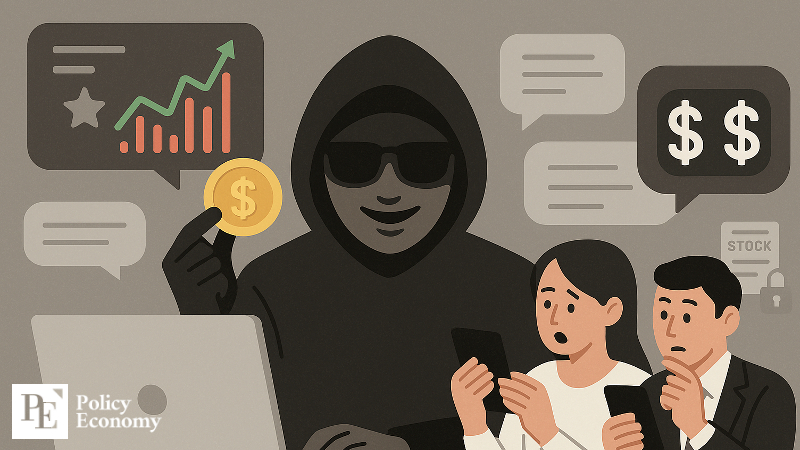
Risky Trading Patterns Among Retail Investors
Korean retail investors pursuing overseas assets have shown a strong appetite for high-volatility, speculative trades. Over the past month, most of the top net-buy positions were leveraged ETFs or stocks with extreme price swings. IonQ, a quantum-computing firm that attracted nearly $740 million in retail inflows over the past month, surged about 350 percent from its March low before entering a phase of daily 10–20 percent jumps followed by sharp reversals.
BitMine and Iren also drew more than $296 million each in the same period. BitMine, a company that accumulates Ethereum, saw a wave of interest after news that PayPal co-founder Peter Thiel holds a 9 percent stake. Iren, once focused on Bitcoin mining, pivoted to AI-cloud services and has risen roughly 450 percent since September.
This speculative demand has been amplified by illegal stock-tipping chatrooms. Last month, the Financial Supervisory Service warned that unregistered operators have been luring investors through SNS posts promoting “high-return U.S. stock strategies,” then funnelling them into private Telegram groups. There, self-proclaimed experts pushed small-cap overseas stocks using false claims such as “institutional buying detected” or “we have insider information,” while offering small early gains through a few staged trades.
Once trust was built, these groups encouraged large coordinated purchases to drive up prices, then dumped their own holdings at the top. After the inevitable collapse, operators disappeared, leaving excuses like “a major shareholder sold illegally” or “full compensation is being arranged.” In some cases, victims were even asked to pay “legal expenses,” leading to additional losses.
Aoife Brennan is a contributing writer for The Economy, with a focus on education, youth, and societal change. Based in Limerick, she holds a degree in political communication from Queen’s University Belfast. Aoife’s work draws connections between cultural narratives and public discourse in Europe and Asia.
Similar Post