China-EV Price War and Emerging Market Domination, Domestic Restructuring Underway

Oliver Griffin is a policy and tech reporter at The Economy, focusing on the intersection of artificial intelligence, government regulation, and macroeconomic strategy. Based in Dublin, Oliver has reported extensively on European Union policy shifts and their ripple effects across global markets. Prior to joining The Economy, he covered technology policy for an international think tank, producing research cited by major institutions, including the OECD and IMF. Oliver studied political economy at Trinity College Dublin and later completed a master’s in data journalism at Columbia University. His reporting blends field interviews with rigorous statistical analysis, offering readers a nuanced understanding of how policy decisions shape industries and everyday lives. Beyond his newsroom work, Oliver contributes op-eds on ethics in AI and has been a guest commentator on BBC World and CNBC Europe.
Authored On
Modified
BYD Launches South America’s Largest EV Plant in Brazil
Domestic Market Saturated; Chinese Automakers Pivot to Emerging Economies
Beijing Initiates Industry Restructuring, Including State-Owned Enterprise Consolidation
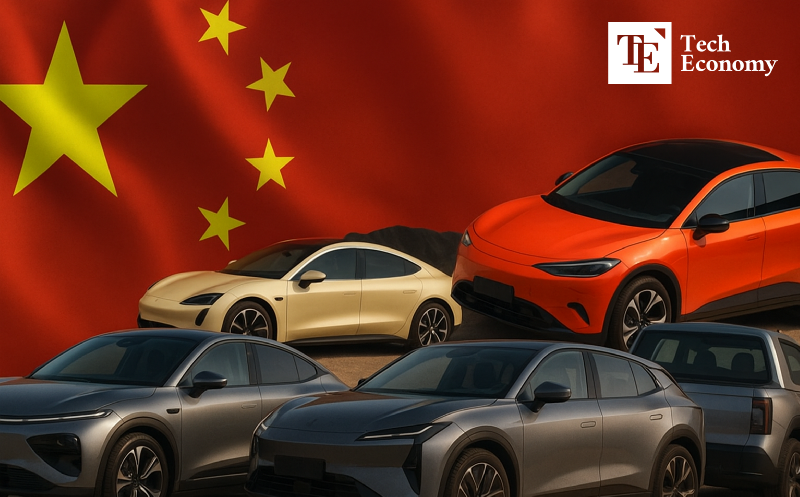
Chinese electric-vehicle brands are rapidly expanding their footprint across South America, Africa, and other emerging markets by leveraging an aggressive ultra-low-cost strategy. They are simultaneously scaling local manufacturing bases and strengthening logistics networks through state-owned Chinese infrastructure investments. Yet profitability has collapsed amid excessive price competition, widening the performance gap among manufacturers. With Beijing moving to unwind subsidies and restructure the sector, industry analysts warn that only about 15 companies may survive.
More Than 20,000 Vehicles Shipped to South America via Peru’s Chancay Port
According to Reuters on the 17th (local time), the opening of Peru’s Chancay Port last September has accelerated China’s penetration of the South American EV market. The port—South America’s first smart harbor—is a megaproject in which state-owned Chinese shipping giant COSCO holds a 60% stake. Within a year, the port replaced traditional North American transit routes and cut maritime transit times between China and South America by half, emerging as a new logistics hub in the region. COSCO plans to move more than 20,000 vehicles through the port by year-end, transshipping a portion to Chile, Ecuador, and Colombia.
Local production bases are also coming online. Chinese EV maker BYD last month completed construction of South America’s largest EV plant in Camaçari, Bahia State, Brazil. Roughly USD 990 million was invested in the facility, which sits on a former Ford site vacated in 2021. In its first year, the plant will assemble vehicles from imported kits with an annual capacity of 150,000 units; by July 2026, once full localization is achieved, capacity will rise to 300,000 units. Since entering Brazil in 2022, BYD has sold a cumulative 170,000 vehicles, securing a 74% share of the local EV market.
Beyond South America, Chinese automakers are intensifying their expansion across Southeast Asia and Africa. In Thailand, Chinese brands already control 85% of the EV market, while BYD, Xpeng, and Chery are deepening local production and investment in Malaysia and Indonesia. In Nigeria, companies have begun establishing a resource-to-manufacturing supply chain leveraging local lithium reserves. China has also formalized plans to build EV plants in North African countries—Morocco, Algeria, and Egypt—citing their proximity to Europe and existing automotive manufacturing bases.
Only Four of 130 Automakers Have Reached Break-Even
China’s pricing advantage has been the decisive factor behind its rise in emerging markets. Designating EVs as a national strategic industry, Beijing funneled large-scale support into the sector—resulting in the establishment of 500 automakers in 2019 alone. This oversupply triggered a collapse in equilibrium, driving steep price cuts. Average selling prices for major Chinese brands such as BYD, NIO, Xpeng, and Li Auto fell from USD 31,000 in 2021 to USD 24,000 in 2024. The number of discounted models grew from 150 in 2023 to 227 last year.
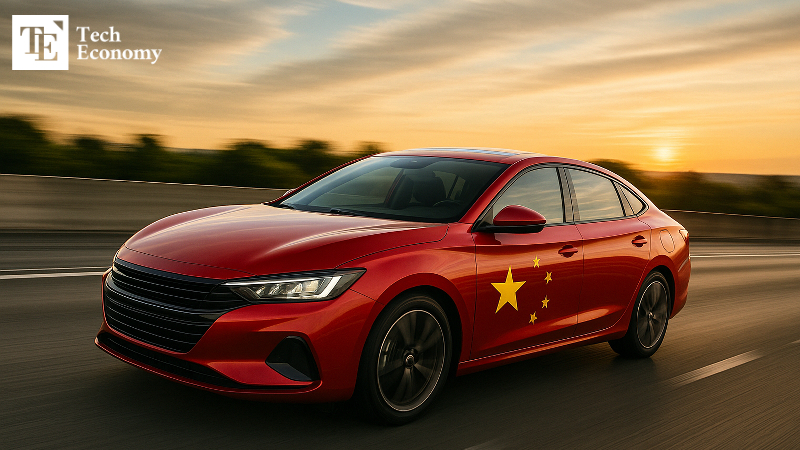
Since 2020, relentless price competition has sharply widened the performance gap across the industry. China’s National Bureau of Statistics reports that automotive production utilization averaged only 50% last year. Merely four companies—BYD, Li Auto, Haima, and GAC Aion—surpassed the annual break-even threshold of 400,000 units among roughly 130 automakers. Domestic sales reached 26.9 million units, still falling short of half of total national production capacity. Global consultancy AlixPartners forecasts that, under such destructive competition, only about 15 companies will remain by 2030.
This environment has pushed Chinese EV makers to aggressively court emerging markets, where lower-income consumers view Chinese EV pricing as an accessible entry point. The ultra-low-cost toolkit spans discounts, direct subsidies, financing incentives, and inventory clearance campaigns. BYD’s lowest-priced models, for instance, are cheaper than Tesla in ten non-Western markets—including Mexico, the UAE, Hong Kong, Japan, Thailand, Malaysia, and Singapore—and in parts of South America, they even undercut local internal-combustion vehicles.
EV Subsidy Removal Could Cut Sales by 5%
However, with China now entering a full-scale restructuring of its EV industry, the ultra-low-cost race is expected to shift. In April, Beijing announced plans to consolidate major state-owned automakers and implement strategic restructuring to enhance industrial competitiveness. During the Central Urban Work Conference in July, President Xi Jinping publicly criticized “reckless and excessive investment” in EVs that had produced overcapacity and wasted resources. Regulators confirmed that EVs will be removed from the strategic-industry list beginning next year, with subsidies to be discontinued.
Experts warn that removing cash incentives and tax benefits will weaken domestic demand. Nick Lai, J.P. Morgan’s Asia-Pacific autos analyst, said: “Because subsidies pulled demand forward, auto sales could decline by 3–5% next year. EV-specific growth is expected to slow from 27% this year to 15% next year.” He added that this projection assumes a complete halt to subsidies and tax perks: “Even in a stronger-consumption scenario, growth momentum is likely to stagnate.”
Externally, escalating trade restrictions pose additional challenges. The United States effectively shut its market by imposing a 100% tariff on Chinese-made vehicles last September. Chinese automakers redirected exports to Europe, where first-half EV shipments surged 91% year-on-year. But the European Commission recently announced the creation of a new “economic small EV” category to support European automakers’ domestic production of low-cost EVs. Widely viewed as a countermeasure targeting China, the new classification is expected to enable European firms to mount a direct challenge to China’s price-driven offensive.
Oliver Griffin is a policy and tech reporter at The Economy, focusing on the intersection of artificial intelligence, government regulation, and macroeconomic strategy. Based in Dublin, Oliver has reported extensively on European Union policy shifts and their ripple effects across global markets. Prior to joining The Economy, he covered technology policy for an international think tank, producing research cited by major institutions, including the OECD and IMF. Oliver studied political economy at Trinity College Dublin and later completed a master’s in data journalism at Columbia University. His reporting blends field interviews with rigorous statistical analysis, offering readers a nuanced understanding of how policy decisions shape industries and everyday lives. Beyond his newsroom work, Oliver contributes op-eds on ethics in AI and has been a guest commentator on BBC World and CNBC Europe.
Similar Post