K-Eyewear, Pharmacies and Convenience Stores as Core Tourism Channels Driven by ‘Efficiency-Based Consumption’

Authored On
Modified
K-Eyewear Tour Popularity Surge, 30-Minute Optometry to Pickup
Pharmacies, convenience stores and outlet malls—everyday consumer spaces—are also gaining traction.
Traditional tourist site dependence has limits; everyday consumption needs activation is essential.
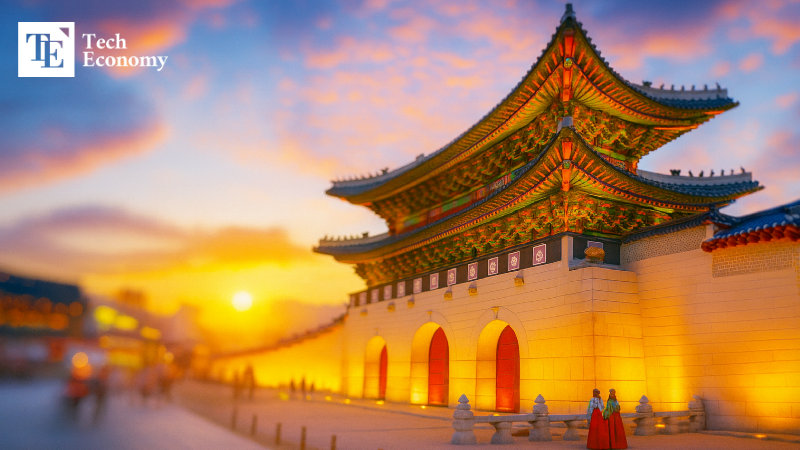
South Korea’s everyday consumption platforms are emerging as a new growth axis in foreign tourism demand. Optician shops, pharmacies, convenience stores and outlet malls—services optimized for efficiency—are overshadowing traditional tourist sites and rising as key channels in Korean tourism. The rapid shift of foreign demand toward lifestyle services suggests a different demand axis than the conventional tourist-site-centric policy direction. Accordingly, experts argue for a strategic pivot that incorporates lifestyle service competitiveness as tourism assets.
Day-of pickup & lower prices fuel K-Eyewear transaction explosion
According to inbound tourism platform CreateTrip, eyeglass-optician transaction volume from June to October this year soared by 1,608% compared to the same period last year. This achievement came within less than a year of introducing eyeglass-optician products via the platform. Among customers booking through the service, nationalities ranged across Asia, North America and Europe. The U.S. accounted for 49% of total bookings (ranked first), followed by Taiwan at 26% and Germany at 9%.
Optician shops located near tourist sites showed high linkage with other tourism products: in the case of a store in Myeong-dong, about 44% of foreign customers booked it together with other products—indicating it is functioning as a major tourism destination rather than mere shopping. The appeal of “K-Eyewear” hinges on speed and price: while eyeglasses in one’s home country may take days to weeks to produce, in Korea inspection to pickup can be completed in 30 minutes to 1 hour. Prices are also lower than in the customers’ home countries, allowing purchase of high-quality products at reasonable cost.
Eyewear designs reflecting fashion trends are another factor: foreign tourists perceive eyeglasses not merely as vision aids, but as fashion items, experiencing styles rare in their home countries. In other words, the service delivers the “speed-price-design” trifecta. CreateTrip plans to expand partner optician shops and enhance its reservation system to broaden the “K-Eyewear Tour”. According to CreateTrip’s CEO Lim Hye‑min, “Visiting an optician has become a unique Korean travel experience for foreigners,” adding that they aim to establish optician services as a must-do tourism course following beauty and medical tourism.
Record High 1.17 Million Foreign Medical Tourists Last Year
Inbound medical tourism in Korea is also growing. According to the Ministry of Health and Welfare, last year the number of foreign patients hosted reached 1.17 million—more than double the pre-COVID-19 peak in 2019 (497,000). Seoul, which has the highest share of medical tourism, forecasts that foreign medical tourists will surpass 1.14 million this year, and taking into account overall tourist volume, expects the total to reach 1.3 million.
The expansion in medical tourism demand is attributed to trends in advanced countries such as the U.S., Canada and Europe: ageing populations, growth in chronic diseases, high medical costs and public-health system strain are driving significant outbound treatment travel. Notably, last year foreign medical tourists whose main purpose was treatment or health check-ups spent an average of $2,408 per person, which is substantially higher than the average for general tourists at $1,372 per person. Medical tourism is therefore seen as a key driver of high-value and qualitative growth in tourism. In terms of satisfaction and revisit rate, medical tourists markedly outperform general tourists: 38.6% of medical tourists have visited Korea four or more times. Among the triggers for interest in Korea travel, “past visit experience” was the most frequent response.
Thanks to the growth in medical tourism, “K-pharmacy” is also attracting attention as a core consumption destination. The share of pharmacies in total foreign medical consumption rose from 53% in H1 of last year to 58% this year—meaning 6 out of 10 foreign medical-consumption cases are occurring at pharmacies. Given that total foreign medical consumption cases rose from 1,237,073 to 1,873,401 in H1, the 5% rise holds greater significance. Pharmacy transactions exceeded 1.08 million cases—equivalent to 87% of the total medical consumption cases in H1 of last year. Foreign visitors also increased their pharmacy spending: whereas last year combined pharmacy spending was KRW 25.4 billion in H1 and KRW 33.1 billion in H2, this year H1 alone saw KRW 55.3 billion in spending.
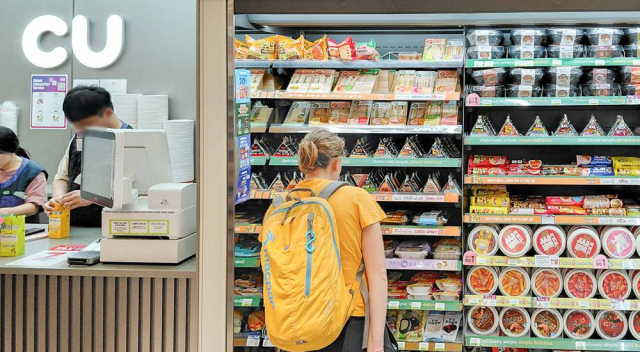
Convenience Stores as ‘Essential Tourism’ Courses, Demand Shift Toward Lifestyle Services
Convenience stores are also becoming an essential course for foreign tourists. Social-media platforms such as Instagram and TikTok are showcasing unusual products and mukbang content from Korean convenience stores. According to CU, five years ago the foreign‐payment-heavy stores in Seoul were concentrated near hotel areas in Euljiro and Myeong-dong, but this year the distribution has diversified into Hongdae, Yongsan, Olympic Park and across Seoul’s corners. The GS25 Door2Seongsu store in Seongsu-dong is one of the must-visit destinations for foreign tourists: the store sells its own-brand (PB) products, pop-up stores, and ‘original single-malt soju’ etc. It gained popularity via K-pop idol group SEVENTEEN’s YouTube content filming visit. A GS25 representative said, “Foreign tourists who watched the YouTube video line up to sit in the spot where the idol sat.”
Payment amounts are also rising: CU’s “Korea Tour Card” sales to foreigners in July increased 14-fold year-on-year, and GS25’s WeChat/Alipay payments in H1 rose 249% year-on-year. A convenience-store operator under Korea Seven noted, “Tourists are trending towards buying Banana-Flavored Milk and pouring it into ice-cups at convenience stores.”
Tourists visiting outlet malls at Seoul outskirts are also increasing. Particularly tours including outlets are popular: high-speed buses from Seoul to the Yeoju Premium Outlets, shuttle buses, and private-vehicle transfers to Seoul-based outlets are steadily rising. “Personal shopping tours” where a professional stylist accompanies the schedule and assists in styling popular Korean brands are garnering attention – reflecting an experience-centric travel trend that uses shopping as a cultural encounter.
Thus, current foreign tourism demand is expanding around stores that Koreans commonly visit. With low-price consumption now normalised, services familiar to Koreans are emerging as travel trends. Experts agree that Korea’s tourism policy direction should shift from investing in generic offerings such as regional cable-cars to expanding consumption experiences integrated with daily life.
It is undeniable that previous tourism policy was inadequate: foreign visitors often lacked infrastructure where they could enjoy and stay, suffered from high prices or overcharging, and lacked storytelling about regional resources. Korean travellers themselves preferred destinations such as Japan, Southeast Asia, or Europe which offer abundant leisure and heritage. The result manifested as persistent travel‐balance and services‐balance deficits: dollars leave abroad from travel spending even when profits are made from semiconductors and automobiles. A hotel-tourism professor remarked, “The government should not spread its limited budget across every place but should think about how to translate everyday services into the most attractive global experience,” and remarked, “Korea’s future tourism strategy lies not in discovering resources but in commodifying efficiency.”
Similar Post