Japan’s U.S. Funds to Back New Reactors — Will Nuclear Cooperation Accelerate Japan’s Comeback?

Aoife Brennan is a contributing writer for The Economy, with a focus on education, youth, and societal change. Based in Limerick, she holds a degree in political communication from Queen’s University Belfast. Aoife’s work draws connections between cultural narratives and public discourse in Europe and Asia.
Authored On
Modified
U.S. to Use Japanese Investment Funds for Westinghouse’s New Reactor Project
Once Criticized as “Humiliating Diplomacy,” the U.S.–Japan Economic Deal May Prove an Opportunity
Japan Reinvests in Nuclear Power, Accelerating Its Market Recovery Potential
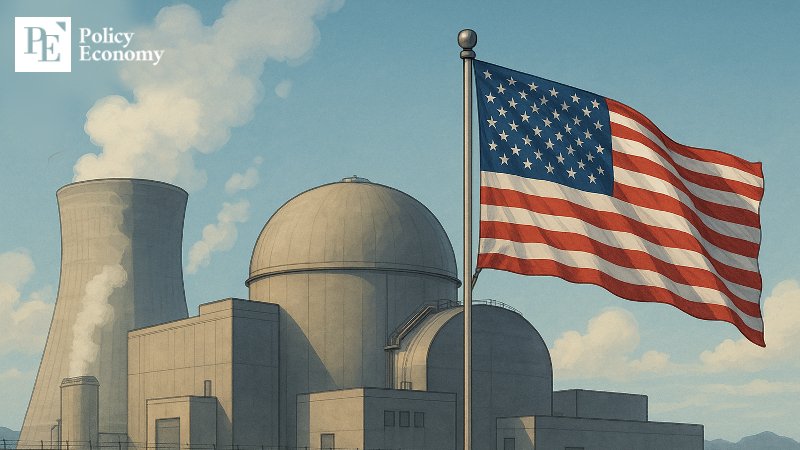
There is growing speculation that the United States may use Japan’s investment funds for a new nuclear power project worth about $80 billion. The U.S.–Japan economic agreement—long viewed in Japan as the result of U.S. pressure and a form of “humiliating diplomacy”—is now being reassessed as a potential opportunity. Analysts say Japan’s nuclear-related investment in the United States could accelerate Tokyo’s push to revive its domestic nuclear power industry.
Japan’s U.S. Investment Funds to Be Directed Toward Major Nuclear Projects
According to Bloomberg on the 19th, Karl Koe of the U.S. Department of Energy said at a meeting hosted by the Tennessee Advanced Energy Business Council that part of Japan’s $550 billion investment in the United States may be used to build Westinghouse Electric’s new reactor. He noted that while the government is generally cautious about intervening in private markets, “this is now a national emergency.” He added that the plan is moving forward and that the government is “reviewing potential sites.”
The Trump administration previously signed an agreement with Brookfield Asset Management—one of Westinghouse’s shareholders—and Cameco, a Canadian uranium producer, to build new reactors in the United States. Under the deal, the U.S. government would receive 20% of any profits exceeding $17.5 billion after entering into a contract worth at least $80 billion for Westinghouse reactor construction. The agreement also allows the government to demand an IPO if Westinghouse’s valuation surpasses $30 billion, in which case U.S. taxpayers would receive a 20% equity stake upon listing.
This plan is part of the pro-nuclear policy framework the Trump administration has steadily expanded. In May, President Trump signed an executive order aimed at boosting nuclear generation capacity from the current 97 GW to 400 GW by 2050. The order also includes constructing ten new large reactors by 2030, citing intensifying global competition in AI and the growing need for energy independence.
U.S.–Japan Economic Deal Turns From Burden to Opportunity
The United States’ push to expand nuclear construction may also create opportunities for Japan. The U.S.–Japan economic agreement has widely been viewed as an unequal deal forced on Tokyo under U.S. pressure. The structure of how funds are used in energy infrastructure reinforces that perception: U.S. companies such as Westinghouse, GE, and Carrier hold dominance across key sectors—$320 billion for nuclear power, $25 billion for transmission, and $20 billion for cooling systems.
Yet Japan is not merely reduced to supplying capital. Through this investment, Japan gains access to U.S. advanced technologies in nuclear power and power transmission. In particular, SMRs (small modular reactors) and HVDC (high-voltage direct current) systems are essential for Japan’s own decarbonization transition. Japanese companies are also gaining a foothold in the U.S. energy infrastructure market, allowing Japan to join the current U.S. infrastructure investment boom. Westinghouse, GE Vernova, Hitachi, SoftBank, Kinder Morgan, Toshiba, and Carrier have already formed cooperative ties under the framework of the new agreement.
The United States also stresses that the deal benefits Japan. U.S. Commerce Secretary Howard Lutnick told the Nikkei last month that Japan’s pledged $550 billion investment is a “joint investment for the economic security of both countries” and carries “no risk of loss.” He added that 10 to 12 Japanese companies—including power utilities and shipbuilders—are reviewing potential investment projects, with the first deal expected this year in the power sector. He emphasized that Japan would fully recover both principal and interest, placing no burden on Japanese taxpayers.
Japan’s Push to Revive Its Nuclear Industry
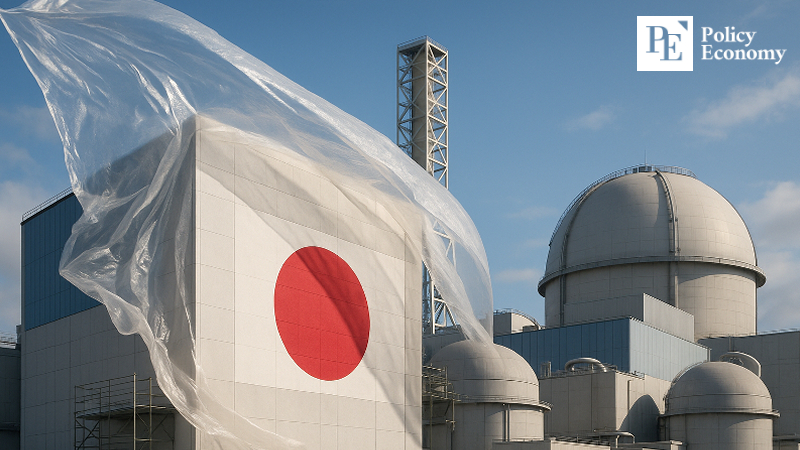
Some analysts say Japan’s cooperation with the United States on nuclear power could accelerate Tokyo’s efforts to revive its own nuclear industry. Japan built 57 reactors between the 1960s and 2010s and once held world-class nuclear capabilities, with a local procurement rate of 90%. Today, it remains one of only four countries—alongside France, Russia, and China—capable of producing all core reactor components domestically.
But after the Fukushima Daiichi accident triggered by the 2011 earthquake and tsunami, Japan shut down all of its reactors and lost global leadership to countries such as China, France, Korea, and Russia. Around 20 companies have already exited the sector, and enrollment in university nuclear engineering programs continues to fall. Export projects have also struggled: Hitachi’s UK project in 2012 and Mitsubishi Heavy Industries’ project in Turkey in 2013 were both abandoned. Newly appointed Prime Minister Takaiichi has since named nuclear power—including next-generation reactors—as a top priority for energy security, affordable electricity, and export competitiveness, signaling an intent to rebuild the industry.
Government-level support is beginning to take shape. According to Nikkei Asia, Japan’s Ministry of Economy, Trade and Industry is considering revising power-sector investment laws to allow public institutions to fund low-carbon power projects. If implemented, utilities would be able to combine private and public financing for investment plans involving nuclear and renewable energy. The ministry plans to submit the revision to a working group under its energy and resources advisory council soon, with the group expected to reach a conclusion within the year and move to amend the Electricity Business Act in next year’s ordinary Diet session.
Aoife Brennan is a contributing writer for The Economy, with a focus on education, youth, and societal change. Based in Limerick, she holds a degree in political communication from Queen’s University Belfast. Aoife’s work draws connections between cultural narratives and public discourse in Europe and Asia.
Similar Post