Netflix expands its IP empire through merchandise, gaming, and live experiences

Authored On
Modified
Platform expands into offline touchpoints
Licensed goods lineup widens across physical products
Games, shopping, and merchandise ecosystems connect
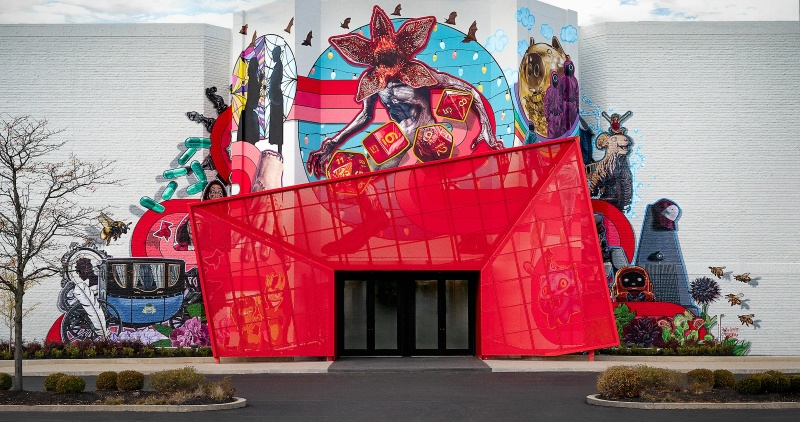
As Netflix accelerates its push into offline experiences, merchandise, and gaming, the company is strengthening an intellectual property strategy that bridges its streaming platform with physical consumer touchpoints. After years of running only temporary pop-up stores, the company has now opened permanent experiential spaces and is deepening partnerships to expand its merchandise lineup. The goal is clear: transform on-platform viewing into real-world visits and product purchases, capturing more of consumers’ time and attention. Netflix is shifting from relying solely on streaming performance toward building multilayered revenue channels across video, physical spaces, products, and games.
Offline experiences target new waves of consumer demand
According to AFP on the 19th (local time), Netflix opened its first theme park, Netflix House, on December 12 in suburban Philadelphia, Pennsylvania. Located inside King of Prussia Mall—one of the largest shopping malls in the world—the 100,000-square-foot venue is designed not just as a gift shop but as a comprehensive entertainment hub featuring food and beverage services, immersive attractions, live performances, and screenings. After years of hosting pop-ups in major cities worldwide, Netflix has now formalized its experiments into a standalone business unit.
Following Pennsylvania, Netflix will open a second space in Dallas, Texas, on December 20 and is planning a Las Vegas location in 2027. By establishing permanent venues in major consumer and tourist cities, Netflix aims to shift its growth narrative from subscriber expansion toward offline consumption and experiential engagement. With subscriber growth slowing, production costs rising, and streaming competitors multiplying, Netflix appears to be building real-world touchpoints as a new engine for business expansion.
Industry observers view this as Netflix signaling its transformation from a streaming service into a full-scale entertainment company. Marian Lee, Netflix’s chief marketing officer, stated that after operating more than 300 pop-ups in cities worldwide, it became clear the company needed its own permanent space to operate more freely. She added that while there are no immediate plans for expansion outside the United States, overseas growth would be approached differently.
Parallel to its offline expansion, Netflix has been ramping up its merchandise business. Since launching an official consumer products division in 2019 and opening its own online store in 2021, Netflix has pushed beyond one-off branded partnerships into building merchandise as a core business pillar. Recently, the company partnered with toy maker Jazwares to release playsets, vehicles, costumes, and other product lines. This strategy is viewed as highly meaningful, allowing Netflix to build long-term fanbases grounded in brand trust.
From a single hit to a long-term franchise asset
The global success of the animated film K-Pop Demon Hunters served as a major catalyst for Netflix’s merchandise strategy. Netflix invested the full production cost—USD 68.49 million—securing full distribution and IP rights. This means not only streaming viewership and new subscriptions but also all future merchandise, secondary products, and tertiary spin-offs will remain under Netflix’s control. With the film’s success, Netflix gained a real opportunity to turn its merchandise strategy into substantial revenue and long-term business expansion.
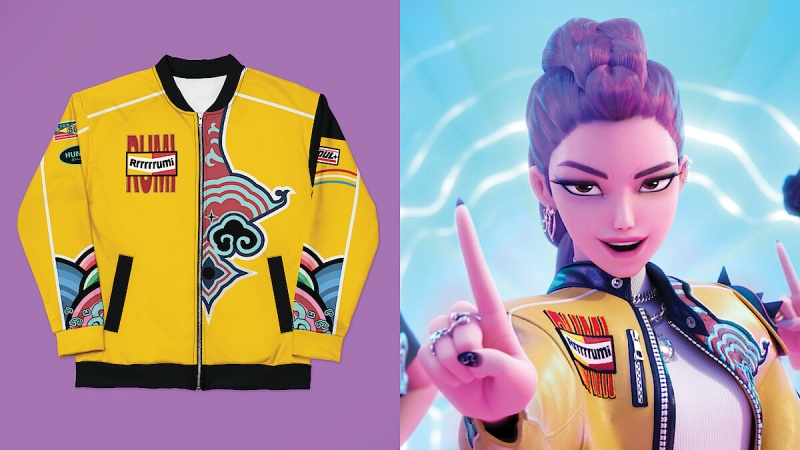
Netflix quickly leveraged the film’s popularity and character-centric world-building by partnering with toy giants Mattel and Hasbro to launch dolls, figurines, board games, and more. Mattel released a series of dolls precisely recreating characters’ outfits and props, while Hasbro introduced strategy-based board and card games built around the film’s universe. Netflix also launched meticulously replicated character costumes through its online store and limited-edition pop-ups, enabling fans to extend their connection to the story through physical ownership.
The figures associated with the film highlight the immense impact of IP expansion. According to the Korea Economic Research Institute, the film generated an estimated USD 2.56 billion in combined economic effects from consumer product exports, foreign tourist attraction, and industry ripple effects. The Korean economy alone saw USD 1.04 billion in production inducement and USD 466 million in added value, along with approximately 845 new jobs created directly and indirectly. This demonstrates how online content can meaningfully stimulate real-world economic ecosystems.
Netflix is believed to have designed K-Pop Demon Hunters from the planning stage as a franchise package, anticipating global toy partnerships from the outset. This means the project was intended not just as a successful piece of content but as a comprehensive franchise spanning costumes, figurines, and collectible merchandise. By securing full IP rights, Netflix can control every revenue channel—screen, store shelves, consumer homes—and reduce its dependence on streaming alone.
Video, gaming, and merchandise fully interconnected
Gaming represents Netflix’s most direct attempt to deepen user engagement beyond passive viewing. In 2021, the company began exploring mobile gaming to capture more user time. Initial tests focused on indie mobile titles, but in 2023 Netflix hired a former Epic Games vice president, signaling a major strategic pivot. Netflix organized its gaming ambitions around four categories—kids, multiplayer party, narrative-driven, and mainstream—and began focusing on incorporating its original IP universes into gaming experiences.
The explosive success of the Korean original series Squid Game was a turning point. Within four weeks of release, the series amassed 1.6 billion hours of viewing and quickly expanded into experiences, merchandise, and brand collaborations. Netflix confirmed that a single breakout title could generate a large revenue chain spanning games, products, and live events. Since then, Netflix has synchronized its trademark filings with business plans, designing some IP titles with prebuilt pathways for games and merchandise—even before release. K-Pop Demon Hunters is a leading example.
Netflix aims to transform its original series from passive viewing content into interactive experiences where users can manipulate and immerse themselves in the narrative. Traditional media value chains focus on production, distribution, and consumption. Netflix seeks to extend this into production → experience → ownership → recurring consumption. Games anchor the experience stage, while shopping and merchandise anchor the ownership stage. Post-Squid Game gaming experiments and the merchandise strategy surrounding K-Pop Demon Hunters are not isolated initiatives but components of a long-term multi-layer IP expansion model.
Some critics argue that expanding into games and merchandise could blur the brand’s identity. If physical products have only a loose connection to the original content, consumers may perceive Netflix’s brand more vaguely. However, if stories, characters, and worlds are tightly integrated across games, products, and physical spaces, the result is a consistent user journey from viewing to experiencing to owning. This is why Netflix refers to itself as “the world’s biggest company dealing in stories” while expanding its hit titles into gaming, retail, and immersive destinations.
Similar Post