“Too Costly to Expand, Too Risky to Pull Back” — U.S. Semiconductor Tariff Delay Leaves the Industry in Limbo

Authored On
Modified
Reuters: “U.S. Chip Tariffs May Not Come Immediately”
Trump Administration’s Unpredictable Moves Keep the Industry on Edge
TSMC and Samsung Face Tougher Calculations on U.S. Manufacturing Investments
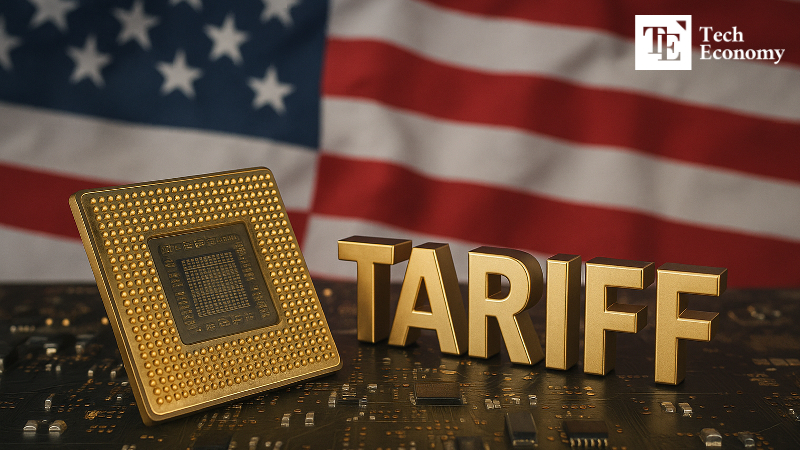
Reports suggest the Trump administration may postpone tariffs on imported semiconductors. Concerns over U.S.–China relations and inflation could slow President Trump’s typically hardline trade approach. Even so, the semiconductor industry is not easing its vigilance, noting the administration’s unpredictability and the substantial capital already committed to U.S. fabrication projects.
Stalled Talks on U.S. Semiconductor Tariffs
Reuters reported on the 19th that U.S. officials have recently told government and industry figures that semiconductor tariffs may not be imposed soon. Earlier, on August 6, President Trump said he would impose tariffs of “around 100%” on semiconductors, targeting all integrated circuits and chips entering the United States. Only companies building—or committing to build—chip fabs in the U.S. would be exempt from the tariff burden, he warned. Trump later said on August 15 that he would “set the tariffs next week,” but no follow-up has emerged in the three months since.
U.S.–China relations appear to be the main reason for the delay. At the APEC summit in Gyeongju late last month, President Trump met Chinese President Xi Jinping, leading to a temporary pause in trade tensions. Trump’s advisers are reportedly concerned that imposing semiconductor tariffs could reignite the trade war and trigger retaliatory measures such as Chinese export controls on critical rare-earth materials.
Inflation concerns have also slowed the administration’s decision. U.S. consumer prices have been rising amid the effects of Trump’s tariff policies. Republican candidates suffered a series of defeats in local elections on the 4th, and President Trump’s approval ratings have declined. If semiconductor tariffs are imposed, prices of smartphones, appliances, and other chip-dependent products could climb further, intensifying public backlash. The administration is even examining a framework that would levy tariffs based on the number of semiconductors installed in each device.
Uncertainty in the Chip Industry Remains Far From Resolved
Some observers warn that uncertainty surrounding U.S. semiconductor tariffs has not disappeared. Until the administration gives final approval, nothing can be considered settled, and triple-digit tariffs could still be imposed at any time. The White House and the Department of Commerce have also rejected interpretations that their tariff stance has weakened. White House spokesperson Kush Desai said the administration would “continue using every executive authority available to bring critical manufacturing back to the United States for national and economic security,” adding that the Reuters report citing anonymous sources was “false.” The Commerce Department likewise stated that its policy direction on semiconductor tariffs “has not changed.”
Industry concerns also remain high. The Trump administration has repeatedly taken actions viewed as highly unconventional by chip manufacturers. One example is its acquisition of a stake in Intel in exchange for subsidy support. In August, President Trump said the U.S. government now “fully owns and controls” a 10% stake in Intel—making it the company’s largest shareholder, surpassing BlackRock, which owns 8.92%. The move was tied to subsidies granted under the CHIPS Act.
Reuters also reported in the same month that Commerce Secretary Howard Lutnick was considering a plan for the U.S. government to receive equity in semiconductor companies that build U.S. fabs with CHIPS Act subsidies. Under this approach, the administration could seek stakes not only in Intel and Micron but also in Samsung Electronics, SK Hynix, and TSMC—all of which have announced U.S. investment plans. However, there is currently no evidence that such measures have progressed.
The Dilemma of U.S. Semiconductor Investments
Even if the tariff plan is delayed, the calculus for chipmakers is unlikely to become any simpler. Major semiconductor companies have been steadily expanding their U.S. investments for years. TSMC announced in 2020 that it would invest $12 billion to build a foundry line in Arizona, later increasing the amount to $65 billion. In March this year, the company said it would invest at least $100 billion more in the United States over the next four years.
Korean firms are also pursuing large-scale projects. Samsung Electronics has committed more than $37 billion to build a foundry plant and related facilities in Taylor, Texas. SK Group plans to invest more than $13 billion in the U.S. market, including $3.87 billion for SK Hynix’s advanced packaging facility in Indiana. Both companies are expected to accelerate their expansion following the recently released Korea–U.S. Joint Fact Sheet (JFS), which outlines a $150 billion U.S. investment roadmap by Korean firms.
Market observers say these companies now face a genuine dilemma. One analyst noted that TSMC’s U.S. subsidiary saw its profit plunge 99% between the second and third quarters of this year, adding that the U.S. market’s high cost structure has created a situation where “the more you invest, the worse the profitability becomes.” The analyst said chipmakers might benefit from reducing U.S. investment if tariff pressure eases—yet openly scaling back remains risky given the Trump administration’s unpredictable and hardline tendencies.
Similar Post