Nvidia’s LPDDR shift shakes the global memory market

Stefan Schneider brings a dynamic energy to The Economy’s tech desk. With a background in data science, he covers AI, blockchain, and emerging technologies with a skeptical yet open mind. His investigative pieces expose the reality behind tech hype, making him a must-read for business leaders navigating the digital landscape.
Authored On
Modified
Mass adoption of smartphone-grade LPDDR
Investment focuses on mitigating heat and power consumption
Rising costs show signs of hitting smartphone production immediately
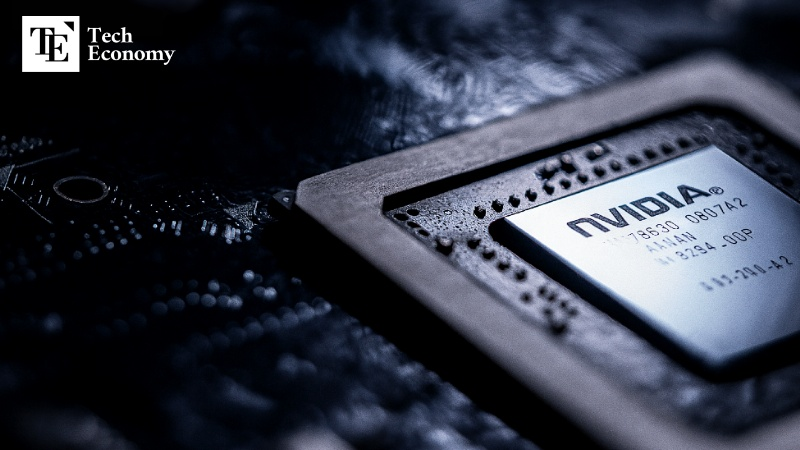
Nvidia’s plan to convert a large portion of its AI server memory to LPDDR is rapidly shaking up the global memory supply balance. Industry research firms warn that prices for high-end memory could double by the end of next year, pointing to widespread instability across the market. While demand for AI infrastructure continues to expand, tension within the memory sector is escalating. The shift is expected to improve power efficiency in data centers, yet at the same time it raises concerns about higher device prices for consumers using smartphones and laptops.
Same wafer production, surging demand from one buyer leads to price spikes
According to Counterpoint Research, continued semiconductor shortages are likely to push memory prices up by roughly 50 percent in next year’s second quarter. High-end memory could reach double current prices by late 2026. The assessment is based on Nvidia’s decision to adopt low-power LPDDR—typically used in smartphones—over conventional DDR server memory. Counterpoint noted that the LPDDR volume consumed by a single server is incomparable to smartphone usage, emphasizing that Nvidia’s procurement move will significantly disrupt DRAM supply worldwide.
Nvidia’s shift to LPDDR stems from power concerns. Traditional server memory uses ECC, which automatically corrects errors but consumes substantial power. Nvidia aims to reduce this burden by shifting error correction to the CPU, while using more power-efficient LPDDR at the GPU level. Considering that power is the main cost driver in data center operations, this architecture shift amounts to a strategic redesign across Nvidia’s server platforms.
Industry observers describe Nvidia’s LPDDR transition as a seismic event for the memory market. The surge in server demand is equivalent to dozens of new smartphone manufacturers appearing at once, and global production capacity may struggle to keep up. Nvidia’s data center revenue in the third quarter rose 112 percent from a year earlier, and because server shipments translate directly into LPDDR demand, memory suppliers now face simultaneous pressure in technology, supply, and pricing.
As a result, Nvidia’s policy shift improves AI server power efficiency while also amplifying supply-demand uncertainty across the global memory sector. With limited production capacity, explosive demand from one customer base can easily push the market beyond its equilibrium. If DRAM makers realign their capacity toward Nvidia orders, shortages currently seen in low-end memory could spread to high-end products.
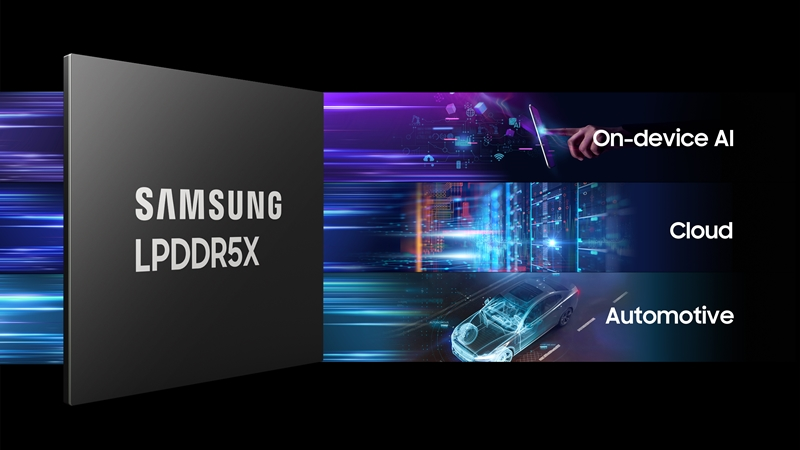
Power efficiency takes priority over reduced speed
Interest in low-power memory is not limited to Nvidia. As AI workloads grow, reducing power consumption and heat generation has become a crucial industry agenda. With workloads shifting from training to inference, efficiency matters even more, driving attention toward low-power memory and advanced packaging solutions. Since data movement inside AI accelerators accounts for a major share of energy use, work continues on simplified compute methods, reduced data precision, and strengthened parallel processing.
HBM is a leading technology, offering high bandwidth but still leaving room for improvement in power efficiency. Processing-in-memory (PIM) has emerged as an alternative. Samsung has released HBM-PIM, AXDIMM, and LPDDR-PIM families, with the recently announced LPDDR5-PIM offering over fourfold performance gains and more than 70 percent better power efficiency than standard LPDDR.
Investment is also accelerating in advanced packaging, which integrates multiple chips into a single package to shorten signal paths and reduce energy loss. Co-Packaged Optics (CPO), which merges optical modules directly with semiconductor packages, is seen as a highly efficient way to enhance power performance compared to conventional electrical signal transmission. Transitioning signal pathways to photonics could dramatically improve communication efficiency across the ecosystem.
Industry analysts note that Samsung is well positioned as LPDDR and HBM demand grows simultaneously. Samsung has both mobile-focused LPDDR and high-performance HBM product lines, enabling a balanced response to market shifts. SK hynix faces constraints due to its concentration in high-end memory, though medium- to long-term adjustments are considered likely as server-grade LPDDR demand rises. With AI expansion expected to last for years, suppliers offering both low-power and high-bandwidth solutions stand to gain competitive strength.
Consumer device costs under renewed pressure
This shift may sharply increase production costs for smartphones and laptops. TrendForce forecasts DRAM contract prices rising more than 75 percent in this year’s fourth quarter, with smartphone manufacturing costs up 5–7 percent next year and laptop production costs up 10–12 percent. Some companies have already begun phasing out low-end models, and higher component prices are increasingly reflected in retail pricing.
The adjustments underway among smartphone makers illustrate the shift. Xiaomi, Oppo, and Vivo reportedly raised prices of budget models in India by up to about 24 dollars. Given typical price ranges for these entry-level devices, this represents nearly a 10 percent increase. India’s Times Now reported that Samsung implemented similar adjustments on low-end models such as the Galaxy A17, and that next-generation devices could see additional increases of up to about 72 dollars due to worsening component supply.
Pricing pressure is also visible in premium segments. Samsung is reportedly reviewing higher launch prices for the upcoming Galaxy S26 series due to rising memory, mobile AP, camera module, and currency-related costs. Apple is similarly considering adjustments after TSMC raised chip prices. Xiaomi’s Redmi K90 Pro Max will debut at a price about 82 dollars higher than its predecessor.
Laptop makers are not exempt from the memory shortage. DRAM and NAND currently account for 10–18 percent of laptop build costs, a share expected to exceed 20 percent next year. Some manufacturers are reviewing reductions in memory configurations and revising production strategies. TrendForce has lowered its 2025 smartphone production outlook from a 1.7 percent increase to a decline, and its notebook forecast from a 0.1 percent increase to a 2.4 percent drop. Rising memory costs could suppress demand across both markets.
Stefan Schneider brings a dynamic energy to The Economy’s tech desk. With a background in data science, he covers AI, blockchain, and emerging technologies with a skeptical yet open mind. His investigative pieces expose the reality behind tech hype, making him a must-read for business leaders navigating the digital landscape.
Similar Post