Steel Industry Cornered on All Sides, High-Value Transition Rendered Illusory by Surging Power Costs

Siobhán Delaney is a Dublin-based writer for The Economy, focusing on culture, education, and international affairs. With a background in media and communication from University College Dublin, she contributes to cross-regional coverage and translation-based commentary. Her work emphasizes clarity and balance, especially in contexts shaped by cultural difference and policy translation.
Authored On
Modified
Designation of Gwangyang as an Industrial Crisis Response Zone
High-value transition deemed essential, but electricity costs render ambitions unattainable
Industry frustration mounting over ‘half-measures’ in steel support policy
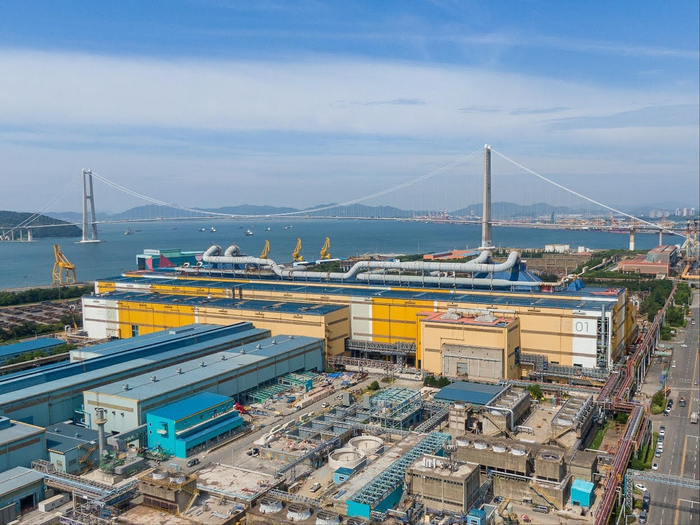
Domestic steel production clusters are rapidly eroding under the weight of China’s supply glut and a policy paradigm fixated on quantitative expansion. Once considered the citadel of Korean manufacturing, Pohang and Gwangyang now face the prospect of economic hollowing and depopulation as industrial competitiveness deteriorates. Although the government has begun designating these manufacturing heartlands as Industrial Crisis Response Zones and pledges to upgrade the sector, the absence of tangible relief for steelmakers has raised fundamental doubts about policy efficacy.
Emergency liquidity and employment stabilization support for two years
On the 20th, the Ministry of Trade, Industry and Energy convened the Industrial Crisis Response Committee and designated Gwangyang as an Industrial Crisis Preliminary Response Zone. Gwangyang, whose industrial base has centered on steel for decades, forms Korea’s three major steel cities alongside Dangjin in South Chungcheong Province and Pohang in North Gyeongsang Province. Earlier this year, Yeosu and Seosan were designated crisis zones due to petrochemical industry distress. For steel, Pohang received the designation in August, now followed by Gwangyang as the second case.
According to the ministry, Gwangyang’s designation will remain in effect until November 19, 2027, spanning two years. Firms in Gwangyang will receive enhanced support, including emergency management stabilization funds and preferential access to local investment promotion grants. Emergency stabilization financing—intended for SMEs and small merchants suffering temporary distress—will provide up to about $685,000 per company over five years at an interest rate of 3.71%, extended through the Korea SMEs and Startups Agency.
The Small Enterprise and Market Service will offer up to about $48,000 per business over five years at a 2.68% rate. Additional measures include maturity extensions and repayment deferrals for SMEs. Korea Credit Guarantee Fund and Korea Technology Finance Corporation will expand preferential guarantee programs for suppliers and small merchants.
Local investment promotion grants—covering land acquisition subsidies and facility investment subsidies—will also be increased. For large corporations making facility investments in Gwangyang, subsidy rates will rise from the existing 4–9% to as high as 12%. For mid-sized firms, land subsidies will increase from 5–25% to 30%, and facility subsidies from 6–12% to 20%. SMEs will see land subsidies rise from 9–40% to 50%, and facility subsidies from 8–15% to 25%.
The government will further expand interest-subsidy support (known as secondary compensation) for SMEs and mid-sized firms operating across steel’s upstream and downstream value chains. The per-company interest subsidy ceiling will increase from about $342,000 to about $685,000. Workforce development programs will also be introduced, while R&D, management consulting, and employment stabilization initiatives required for regional recovery will be incorporated into next year’s budget.
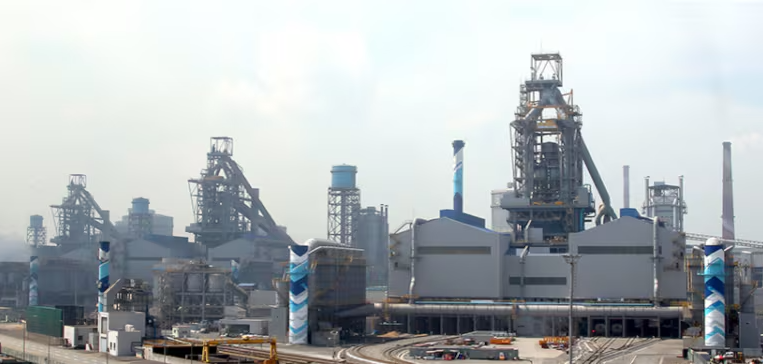
Growth-at-all-costs strategy reaches its limits
Gwangyang’s crisis designation stems largely from China’s steel oversupply. With a production capacity of 140 million tons, China has increasingly offloaded low-priced products onto neighboring markets including Korea and Japan as its domestic property and construction sectors decelerate. From thick plates for shipbuilding to hot-rolled coils, rebar, and color steel sheets used across manufacturing, Chinese steel has poured into the Korean market.
The impact has been stark. POSCO shuttered its Pohang No.1 steelmaking and No.1 wire-rod plants last year, while Hyundai Steel halted operations at its Pohang No.2 plant in June. According to the Korea Iron & Steel Association, Korea’s crude steel production fell from 71.41 million tons in 2019 to 63.65 million tons last year.
As major plants scaled back or closed, the local economies of Pohang and Gwangyang suffered directly. Workforce reductions at POSCO and Hyundai Steel triggered cascading distress among equipment suppliers, lodging operators, restaurants, and other small businesses dependent on steel plant activity. Gwangyang—home to POSCO’s largest single-site steelworks—is effectively a “POSCO city,” with more than one-tenth of residents employed in steel-related work and roughly 200 firms engaged in steel processing and distribution.
Beyond China’s surplus, an excessively leader-centric industrial structure has intensified the crisis. While dominance by leading firms contributed to quantitative expansion, it impeded qualitative upgrading, culminating in today’s erosion of competitiveness and sector-wide stagnation. Critics argue the government bears responsibility for failing to check this imbalance or enforce market discipline. Unlike the U.S. and China, where the state plays an assertive industrial-policy role, Korea remains overly committed to market-driven orthodoxy.
Government emissions-reduction mandate amplifies electricity-cost burden
Industry concerns are mounting over the government’s latest steel support package. On the 4th, the government unveiled its “Steel Industry Advancement Plan,” outlining a transition from blast furnaces to electric arc furnaces and hydrogen-based steelmaking. The roadmap includes developing demonstration-scale hydrogen DRI technology of 300,000 tons annually by 2030 and scaling it to 2.5 million tons by 2035, ultimately converting 11 blast furnaces (eight POSCO, three Hyundai Steel) into 15 hydrogen-based units by 2050.
Yet the plan focuses on low-carbon competitiveness without specifying how costs will be offset. Measures such as electricity-rate reductions, industrial tariff restructuring, or peak-charge relief were absent—despite being essential for electric-arc-furnace operators. Scrap metal and low-carbon HBI are more expensive than iron ore, and electricity consumption is significantly higher. Industrial electricity prices for heavy users now stand at about $0.13 per kWh, up 73.2% from about $0.07 per kWh in Q1 2022. While POSCO covers part of its needs through self-generation, smaller firms face soaring cost burdens.
For mid-sized EAF steelmakers, the strain is even greater. At Dongkuk Steel, SeAH Steel, and DaeHan Steel, electricity accounts for roughly half of production costs. Dongkuk Steel—Korea’s most EAF-dependent producer with a 76.05% EAF share—paid about $205.3 million in electricity bills last year, up more than about $75.3 million from the previous year. To curb costs, the company shifted operations to nighttime when rates are lower. Some smaller firms have reduced operating hours or suspended production entirely. An industry official noted: “Those reducing operating hours are the fortunate ones—some companies are cutting wages in half and sending workers to training; others are shutting down altogether. In Pohang and Gwangyang, closures are already widespread, though not widely reported.”
Industry sentiment is grim: corporate efforts alone no longer suffice. With construction—steel’s key demand driver—still stagnant, domestic sales channels have evaporated. Even Chinese rebar, once crowding the Korean market, is now being diverted elsewhere as local prices fall below minimum margins. Many firms fear for their immediate survival, not just their five-year outlook. A senior steel executive remarked: “Expanding electric-arc-furnace capacity may be the correct policy direction, but without electricity-cost support, it simply cannot work. It is effectively the same as telling us to cut carbon emissions by halting production.”
Siobhán Delaney is a Dublin-based writer for The Economy, focusing on culture, education, and international affairs. With a background in media and communication from University College Dublin, she contributes to cross-regional coverage and translation-based commentary. Her work emphasizes clarity and balance, especially in contexts shaped by cultural difference and policy translation.
Similar Post