China Signals Additional Retaliation over Takaichi’s Remarks, Raises Prospect of ‘Rare-Earth Embargo’ Following Restrictions on Seafood and Beef

Authored On
Modified
China Denounces Takaichi’s Remarks as Interference in Internal Affairs
“China Retains Ample Retaliatory Measures Against Japan”
Most Powerful Option Still on the Table: Rare-Earth Sanctions
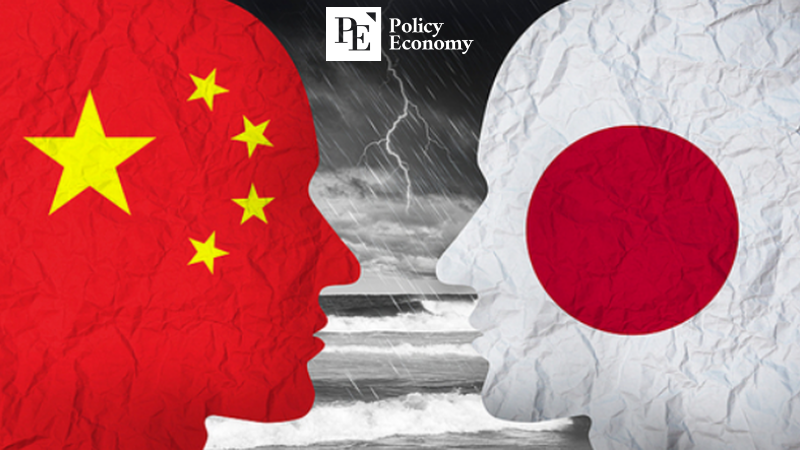
China has escalated its multidimensional retaliation against Japan after Prime Minister Sanae Takaichi stated that Japan could exercise its right of self-defense in the event of a Chinese military invasion of Taiwan. Beijing has urged its citizens to refrain from traveling to Japan, restricted imports of Japanese seafood and beef, and postponed the Korea-China-Japan Culture Ministers’ Meeting, effectively suspending key communication channels. China is now raising pressure further by openly referencing a potential ban on rare-earth exports, considered one of its most powerful punitive tools.
China’s Hardline Move: Postponement of Trilateral Culture Ministers’ Meeting
On the 21st, Xinhua News Agency and Japan’s Kyodo News reported that the 2025 Korea-China-Japan Culture Ministers’ Meeting—scheduled to be held in Macao on the 24th—had been postponed at Beijing’s request. Chinese Foreign Ministry spokesperson Mao Ning confirmed the decision during a regular briefing the previous day, stating, “Japan’s leader has made a blatantly erroneous statement regarding the Taiwan issue, hurting the feelings of the Chinese people and challenging the post-war international order,” adding that “Japan has damaged the foundation and atmosphere of trust among the three countries, making it temporarily impossible to meet the conditions for holding the meeting.”
The dispute originated from Prime Minister Takaichi’s remarks during the Budget Committee of Japan’s House of Representatives on the 7th. At the time, Takaichi stated that a potential Chinese invasion of Taiwan “could constitute a ‘survival-threatening situation’ for Japan if accompanied by the deployment of warships.” Under Japanese law, a survival-threatening situation is defined as a scenario in which, even without a direct attack on Japan, regional security conditions pose a severe threat to Japanese citizens or territory, thereby enabling the exercise of collective self-defense. China denounced the remark as interference in its internal affairs and has issued strong criticism for days, but Takaichi has refused to retract her statement.
In response, Chinese authorities advised citizens to avoid travel to Japan and urged caution in dispatching students and trainees. The postponement of the meeting is widely seen as part of this pressure campaign. The trilateral culture ministers’ meeting has been held annually on a rotating basis since 2007, with China serving as the host country this year. Meanwhile, Chinese state media have openly discussed potential additional countermeasures. The Global Times warned that “China has ample options” and declared that “any act that harms China’s core interests will inevitably come at an appropriate cost.”
China Moves to Block Japan’s Bid for a Permanent UN Security Council Seat
Beijing’s retaliation against Japan is expanding across multiple fronts. On the 19th, China formally notified Japan through diplomatic channels that it would halt imports of Japanese seafood. China had imposed a full ban on Japanese seafood in 2023 after Japan discharged treated water from the Fukushima Daiichi nuclear power plant into the ocean, citing public health and food-safety concerns. Although China briefly resumed imports by bringing in six tons of frozen scallops from Hokkaido on the 5th for the first time in two years, shipments were suspended again within two weeks, with authorities citing the need for renewed monitoring of the treated water.
On the 19th, spokesperson Mao Ning stated, “Japan pledged to fulfill its supervisory responsibilities and guarantee the safety and quality of seafood exported to China,” adding that “Japan has failed to provide the required technical documentation.” She also noted, “Prime Minister Takaichi’s recent remarks have triggered intense public anger in China, and even if Japanese seafood enters China, there will be no market for it,” stressing that China will be compelled to take “resolute countermeasures” unless the remarks are withdrawn.
Talks to resume Chinese imports of Japanese beef have also been suspended at Beijing’s discretion. The issue has been a sensitive matter for 24 years. China imposed a full ban on Japanese beef in 2001 following Japan’s confirmation of mad cow disease cases. After prolonged negotiations, the two governments signed an animal-health and quarantine agreement in July this year, opening the door for exports. However, China is now demanding technical documentation and proof of safety and quality guarantees from Japan, leaving the timing of actual market resumption uncertain.
China has also rekindled historical disputes. In a recent editorial titled “Why Ryukyu Studies Matter,” the Global Times spotlighted Okinawa—once an independent kingdom known as Ryukyu prior to the Meiji Restoration—emphasizing that the Ryukyu Kingdom had established tributary relations with the Ming Dynasty in 1372. Beijing also moved to obstruct Tokyo’s push to secure a permanent seat on the UN Security Council. On the 18th, China’s ambassador to the UN, Fu Cong, criticized Prime Minister Takaichi’s remarks during a General Assembly debate on UNSC reform, arguing that “Japan is not qualified for permanent membership.”
China’s Rare-Earth Leverage: Japan Still 60% Dependent, Not Fully Autonomous
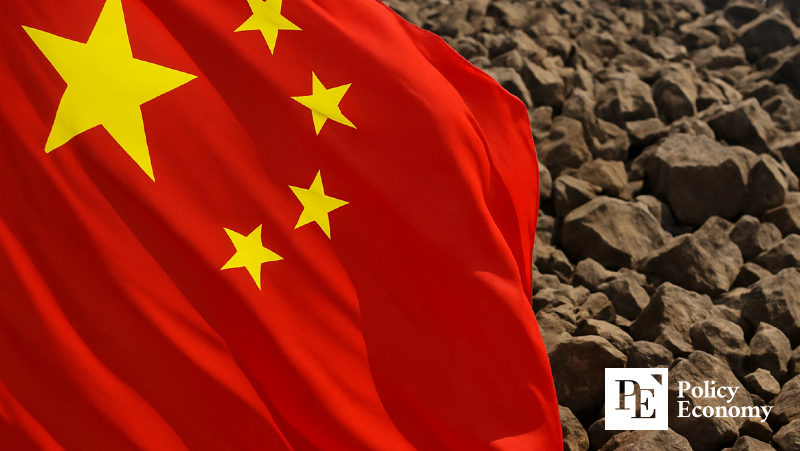
Among China’s remaining options, a rare-earth export ban is viewed as the most potent. Japan already experienced a de facto halt in rare-earth imports from China in 2010 amid the Senkaku (Diaoyu) sovereignty dispute. That episode prompted the Japanese government and private sector to jointly invest $250 million in Australia-based rare-earth mining and processing firm Lynas to reduce dependence on China. In March this year, Japan also invested approximately $116 million in French company Carester to further diversify suppliers.
Japan has simultaneously accelerated efforts to internalize key processing stages. By bringing processes such as refining and the production of alloys and high-performance magnets back onshore, Japan aims to secure buffer capacity against potential supply disruptions. Manufacturers such as Hitachi Metals produce magnets used in automotive, electronics, and robotics industries domestically, while the government-affiliated Japan Organization for Metals and Energy Security (JOGMEC) strategically stockpiles rare-earth materials to reinforce supply-chain resilience. Starting January next year, Japan plans to initiate pilot rare-earth extraction in waters near Minamitorishima.
These efforts have reduced Japan’s dependence on Chinese rare-earth supplies from 90% in 2010 to roughly 60% today. However, some high-purity compounds remain heavily reliant on China, and a significant portion of refining still takes place there—leaving full autonomy out of reach. When China tightened rare-earth export controls during the recent U.S.-China trade war, supply delays for neodymium and dysprosium—metals essential for electric-vehicle motors—forced some automakers to postpone production schedules, underscoring the industry-wide vulnerability spanning automobiles, batteries, and motor manufacturing.
Similar Post