Tesla’s next-generation AI5 chip delay forces a reset of its “full self-driving” roadmap

Authored On
Modified
AI4 expected for the first Robo-taxi “Cybercab”
Samsung joining production adds a new variable
Performance gains clear, but technical ceilings remain
Tesla’s timeline for deploying its next-generation autonomous-driving computer, AI5, has been pushed back, raising red flags over the company’s full self-driving (FSD) transition plan. With the new schedule delayed by nearly two years compared to what was initially outlined, industry observers expect meaningful repercussions for Tesla’s robo-taxi ambitions. Analysts pointed to external foundry constraints as a central factor behind Tesla’s slower-than-expected hardware shift, adding that this delay marks a significant turning point for the company’s medium- to long-term strategy.
Impact across the FSD roadmap
According to EV-focused outlet Electrek on November 20 (local time), Tesla now expects mass production of the AI5 chip in mid-2027. This represents a delay of almost two years from the original target of equipping vehicles within this year, suggesting Tesla may need to reassess its entire FSD roadmap. Because AI5 was designed as a core technology platform with computing power targeted at roughly 10× that of AI4, the new timeline is expected not only to slow production but also to push back the achievable timing for true FSD functionality.
CEO Elon Musk acknowledged bottlenecks in preparing for mass production, stating on X (formerly Twitter) on the 15th that “hundreds of thousands of completed AI5 boards must be ready on production lines.” Even if Tesla continues improving FSD software, market analysts reiterated that unsupervised autonomous driving is simply not feasible on AI4-based hardware.
The Cybercab—Tesla’s dedicated robo-taxi model—will also require rescheduling. Tesla initially targeted Q2 2026 for mass production of the vehicle. But with AI5 arriving at least a year later, early Cybercab versions will likely ship with the existing AI4 computer. While Musk continues to dismiss proposals for an optional version with a steering wheel and pedals, AI4’s capability remains insufficient for genuine, unsupervised FSD.
As a result, observers expect early Cybercab deployment to remain geographically limited and functionally constrained. Electrek noted that “Tesla is modifying its plans again due to technical limitations,” adding that despite ongoing software optimization, the persistent hardware gap means the timeline for full autonomy will continue to slide.
Restructuring outsourced production lines
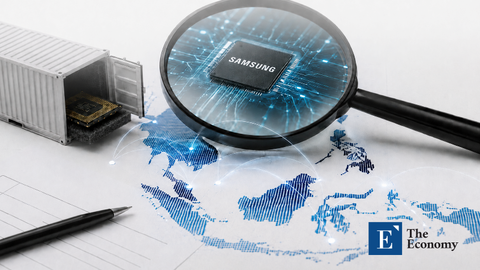
Industry analysts focused on why Tesla’s key FSD hardware, AI5, slipped behind schedule. Under the original plan, Tesla sourced AI4 from Samsung and assigned AI5 to TSMC. But in October, Musk abruptly announced that “both Samsung and TSMC will work on AI5,” prompting speculation that no single foundry could secure enough production capacity on its own.
Samsung’s entry point underscores this shift. Although Samsung was expected to resume Tesla collaboration starting with AI6, the company accelerated readiness for AI5, including advancing activation plans for its Taylor, Texas fab. Semiconductor analysts said that successful delivery of AI5 could strengthen Samsung’s position for future large-scale orders. Tesla is expected to use AI-class chips not only in EVs but also in robotics and data centers, meaning reliability in AI5 production could meaningfully reshape the foundry landscape.
This sequence of developments indicates that AI5 delays cannot be attributed solely to internal issues. Instead, they stem from a combination of foundry capacity constraints, process differences, and scheduling coordination. A semiconductor-industry official told reporters, “TSMC will naturally hold a large share of AI5 production, but Samsung’s involvement shows Tesla’s long-term chip strategy shifting away from single-supplier dependence.” The updated production schedule therefore reflects Tesla’s internal roadmap adjustments and the simultaneous restructuring of its outsourced supply chain.

Gap between stated performance gains and industry expectations
Another focal point is the level of autonomous-driving capability Tesla aims to achieve with AI5. Based on specifications shared earlier this year, AI5 targets 2,000–2,500 TOPS. Numerically, this is roughly five times the 500-TOPS range used in current Tesla vehicles equipped with HW4. But this conflicts with Musk’s earlier claims that AI5 would deliver “more than 10×” HW4 performance—raising skepticism about Tesla’s performance framing.
This concern is amplified by comparisons between AI4 and AI5. Vehicles running AI4 with FSD v13 have already demonstrated smooth performance in both urban and highway settings, handling automatic speed control, collision-avoidance prediction, lane changes, following distance management, unprotected left turns, and U-turns. Hardware upgrades also lifted AI4 to 300–500 TOPS, with cameras exceeding 5 megapixels and certain models combining radar and ultrasonic sensors—significant progress over HW3’s roughly 72 TOPS.
But these improvements do not directly translate into true FSD. Tesla still relies on a HW3-trained model simulated on HW4, meaning the system often hesitates at atypical intersections, temporary lanes, construction zones, and non-standard signage. Pattern-based learning limits its ability to reliably handle the full range of real-world edge cases. Even if AI5 offers higher theoretical compute, the gap between the requirements for true FSD and Tesla’s current technical capabilities remains substantial.
Thus, despite clear generational increases in compute performance, the difference between AI4’s already strong assisted-driving function and the next-generation performance Tesla claims for AI5 is complex. HW4’s weaknesses in irregular road situations show that compute gains alone will not be enough to achieve Musk’s goal of “no driver intervention.” Even after AI5 begins full-scale production, experts believe it will take much longer before Tesla can credibly reach that level of autonomy.
Similar Post