“From Big Tech to OpenAI” — As More Firms Build Their Own AI Chips, Can Anyone Slow NVIDIA’s Dominance?

As one of the youngest members of the team, Tyler Hansbrough is a rising star in financial journalism. His fresh perspective and analytical approach bring a modern edge to business reporting. Whether he’s covering stock market trends or dissecting corporate earnings, his sharp insights resonate with the new generation of investors.
Authored On
Modified
Big Tech Races to Build Its Own AI Chips, From Google to Amazon and Microsoft
NVIDIA’s Grip on the AI Chip Market Brings Soaring Prices and Supply Delays
OpenAI Teams Up With Broadcom, Aiming to Cut Costs by 30% Compared With NVIDIA GPUs

A shift is emerging in the AI chip market long dominated by NVIDIA. Global Big Tech firms that once relied on NVIDIA to build massive AI infrastructures are now moving to develop their own AI chips. The trend reflects a strategic push to address rising costs and supply delays stemming from the market’s highly concentrated structure.
More “NVIDIA Challengers” Enter the Scene
According to the semiconductor industry on the 24th, global Big Tech firms are accelerating efforts to develop their own AI chips. Google Cloud, for example, officially launched its seventh-generation Tensor Processing Unit (TPU), Ironwood, on the 6th. TPUs are Google’s custom AI/ML ASICs, designed and validated in just 15 months in response to the surge in deep-learning workloads in 2013. With optimized power-delivery architecture, TPUs are considered more energy-efficient than NVIDIA GPUs. Ironwood—first previewed at the Next 2025 event in April—was built to handle complex workloads such as model training, reinforcement learning, and low-latency large-scale inference.
Meta is also preparing to unveil its own custom ASIC, the Meta Training and Inference Accelerator (MTIA), in partnership with Broadcom in the fourth quarter. Amazon Web Services (AWS) has developed Trainium, a training-focused chip designed to deliver better cost efficiency and performance than GPUs for large-scale model training, and Inferentia, a purpose-built inference chip optimized for real-time workloads such as speech recognition, image classification, and recommendation systems.
Microsoft introduced its first in-house chips on the 18th: the Azure Cobalt 200 CPU and the Azure Maia 200 AI accelerator. Cobalt is a low-power, high-performance CPU designed to reduce infrastructure costs in AI cloud environments, while Maia was developed to replace NVIDIA GPUs for large-scale AI training and inference. Scott Guthrie, Executive Vice President of Microsoft’s Cloud + AI Group, said the move will “reduce external dependency and ensure supply at the scale and timing we need.”
The Costs of a Near-Monopoly
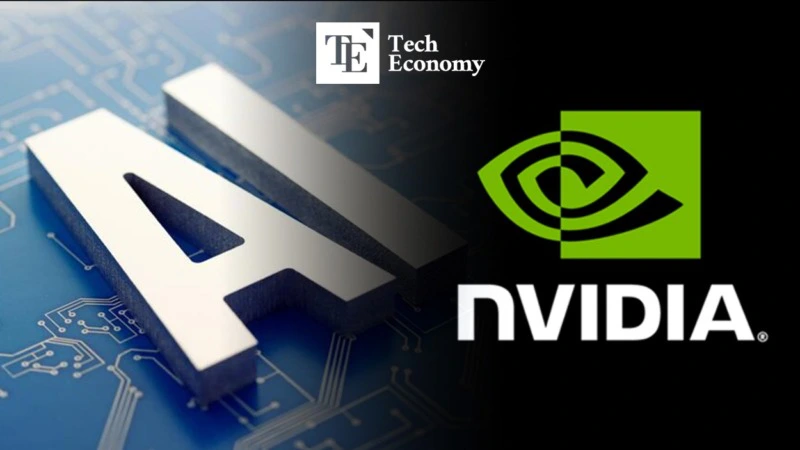
Big Tech’s push to develop in-house AI chips reflects an effort to reduce dependence on NVIDIA. At present, NVIDIA controls nearly all GPU supply for AI infrastructure. As of the second quarter of 2025, its market share is estimated at 94–97%, and in data-center GPUs it holds an overwhelming 97.7%, effectively dominating the market. This concentration has driven GPU prices higher and caused repeated delivery delays due to limited supply.
For companies building massive AI infrastructure, reliance on NVIDIA is believed to be even heavier. According to NVIDIA’s second-quarter 2025 filing with the U.S. Securities and Exchange Commission (SEC), just two unnamed customers accounted for 39% of its $46.7 billion in total revenue. “Customer A” represented 23%, and “Customer B” 16%—up sharply from 14% and 11% in the same period a year earlier.
NVIDIA listed these firms as “direct customers,” indicating they purchase chips directly and then build systems or boards for resale. This suggests they are major cloud operators driving large-scale AI infrastructure spending. Industry analysts widely believe the customers are U.S. hyperscalers, most likely Microsoft and Meta.
OpenAI Turns to ASICs as an Alternative
It is not only Big Tech that has grown uneasy with NVIDIA’s dominance. OpenAI—the company that propelled the AI era—has also begun developing its own AI chips in partnership with Broadcom, a global leader in communications semiconductors. OpenAI has identified ASICs as its preferred path. Unlike NVIDIA’s general-purpose GPUs, a custom chip tailored to the architecture and computational patterns of models like GPT could deliver far greater efficiency and performance per watt.
Choosing Broadcom as a partner is seen as a natural step. Broadcom has played a central role in Google’s TPU program as well as Meta’s and Microsoft’s custom chip development, proving its world-class capabilities in ASIC design and manufacturing. Under the partnership, OpenAI is expected to focus on model design and software optimization, while Broadcom handles the physical chip implementation.
OpenAI and Broadcom aim to reduce costs by at least 30% compared with NVIDIA GPUs. This goes beyond chip prices alone—it includes substantial cuts in data-center operating expenses through improved power efficiency. ASICs eliminate unnecessary functions and streamline data pathways, making them far more energy-efficient than general-purpose GPUs. If ASIC adoption becomes widespread, lower electricity and cooling costs—often more than half of total AI infrastructure expenses—could significantly reduce the total cost of ownership (TCO) across the full lifecycle of AI systems.
As one of the youngest members of the team, Tyler Hansbrough is a rising star in financial journalism. His fresh perspective and analytical approach bring a modern edge to business reporting. Whether he’s covering stock market trends or dissecting corporate earnings, his sharp insights resonate with the new generation of investors.
Similar Post