Escalating AI Dominance Race, U.S. Allows H200 Exports but China Counters with ‘Usage Restrictions’

Oliver Griffin is a policy and tech reporter at The Economy, focusing on the intersection of artificial intelligence, government regulation, and macroeconomic strategy. Based in Dublin, Oliver has reported extensively on European Union policy shifts and their ripple effects across global markets. Prior to joining The Economy, he covered technology policy for an international think tank, producing research cited by major institutions, including the OECD and IMF. Oliver studied political economy at Trinity College Dublin and later completed a master’s in data journalism at Columbia University. His reporting blends field interviews with rigorous statistical analysis, offering readers a nuanced understanding of how policy decisions shape industries and everyday lives. Beyond his newsroom work, Oliver contributes op-eds on ethics in AI and has been a guest commentator on BBC World and CNBC Europe.
Authored On
Modified
Trump Approves Nvidia’s H200 Exports to China
Huawei’s AI Chips Advancing to Near-Nvidia Performance
China to Approve H200 Use Only When Domestic Chips Are Not Viable
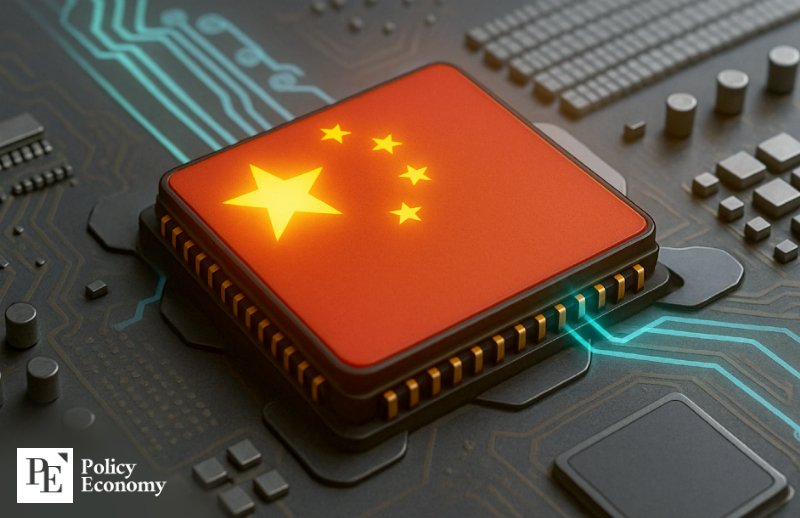
U.S. President Donald Trump has authorized exports of Nvidia’s high-performance artificial intelligence (AI) chip H200 to China, but Beijing is considering measures to restrict domestic companies’ access to the H200 in a reciprocal move. The decision is interpreted as a sign of China’s confidence that it can secure AI competitiveness without relying on the U.S., while also reflecting frustration over the “humiliating procurement structure” in which Chinese buyers must pay up to a 25% tariff as the product is rerouted through the United States. However, with China’s surging demand for AI chips colliding with severe supply shortages—and illicit imports rising—it remains uncertain whether Beijing’s countermeasures will actually stabilize the market.
China Weighs Full Ban on H200 Use in Public Sector
According to the Financial Times (FT) on the 9th (local time), the Chinese government is currently discussing access-restriction measures for the H200. Citing multiple Chinese government officials, FT reported that “Chinese companies seeking to purchase the H200 would be required to submit a justification letter to regulators stating that ‘domestic chips cannot provide a viable substitute,’ after which they would obtain formal approval.” Although detailed regulatory steps have not yet been finalized, the National Development and Reform Commission and the Ministry of Industry and Information Technology are reportedly considering an outright ban on H200 use within the public sector.
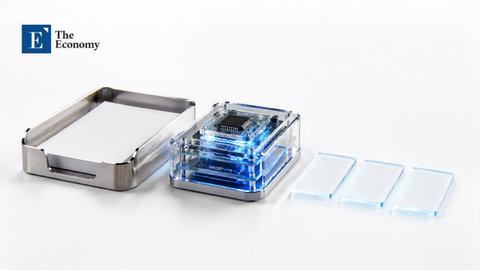
The H200 is Nvidia’s next-generation high-performance AI chip used for generative AI development and large-scale computation. It is assessed to deliver six times the performance of the H20, an advanced AI chip that can be legally exported to China. Since 2022, the U.S. government has restricted exports of Nvidia GPUs to China over concerns that Chinese AI technologies could be diverted for military use. Nvidia CEO Jensen Huang has repeatedly argued that the export controls have pushed the company out of the world’s largest semiconductor market, lobbying aggressively for the Trump administration to ease restrictions.
On the 8th, President Trump announced on his social media platform Truth Social that “he informed Chinese President Xi Jinping that the United States will allow H200 shipments to China on the condition that U.S. national security remains strongly protected,” adding that “President Xi responded positively.” He continued, “The Department of Commerce is finalizing the details, and the same approach will apply to other great American companies such as AMD and Intel.” However, the latest Nvidia Blackwell chips and the upcoming Rubin series are not included in the approved export list.
U.S. Rerouting Imposes 25% Tariff on H200 Imports
Industry analysts say China’s tightening of H200 access—despite Trump’s approval of exports—reflects growing confidence in its own AI technological capabilities. China is reportedly already operating AI systems comparable to the H200. On the 9th, Bloomberg, citing local sources, reported that “Huawei’s AI platform ‘CloudMatrix 384’ delivers performance equivalent to Nvidia’s Blackwell-based ‘NVL72’ system,” and that “China will produce millions of Ascend 910C accelerators next year to compete with Nvidia’s product lineup.” This far exceeds Washington’s earlier estimate of an annual production capacity of 200,000 units.
For this reason, industry observers believe that Washington approved H200 exports because China’s technological progress has already eroded the effectiveness of the existing sanctions regime. With China capable of achieving technological self-reliance in key product categories even without Nvidia, U.S. export restrictions have reached their limits as a pressure tactic. Additionally, the argument that U.S. sanctions have inadvertently strengthened Chinese domestic champions such as Huawei is also seen as influencing Washington’s shift. CEO Huang has likewise criticized the restrictions, saying they “only boosted Chinese companies’ technological capabilities.”
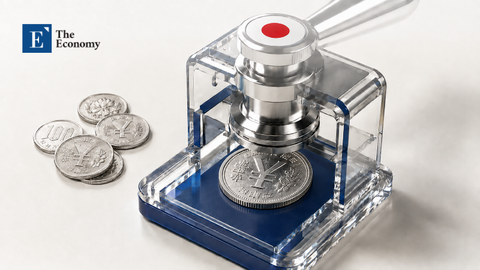
Still, separate from China’s increasingly tangible technological gains, the humiliating structure of H200 imports remains a major irritant in Beijing’s competition with Washington for technological supremacy. According to the Wall Street Journal (WSJ), H200 units produced in Taiwan cannot be shipped directly to China; for national security reasons, they must be rerouted through the United States. During this rerouting, they undergo special security inspections and face tariffs of up to 25%—effectively functioning as a de facto export tax collected in the form of tariffs. As a result, fees and tariff burdens fall entirely on Chinese companies, creating a structure in which the U.S. benefits financially every time H200 units are imported into China.
Exploding Demand and Worsening Supply Shortages Spur Illicit Imports
Nevertheless, it remains unclear whether Beijing’s restrictions on Nvidia chip usage will function effectively in the market. Chinese tech giants such as Alibaba, ByteDance, and Tencent have aligned with government policy by using domestic chips for lower-compute tasks such as AI inference, but they continue to rely heavily on Nvidia’s products for training, which requires massive computational power. Nvidia’s chips outperform domestic alternatives in both performance and power efficiency. Some Chinese firms are even resorting to offshore training—running AI model training in foreign locations—to circumvent domestic bans on certain Nvidia chips.
Compounding the issue, China is suffering acute supply shortages amid surging chip demand. The Chinese government has intervened directly in the allocation of chips produced by the country’s largest foundry, SMIC, attempting to control distribution. This has created a system under which strategic firms such as Huawei—requiring both AI chips and smartphone processors—receive priority allocation. The challenge, however, is that SMIC and other Chinese foundries still lag far behind TSMC in both production capacity and yield. As a result, companies cannot secure sufficient semiconductors for AI projects, causing delays and intensifying bottlenecks across the industry.
Amid this widening supply-demand imbalance, illicit import cases are multiplying. Recently, U.S. prosecutors arrested Chinese-American entrepreneurs attempting to smuggle USD 160 million worth of Nvidia H200 and H100 chips into China. They face charges of falsifying shipping labels and disguising export items and destinations between October last year and May this year. In another case, the CEO of a U.S. subsidiary of a Chinese IT company and the Chinese-American CEO of a New York-based tech firm allegedly colluded with a Hong Kong logistics company and a Chinese AI firm to attach false labels to H200 units in an attempt to smuggle them into China and Hong Kong.
Oliver Griffin is a policy and tech reporter at The Economy, focusing on the intersection of artificial intelligence, government regulation, and macroeconomic strategy. Based in Dublin, Oliver has reported extensively on European Union policy shifts and their ripple effects across global markets. Prior to joining The Economy, he covered technology policy for an international think tank, producing research cited by major institutions, including the OECD and IMF. Oliver studied political economy at Trinity College Dublin and later completed a master’s in data journalism at Columbia University. His reporting blends field interviews with rigorous statistical analysis, offering readers a nuanced understanding of how policy decisions shape industries and everyday lives. Beyond his newsroom work, Oliver contributes op-eds on ethics in AI and has been a guest commentator on BBC World and CNBC Europe.
Similar Post