India deepens alliance with Russia despite Trump’s tariff pressure, expanding from logistics infrastructure to consumer goods

Authored On
Modified
India and Russia have maintained an alliance for more than 60 years since the Cold War era
Cooperation extends beyond energy and defense to joint development of icebreakers
Tariff talks with the United States also accelerating, likely to conclude within the year
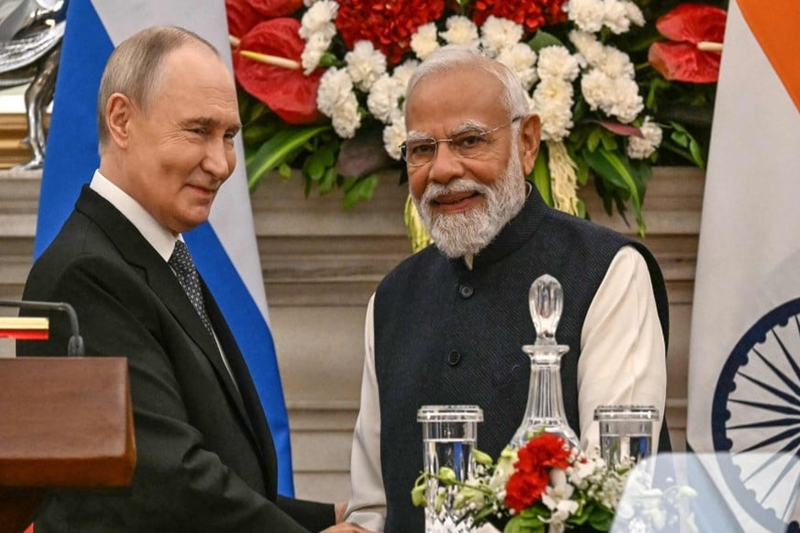
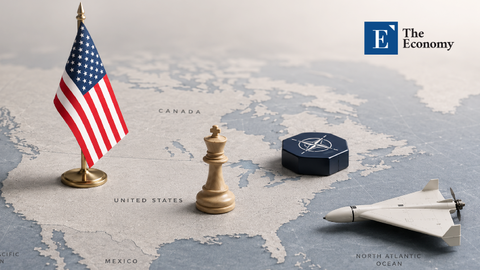
Even as U.S. President Donald Trump exerts pressure on India by imposing tariffs of 50%, India and Russia are consolidating a partnership that stretches back to the Cold War. With the two leaders issuing a joint statement in recent days, bilateral relations are entering an inflection point in which cooperation, once centered on military and energy, is broadening across the economy and industry—from logistics infrastructure to labor mobility and consumer-goods exports. India is emerging as a pivotal state capable of reshaping the balance between Washington and Moscow, seeking a point of equilibrium in its foreign and trade policy by deepening cooperation with Russia while simultaneously accelerating tariff negotiations with the United States.
Putin–Modi summit under additional U.S. sanctions
According to Bloomberg on the 10th (local time), Russian President Vladimir Putin paid a state visit to New Delhi, India, on a two-day schedule starting on the 4th and held a summit with Prime Minister Narendra Modi, where the two agreed to strengthen cooperation in energy, including oil and nuclear power. It was Putin’s first visit to India in four years, since December 2021, just before Russia launched its war against Ukraine in February 2022. On this occasion, Modi made the unusual move of personally greeting Putin at Palam Air Force Station in New Delhi as he stepped off his presidential aircraft.
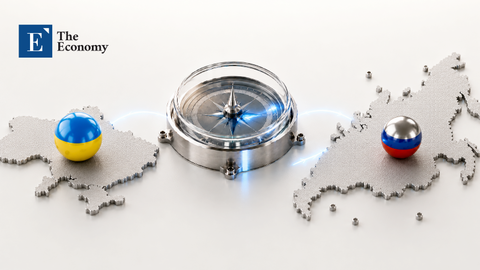
The summit took place as India has since August been subject to a 50% tariff on its exports to the United States, imposed in response to its imports of Russian crude. After the summit on the 5th, Putin declared in a joint statement that “Russia is ready to provide uninterrupted fuel supplies tailored to India’s growing economy,” while Modi stressed that “the friendship between India and Russia is like the North Star” and added, “Energy security is a solid pillar of our partnership, and we will continue this win-win cooperation.”
The two leaders were also reported to have focused on options for further military cooperation. India has agreed to lease a nuclear-powered submarine from Russia, to be delivered in 2028. They are also said to have discussed additional deliveries of Russia’s advanced S-400 surface-to-air missile defense systems and joint production of Su-57 fighter jets. In October, senior executives from major Indian defense companies visited Russia to review Moscow’s proposal to build production facilities in India to manufacture parts for Russian air-defense and weapons systems, including Mikoyan MiG-29 fighter jets.
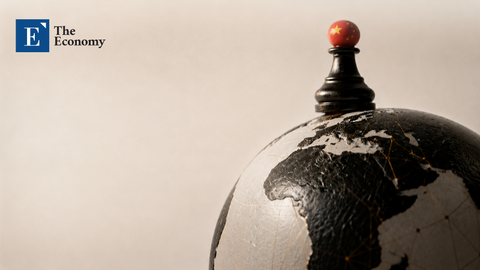
Experts believe that, given the historical context and underlying geopolitical interests, the two countries will continue to uphold a close relationship. As tensions between the Soviet Union and China escalated in the 1960s, Moscow rapidly drew closer to New Delhi and thereafter provided diplomatic support whenever India clashed with China or Pakistan. Bilateral ties tightened further when the United States imposed sanctions on India over its nuclear tests. This cooperation subsequently broadened into the energy and defense sectors. Since the 1960s, the Soviet Union has supplied India with crude oil at prices below international benchmarks and for decades has provided weapons and large-scale loans.
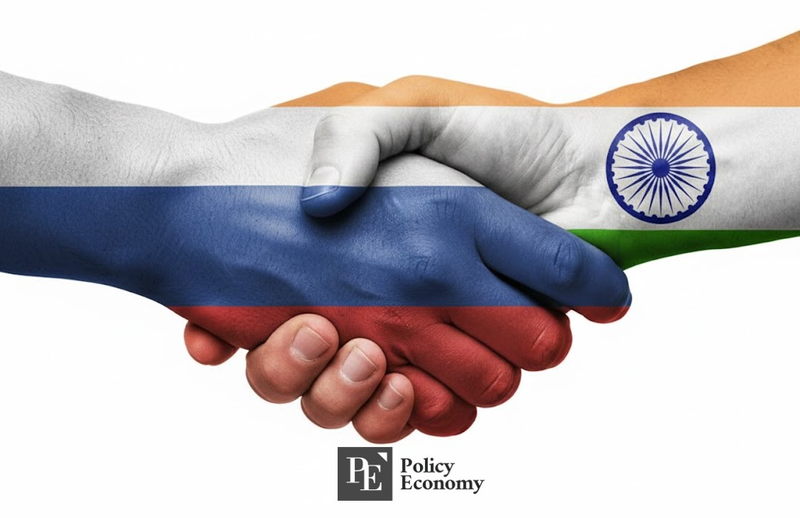
India–Russia ties evolve into “horizontal cooperation”
Analysts say that the combination of post-Ukraine-war sanctions on Russia and President Trump’s tariff policy has pushed India–Russia relations into a structural turning point. What was once a vertical relationship focused on arms and energy is shifting toward a more horizontal partnership that spans the broader economy and industrial base. India prefers to settle its large-volume imports of Russian energy and raw materials in its own currency, but with Russia cut off from the dollar payment system, that currency has been accumulating inside Russia with limited international usability, creating a persistent constraint. To ease that constraint, the two sides are now placing greater weight on building a shared economic base rather than concentrating solely on military collaboration.
Within this context, shipbuilding and logistics cooperation stands out most clearly. The joint statement from the summit includes language calling for the two countries’ shipbuilding industries to design icebreakers together and explore options for local production in India. It also sets out plans for Russia to provide navigation training and operational know-how so that Indian seafarers can sail in Arctic waters. This partnership goes beyond mere vessel construction, aiming to establish a maritime trade axis linking the Far East and Europe along the Arctic coastline. With Western sanctions constraining the traditional Northern Europe–Atlantic–Mediterranean routes, Russia is seeking to develop Arctic sea lanes—under its own control—into a new economic corridor.
A labor-mobility agreement is likewise a central component of the joint statement. Russia is grappling with a broad-based labor shortage across industries due to the war and demographic decline, while India has a vast youth population. Although labor flows between the two countries already existed to some degree, the latest agreement is significant in that it systematizes and scales up those movements. Trade in consumer goods is also expanding. In recent years, Indian industrial and consumer products have been rapidly filling Russian shelves, with Indian machinery and components, pharmaceuticals, spices, tea, coffee, processed foods, and apparel increasingly displacing European brands in the Russian market. Once quarantine and certification issues are resolved, exports of agricultural and marine products are also expected to grow sharply.
Resilient growth even amid tariff talks with the United States
At the same time, India is strengthening its partnership with Russia while pushing to finalize a first-phase tariff agreement with the United States by the end of this year. Since August, the Trump administration has imposed a total tariff of 50% on India—25% in reciprocal tariffs by country, plus an additional 25% sanctionary levy tied to its oil trade with Russia. The 50% rate is among the highest that Washington has applied to any trading partner and is on par with the tariff imposed on Brazil. As a result, India’s trade deficit swelled last month to a record dollar 41.68 billion, the largest in its history.
Even so, the Indian government has offered an upbeat outlook. Rajesh Agrawal, additional secretary at India’s Ministry of Commerce and Industry and head of the country’s trade delegation in talks with Washington, commented, “The trade deficit is not yet at an alarming level,” and added, “India hopes to completely eliminate reciprocal tariffs through a comprehensive agreement.” He noted, “The two countries had initially planned to conclude a first-phase agreement by this fall, but the timeline was pushed back due to shifts in U.S. trade policy,” and said, “Negotiations are now in their final stages.” He further stated, “Most of the contentious issues have been resolved, and the remaining points can be settled at the political level.”
In practice, India’s economy has maintained solid momentum despite U.S. pressure. In the third quarter, India’s real gross domestic product (GDP) grew 8.2%, outpacing the second quarter’s 7.8% expansion. The surge in private consumption—which accounts for 60% of GDP—combined with a 9.1% year-on-year increase in manufacturing output underpinned that performance. In a report by its Global Investment Committee (GIC), Morgan Stanley projected that “India’s real GDP growth will come in at 5.9% in 2025 and 6.4% in 2026,” forecasting that “India will post robust growth this year and next and will be the fastest-growing major economy.”
Similar Post