After Three Straight Rate Cuts by the Fed, Next Year Hangs on ‘Hardline Dove’ Hassett

Matthew Reuter is a senior economic correspondent at The Economy, where he covers global financial markets, emerging technologies, and cross-border trade dynamics. With over a decade of experience reporting from major financial hubs—including London, New York, and Hong Kong—Matthew has developed a reputation for breaking complex economic stories into sharp, accessible narratives. Before joining The Economy, he worked at a leading European financial daily, where his investigative reporting on post-crisis banking reforms earned him recognition from the European Press Association. A graduate of the London School of Economics, Matthew holds dual degrees in economics and international relations. He is particularly interested in how data science and AI are reshaping market analysis and policymaking, often blending quantitative insights into his articles. Outside journalism, Matthew frequently moderates panels at global finance summits and guest lectures on financial journalism at top universities.
Authored On
Modified
Policy rate cut by 25bp to 3.50–3.75%
November private payrolls hit by ‘negative growth shock’
Aggressive rate cuts likely if chair is replaced
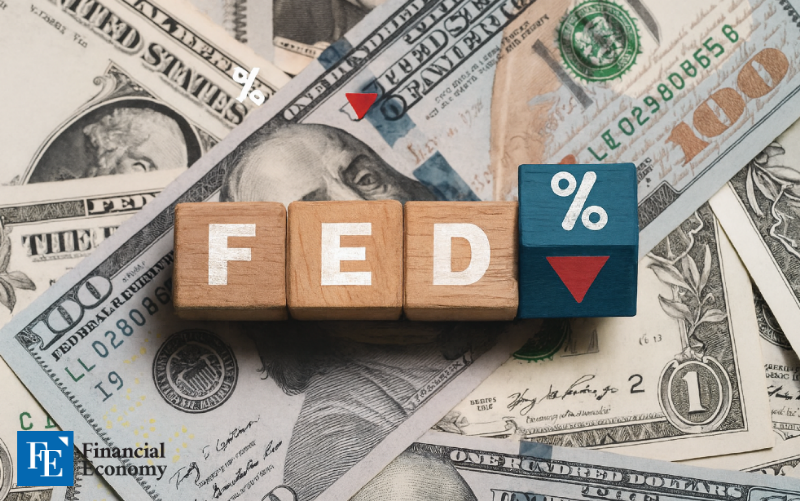
The U.S. Federal Reserve (Fed) has cut its benchmark interest rate by 0.25 percentage point, marking a third consecutive reduction. Although inflation remains above target, concern over labor-market fragility rather than price pressures was the primary driver behind the latest easing move. The rate path for next year, however, remains highly uncertain. The so-called dot plot still points to just one rate cut in 2025, but with a change at the helm of the Fed due in May and the nomination of a pro-Trump successor widely expected, some observers predict that monetary policy will tilt more decisively in a dovish, easing-friendly direction.
Policy rate at 3.50–3.75%, lowest since October 2022
On the 10th (local time), the Fed announced after its Federal Open Market Committee (FOMC) meeting that it had decided to lower the federal funds rate from 3.75–4.00% to 3.50–3.75%. This is the third straight 0.25 percentage point cut following reductions in September and October, and is in line with market expectations. What stood out, however, was the depth of division within the Fed.
According to the Wall Street Journal (WSJ), three of the 12 voting FOMC members (the seven Fed governors and five regional Federal Reserve Bank presidents) dissented. Fed Governor Steven Mnuchin, one of President Donald Trump’s closest confidants, argued for a “big cut” of 0.5 percentage point, while Kansas City Fed President Jeffrey Schmid and Chicago Fed President Austan Goolsbee called for no change in rates. It is the first time in six years that three Fed officials have cast dissenting votes at the same meeting. The fact that doves and hawks opposed the decision from opposite directions underscores how sharply the Fed is split over whether to prioritize inflation control or employment.
This FOMC decision was taken against a backdrop of delayed and noisy economic data releases caused by the longest government shutdown on record. At his press conference after the meeting on the 10th, Fed Chair Jerome Powell said of the current rate level that the Fed is “in a good position to watch and see how the economy evolves from here.” He added, “Following the policy adjustments since September, our stance is now within a reasonable range of estimates of neutral.” With three consecutive 0.25 percentage point cuts since the September meeting—75 basis points in total—the Fed funds rate has, in his telling, been brought back down toward neutral.
Choosing jobs over rekindling inflation
The decisive trigger that solidified the Fed’s justification for cutting rates was the shock from the labor market. Tasked with achieving both “price stability” and “maximum employment,” the Fed worried about above-target inflation and the impact of the Trump administration’s global tariffs on prices, but ultimately opted to prioritize the weakening jobs market in deciding to ease.
According to payroll processor Automatic Data Processing (ADP), U.S. private-sector employment in November fell by 32,000 jobs from the previous month. That outcome ran directly counter to Wall Street economists’ expectations for a modest increase. Compared with the 47,000 jobs added in October, the data suggest the labor market swung into a sharp downturn in the space of just one month. At the same time, the unemployment rate climbed to 4.4%, amplifying concerns over labor-market conditions.
The epicenter of this hiring freeze was small businesses with weaker fundamentals. Seasonal effects that normally support employment heading into the year-end holiday period—such as delaying layoffs or increasing temporary hires—failed to materialize. In November alone, firms with fewer than 50 employees shed more than 120,000 jobs. Slowing growth, rising costs and uncertainty over consumer behavior dealt a heavy blow to many small businesses, and broad-based job losses were seen across sectors including IT and manufacturing. By contrast, larger and better-capitalized firms increased headcount by 90,000, highlighting a widening divide.
In this environment, the consumer price index (CPI) for September rose 3.0% year-on-year, returning to the 3% range for the first time since January (3.0%). Even if tariff-driven inflation is described as a temporary shock, the current level is uncomfortable given that the full impact has yet to be felt. The personal consumption expenditures (PCE) price index for September also rose 2.8%. While in line with the Dow Jones consensus estimate, it was the highest reading in a year and a half, since March last year (2.9%).
This combination of sticky inflation and weakening employment significantly constrains the Fed’s room for maneuver on monetary policy. In its statement, the Fed noted that “job gains have slowed this year and the unemployment rate has edged up through September,” while “inflation has moved higher since the beginning of the year and remains somewhat elevated.” It added that “downside risks to employment have increased in recent months,” citing this assessment as the backdrop for the rate cut.
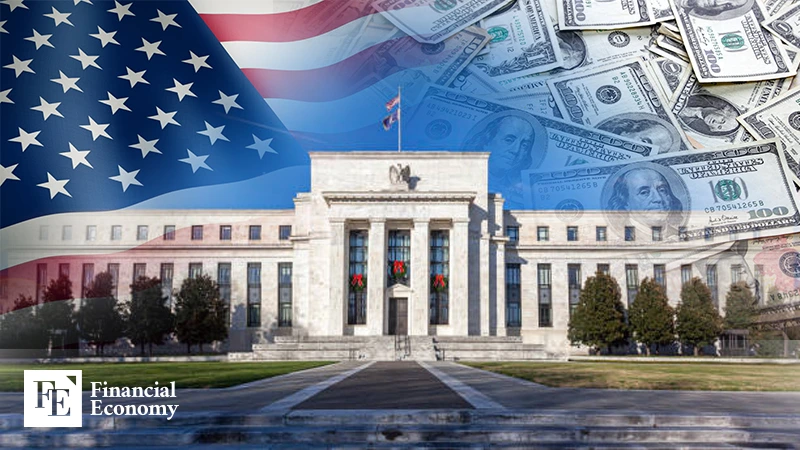
Big-cut pressure seen mounting after Powell term ends in May
With three consecutive rate cuts now in place, market attention has shifted squarely to next year’s rate trajectory. In its dot plot of future policy projections, the Fed signaled just one more rate cut in 2025. It set the median projection for the fed funds rate at the end of next year at 3.4%, which translates into a single additional 0.25 percentage point cut over the course of the year. Yet analysts believe the pace and scale of future easing will hinge heavily on Chair Powell’s term and the choice of his successor. Powell, known for his cautious stance on cutting rates, is set to step down as chair in May next year, and the new chair to be appointed by President Trump is seen as likely to advocate larger reductions.
To carry out President Trump’s preference to lower rates from the current 3.75–4.00% range to 1.00%, the Fed Board would need to include governors aligned with the White House. The president has already made clear that, in selecting a nominee, he will prioritize candidates who favor low interest rates over those strictly committed to the Fed’s dual mandate of price stability and maximum employment. Trump also publicly criticized the latest FOMC decision, saying “the pace of rate cuts should have been at least twice as fast,” and once again disparaged Powell as a “stubborn person.”
At present, the figure most widely viewed as a potential Fed chair is Kevin Hassett, head of the White House National Economic Council (NEC). The WSJ attributed Hassett’s emergence as a leading candidate to his meeting the president’s two core criteria of “loyalty” and “market credibility.” Hassett, for his part, has been unabashed about his ambitions. In a CNBC interview on the 30th of last month, when discussing possible successors to Powell, he remarked, “If I were chosen, I would be pleased to serve the president.” On the 8th, the day before this month’s FOMC meeting, he again aligned himself with President Trump, saying that a big cut was possible immediately.
Matthew Reuter is a senior economic correspondent at The Economy, where he covers global financial markets, emerging technologies, and cross-border trade dynamics. With over a decade of experience reporting from major financial hubs—including London, New York, and Hong Kong—Matthew has developed a reputation for breaking complex economic stories into sharp, accessible narratives. Before joining The Economy, he worked at a leading European financial daily, where his investigative reporting on post-crisis banking reforms earned him recognition from the European Press Association. A graduate of the London School of Economics, Matthew holds dual degrees in economics and international relations. He is particularly interested in how data science and AI are reshaping market analysis and policymaking, often blending quantitative insights into his articles. Outside journalism, Matthew frequently moderates panels at global finance summits and guest lectures on financial journalism at top universities.
Similar Post