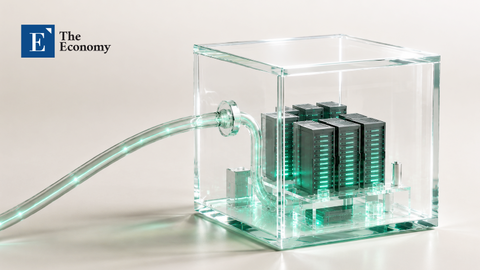
AI Data Center Thermal Runaway Era: Cooling Technology Becomes the Decisive Frontline of Hegemony

Authored On
Modified
Companies Racing to Cool Data Centers
Liquid Cooling as the Core of AI Data Centers
Toward High Latitudes, the Seabed, and Space in Search of Cooling Advantages
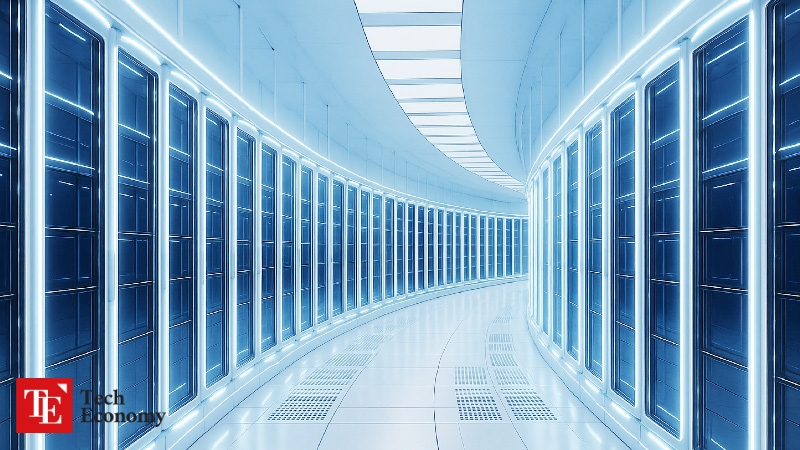
As artificial intelligence (AI) technologies expand at an explosive pace, data centers worldwide are confronting a massive “thermal wall.” As hyperscale operators such as Google accelerate the performance race and conventional air-cooling systems reach their limits, advanced cooling technologies capable of breaking that ceiling are emerging as core infrastructure for the next industrial cycle. This momentum is spreading even into the ocean and outer space. Undersea data centers are positioned to boost efficiency by using low seawater temperatures as a cooling source, while space-based data centers are being discussed as a next-generation infrastructure model on the premise that they can radiate heat directly in a vacuum environment and secure around-the-clock solar power.
Evolution of Data Center Cooling Infrastructure
According to Global Market Insights, a market-research firm, the global heating, ventilation, and air-conditioning (HVAC) market is projected to surge from $301.6 billion in 2024 to $545.4 billion by 2034. In other words, within a decade the HVAC market will expand to a scale comparable to last year’s global smartphone market size of $570 billion.
Behind this cooling-market expansion lies the immense heat output of graphics processing units (GPUs), which are essential for AI training. In data center operations, thermal management is no longer a simple maintenance issue but a decisive factor governing system continuity and reliability. Most of the heat generated in data centers arises during data processing. When AI-related data are processed, core components such as central processing units (CPUs), GPUs, and memory produce substantial heat. In particular, as server performance improves, the mainstreaming of high-density servers and the spread of GPU-centric AI computation have driven heat generation per unit area to levels far beyond anything in the past.
As a result, cooling methods have also changed from the past. Data centers have long relied on “air cooling,” which circulates cold air. Because external temperatures matter, demand was strong for building data centers in cold Northern European countries. However, air cooling has a drawback: once temperatures exceed a certain threshold, cooling efficiency deteriorates. It remains the most widely used method, but it is increasingly viewed as ill-suited to the AI-driven shift.
Expanding Immersion-Cooling Market
The industry is therefore turning its attention to “water cooling.” Interest from big-tech companies in related technologies has risen in particular after Nvidia decided to adopt water-based cooling for its next-generation AI accelerator, “Blackwell.” Among these approaches, “Direct-to-Chip” cooling uses a cold plate—a metal plate through which coolant flows—pressed tightly against the GPU chip surface to remove heat. Because it does not use cooling fans, it also offers the advantage of being less exposed to noise and dust issues.
Another water-based method, “Immersion Cooling,” is also emerging as a next-generation technology. This approach cools systems by submerging entire servers in a special non-conductive liquid. It covers a wider cooling range than direct-to-chip and can cool uniformly without temperature differentials between components. In particular, immersion cooling is a technology that must be adopted once per-rack heat output exceeds 50 kilowatts (kW). The per-rack power density of the latest AI clusters has already crossed 100 kW—more than five times that of conventional systems.
Beyond advancing cooling technologies, efforts are also accelerating to locate data centers directly in low-temperature environments to achieve natural cooling. In practice, some companies operate data centers in high-latitude regions where average temperatures remain low year-round. Meta is known to have significantly reduced cooling costs by building a data center in Luleå, Sweden, near the Arctic Circle in 2013. China’s Yazhang Computing Tech built a large-scale AI-dedicated computing center, “Yazhang No. 1,” on the Tibetan Plateau. Yazhang No. 1 is said to be equipped with high-performance servers as well as an eco-friendly cooling system. Naver also built a data center in Chuncheon, Gangwon Province—where average temperatures are low—creating a structure that cools server heat using cold air descending from the mountains.
These experiments are not confined to land. China’s Highlander Digital Technology plans to deploy a new undersea computing module off the coast of Shanghai. Undersea data centers regulate server temperatures. This technology was first tested in 2018, when Microsoft (MS) conducted an initial trial off the coast of Scotland. The goal is to raise energy efficiency by leveraging low ocean temperatures; analysis found that server failure rates were reduced to one-eighth of those on land. China’s ongoing project is regarded as an early case aimed at commercialization. Power for the undersea data center is planned to be supplied mostly from offshore wind farms, lifting the renewable-energy share to over 95%.
Space Data Centers Emerging Without Energy, Efficiency, or Space Constraints
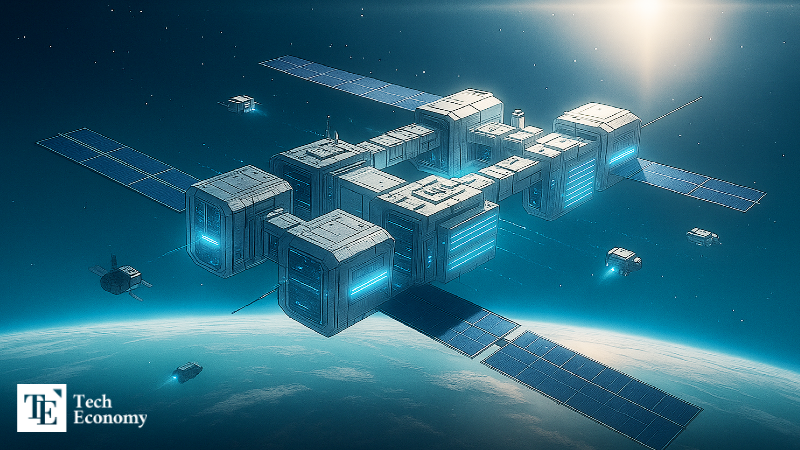
Recently, the establishment of space-based data centers has also entered discussion on the premise that no separate cooling equipment is required and that 24-hour solar power generation is possible regardless of climate. The company seen as furthest ahead is SpaceX, founded by Elon Musk. SpaceX is pursuing a plan to build a space AI data center by mounting AI computing equipment on Starlink satellites. In an interview with a U.S. technology outlet, Musk said, “SpaceX will actually operate orbital data centers in the future,” adding that “once (the next-generation rocket) Starship is fully stabilized commercially, the cost of lifting data center modules into space becomes competitive even compared with the cost of building terrestrial data centers.”
Jeff Bezos, chairman of Amazon and head of space company Blue Origin, also has a vision of expanding Amazon Web Services (AWS) cloud—one of today’s largest data-market players—into space. At an event held in Italy last month, Bezos said, “In 10 to 20 years, we will enter an era in which we operate gigawatt (GW)-class data centers in space.” A 1 GW-class data center corresponds to the level of electricity consumption used by a city of roughly 1 million people.
Starcloud, a startup backed by Nvidia, recently succeeded in running an AI model in orbit by mounting Nvidia’s H100 GPU on a satellite launched aboard a SpaceX rocket. This is the first time an AI model has been trained in space. Google also unveiled “Project Suncatcher” last month on the 4th, a concept to extend AI infrastructure into space. The plan is to place AI chips such as TPUs (Tensor Processing Units) into small satellites that generate their own power via solar cells and link those satellites together like a single computing network.
A space AI data center refers to a technology that operates AI computing equipment like a data center by loading it onto multiple low-Earth-orbit satellites (200 to 2,000 kilometers above the ground). The aim is for multiple satellites to interconnect and cooperate as one large computing center to perform computation. Unlike Earth, space can provide all three conditions AI needs. In low Earth orbit, stable solar power can be secured without weather disruption, enabling on-site generation of the electricity required for computation; in a vacuum, heat can be radiated directly into space without consuming vast amounts of water as on Earth. Land constraints are also effectively nonexistent. On this point, Bezos said, “In space, you can use uninterrupted solar energy 24 hours a day, allowing large AI clusters to be operated far more stably than on Earth.”
Similar Post