“Tariffs Imposed on EU Pork” China Retaliates, Putting EU–China Cooperation Hopes at Risk Amid Tariff Wars

As one of the youngest members of the team, Tyler Hansbrough is a rising star in financial journalism. His fresh perspective and analytical approach bring a modern edge to business reporting. Whether he’s covering stock market trends or dissecting corporate earnings, his sharp insights resonate with the new generation of investors.
Authored On
Modified
China Imposes 4.9%–19.9% Anti-Dumping Tariffs on EU Pork
Beijing Strikes Back as the EU Uses Tariffs to Push Out Chinese EVs
EU and China, Once Hinting at Cooperation Against US Tariff Barriers, See Ties Cool Again
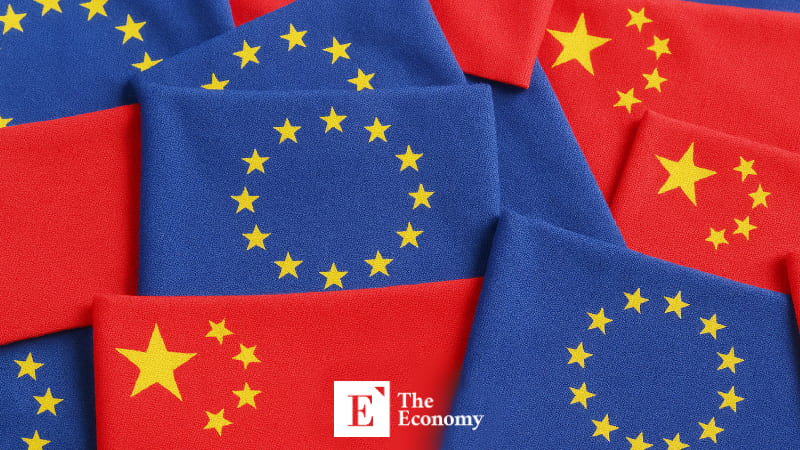
China is set to impose anti-dumping tariffs on pork imported from the European Union (EU). Beijing says the move follows the results of an anti-dumping investigation launched in June last year, which it claims proved that EU pork has been harming China’s domestic industry. Markets, however, increasingly see the decision as a de facto retaliatory measure in response to the EU’s additional tariffs on Chinese electric vehicles.
China Launches Trade Retaliation Against the EU
On December 16 (local time), China’s Ministry of Commerce announced on its website that it will impose anti-dumping duties of between 4.9% and 19.9% on pork and pork offal imported from the European Union. The ministry said the move follows the outcome of an anti-dumping investigation launched in June last year at the request of the China Animal Agriculture Association.
The ministry said it “conducted the investigation in accordance with laws and regulations, broadly solicited the views of all interested parties, and fully safeguarded their rights, arriving at objective and fair conclusions.” According to the final ruling report, pork and pork offal imported from the EU were found to have been dumped and to have caused significant harm to China’s domestic industry.
China has already been imposing provisional anti-dumping duties of up to 62.4% on EU pork since September. Tariff rates of 15.6% to 32.7% were applied to Spain, Denmark, and the Netherlands, which cooperated with the investigation, while a 62.4% rate was imposed on other countries. Under the latest decision, the maximum tariff rate will be lowered to 19.9%. The duties will take effect on December 17 and will remain in force for five years.
The anti-dumping duties will be levied on an ad valorem basis, calculated using the formula: “taxable import value as determined by customs × anti-dumping duty rate.” Import value-added tax will be imposed on an ad valorem basis by adding customs-determined taxable value, customs duties, and anti-dumping duties.
Guarantees provided to Chinese customs by importers between September 10 and December 16, in line with the provisional ruling, will be converted into anti-dumping duties based on the final determination of product scope and duty rates, with import-stage value-added tax applied accordingly. Any portion of the guarantees exceeding the final anti-dumping duties, as well as any over-collected import-stage value-added tax, will be refunded by customs authorities, while any shortfall will not be collected further.
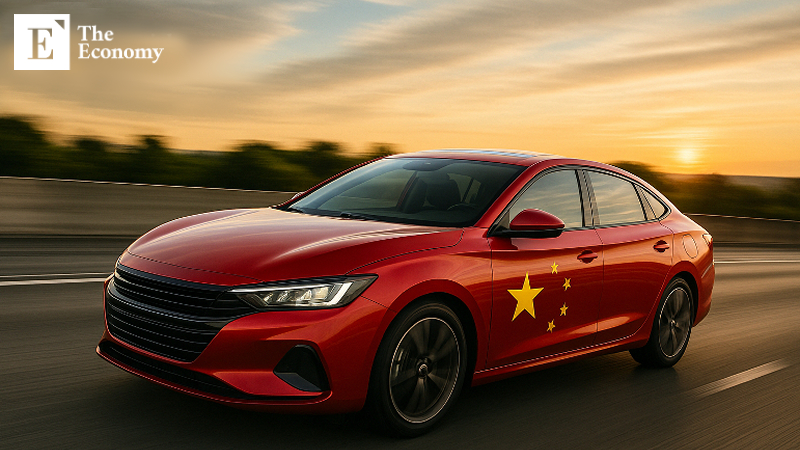
EU Steps Up Its Pushback Against Chinese EVs
Markets widely view the pork anti-dumping duties as effectively retaliatory in nature. That is because China launched its investigation into EU pork and related products shortly after the EU announced plans to impose additional tariffs on Chinese electric vehicles. In June last year, the EU informed automakers that it would impose provisional duties on Chinese EVs, based on the findings of an anti-subsidy investigation. At the time, Valdis Dombrovskis, the EU’s trade commissioner, said there was “no choice but to act” amid a surge in EV imports benefiting from heavy subsidies from China, warning that Europe’s industry risked being harmed.
The additional tariff rates vary depending on the level of cooperation with the investigation and by manufacturer. As of October last year, final countervailing duty rates on Chinese battery electric vehicles (BEVs) stood at 7.8 percentage points for Tesla, 17 percentage points for BYD, 18.8 percentage points for Geely, and 35.3 percentage points for SAIC. When combined with the EU’s base import tariff of 10%, total duties can reach as high as 45.3%. Chery Automobile, classified as an “other cooperating company,” was hit with a 20.7% countervailing duty. These measures are set to remain in place for five years.
The problem is that these trade barriers have failed to stem what many describe as a Chinese EV “onslaught.” Chinese manufacturers have been bypassing the tariffs by shipping large volumes of low-priced plug-in hybrid vehicles (PHEVs) to Europe instead of BEVs. Chinese brands sold just 779 PHEVs in Europe in August last year, but that figure surged to 11,064 this August—an increase of 1,320%. In the same month, three Chinese models made it into the EU market’s top 10 PHEV rankings: BYD’s Seal U, Jaecoo’s J7, and MG’s HS. Jaecoo is owned by Chery Automobile, while MG is a premium brand under SAIC.
In response, the EU has moved hastily to ease regulations on internal combustion engine vehicles. The policy shift reflects concerns over struggling regional automakers, squeezed by competition from low-cost Chinese players and the heavy investment burden of electrification. A legislative amendment unveiled by the European Commission on December 16 includes a plan to lower the 2035 new-car carbon reduction target to 90%, down from the original goal of 100%. This would allow certain internal combustion vehicles, including diesel models, as well as plug-in hybrids, to continue being sold in the EU beyond 2035. In exchange, automakers would be required to cut emissions through other means, such as using low-carbon, EU-produced steel or manufacturing vehicles with cleaner fuels.
EU–China Cooperation Prospects Effectively “Wiped Out”
As trade tensions between the EU and China flare up again, any prospect of cooperation that had surfaced amid tariff battles triggered by the Donald Trump administration in the United States has effectively lost its meaning. EU–China relations had been seen as recovering rapidly in the months following Trump’s return to office. China’s top diplomat, Foreign Minister Wang Yi, toured Europe in February, visiting the United Kingdom, Ireland, and Germany. In March, He Lifeng, China’s vice premier and key economic policymaker, met with EU trade commissioner Maroš Šefčovič at the Diaoyutai State Guesthouse in Beijing, proposing that China and the EU “jointly resist unilateralism and protectionism, uphold the multilateral trading system, strengthen dialogue and exchanges, expand mutual openness, and promote healthy and stable development.”
The two sides also held a summit in July, exploring ways to coordinate responses to the United States. At the time, Chinese President Xi Jinping met with European Council President António Costa and European Commission President Ursula von der Leyen at the Great Hall of the People in Beijing, saying that “China–EU relations are at a turning point” and that “strategic judgment is needed in turbulent times.” Xi stressed that China and the EU should work together to build global governance, cooperate on global challenges such as climate change, and ensure that the torch of multilateralism lights the future of humanity. The remarks were widely interpreted as a call to forge cooperation on supply chains and tariffs in response to the United States. Xi also said there were “no fundamental conflicts of interest or geopolitical contradictions” between China and the EU, and urged Europe to refrain from imposing economic and trade restrictions.
Von der Leyen, however, pointed to the EU’s trade deficit with China and argued that Beijing must address trade imbalances. “As our cooperation has deepened, imbalances have also grown,” she said, calling on China to acknowledge the concerns of EU member states and present genuine solutions. She reiterated the EU’s long-standing position that China has distorted markets by funneling massive state subsidies into manufacturing sectors such as electric vehicles and solar panels, encouraging overcapacity and exporting products to Europe at low prices. With positions clearly divided, the two sides failed to produce any concrete, codified outcomes from the talks, aside from a brief joint statement on climate action marking the 10th anniversary of the Paris Agreement.
As one of the youngest members of the team, Tyler Hansbrough is a rising star in financial journalism. His fresh perspective and analytical approach bring a modern edge to business reporting. Whether he’s covering stock market trends or dissecting corporate earnings, his sharp insights resonate with the new generation of investors.
Similar Post