“Behind the ‘huge U.S. win’: questions surrounding Korea Zinc’s smelter investment in the United States

Authored On
Modified
Funding burden concentrated on Korea Zinc, raising fairness concerns
Links to the South Korean government’s pro-U.S. investment stance
Major shift in U.S. critical minerals policy and investment model
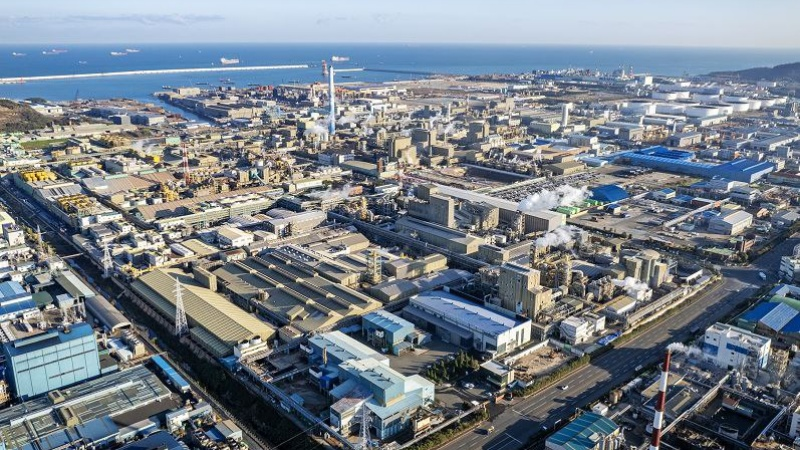
Korea Zinc, the world’s largest non-ferrous metals producer based in South Korea, has decided to make a large-scale investment to build a smelter in Tennessee, prompting the U.S. government to frame the move as a “huge win” and a turning point in reshoring critical-minerals supply chains. Washington argues that the project secures refining and processing capacity for key minerals by leveraging foreign capital while restoring an industrial base that has been hollowed out for decades. This model of attracting overseas capital to build strategic facilities is expected to have far-reaching implications for future U.S. industrial policy and investment frameworks.
Direct domestic supply of essential strategic minerals
According to Reuters and other outlets on the 16th, U.S. Commerce Secretary Howard Lutnick wrote on social media platform X that “President Donald Trump has finalized a transformative critical minerals deal that strengthens our national security, rebuilds our industrial base, and ends reliance on foreign supply chains,” adding that “starting in 2026, the United States will gain priority access to Korea Zinc’s expanded global production, putting U.S. security and manufacturing first.” He concluded by calling the deal “a huge win.”
The remarks followed Korea Zinc’s decision to enter a strategic partnership with the U.S. Department of Defense and the Department of Commerce and invest $7.43 billion to build a smelter in Clarksville, Tennessee. Once completed, the facility is expected to produce 540,000 tons of essential materials annually, supplying strategic minerals such as gallium, germanium, indium, antimony, copper, silver, gold, and zinc directly from U.S. soil—materials critical to defense, semiconductors, artificial intelligence, quantum computing, and power grids.
The Trump administration has explicitly linked the investment to national security outcomes. Deputy Defense Secretary Steve Feinberg described critical minerals as “strategic assets for defense and economic security,” stressing that the Pentagon’s conditional $1.4 billion investment to revive domestic smelting capacity marks a turning point after 50 years of industrial decline. Senator Bill Hagerty of Tennessee similarly framed the project as a geopolitical victory, saying Korea Zinc’s decision to build a world-class smelter supports Trump’s efforts to restore U.S. economic security through cooperation with ally South Korea.
A closer look at the investment structure clarifies why U.S. officials have called it a “huge win.” The vast majority of funding for construction and operation is borne by Korea Zinc itself. Of the more than $7.4 billion required, about $6.6 billion is capital expenditure, with the remainder covering operating funds and financing costs—all committed by a single company. By contrast, direct U.S. government support is limited to up to $210 million in subsidies under the CHIPS Act and the Pentagon’s $1.4 billion conditional investment.
The structure allows the United States to capture production capacity, jobs, and political credit, while Korea Zinc assumes the upfront risk and long-term profitability burden. As a result, assessments of the deal have diverged between “win-win” optimism and criticism that it is excessively unbalanced. Korea Zinc secures early entry into the U.S. critical-minerals supply chain and long-term strategic positioning, while the United States brings a core link of a strategic industry back home using foreign capital. Lutnick’s “huge win” rhetoric underscores how cost-effective the arrangement is from Washington’s perspective.
Aligned with the Korea–U.S. supply-chain alliance
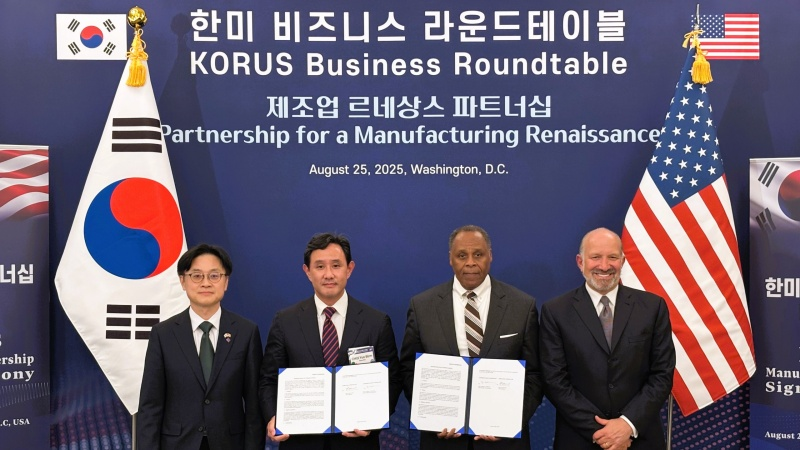
Still, the investment cannot be viewed solely as a unilateral corporate decision. It closely overlaps with the South Korean government’s broader push to expand investment in the United States. In August, Korea Zinc Chairman Choi Yoon-beom joined a South Korean presidential economic delegation to Washington, where he discussed cooperation on critical-minerals supply chains with U.S. officials. Those talks focused on rebuilding U.S. refining and processing capacity through allied capital and reducing reliance on China-centric supply chains—discussions that later evolved into concrete project reviews.
Choi’s U.S. trip also included engagement with Lockheed Martin, a major player in defense and aerospace. The two sides agreed on a supply deal for high-purity germanium and committed investment to build production facilities at Korea Zinc’s Onsan smelter, targeting annual output of 10 tons. Scheduled to begin operations in the first half of 2028, the output will be supplied to U.S. defense and semiconductor industries. Germanium is a critical mineral for military radar, satellites, and infrared sensors, making cooperation with Korea Zinc a practical way for the United States to mitigate long-standing supply risks tied to China.
These developments align with the broader Korea–U.S. supply-chain alliance. The United States has already agreed with Japan on a $550 billion strategic-industries and critical-minerals investment fund and reached supply-chain cooperation arrangements with the European Union covering natural resources and chemical products. South Korea, for its part, has proposed annual investment plans of $20 billion in the United States, using shipbuilding, manufacturing infrastructure, and strategic-minerals facilities as negotiating leverage. Korea Zinc’s smelter project represents the first large-scale investment to materialize under this environment.
In this sense, the deal reflects a model in which private companies provide capital and execution while governments leverage those investments in diplomatic and trade negotiations. Supporting this view, Korea Zinc recently acquired a 5% stake in Canadian resource developer TMC for $85 million, extending its reach upstream into raw-materials procurement. Industry and diplomatic observers widely see these moves not merely as corporate expansion, but as strategically positioned actions within the broader framework of Korea–U.S. economic security cooperation.
No recent U.S. smelting track record
The investment also signals a shift in how the United States implements its critical-minerals policy. While Washington has long classified strategic minerals as national-security assets under laws such as the Defense Production Act, it has struggled to rebuild domestic refining and processing capacity using U.S. firms alone. Smelting requires massive upfront investment, complex environmental permitting, local acceptance, and skilled labor—all difficult hurdles simultaneously.
The industrial gap has accumulated over decades. Since the 1970s, stricter environmental regulations and rising costs led the United States to scale back smelting of non-ferrous and strategic metals such as lead, antimony, indium, and germanium, leaving supply chains increasingly centered on China. According to U.S. Geological Survey data, U.S. dependence on China for antimony reached 76% between 2020 and 2023, with other minerals similarly constrained. In this context, overseas firms with proven large-scale smelting expertise emerged as the only viable partners for rapid policy execution.
Against this backdrop, Korea Zinc’s role goes beyond that of a simple supplier. The United States has identified refining and processing as the most vulnerable link in the mining-to-manufacturing chain and sees Korea Zinc as a partner capable of stabilizing this bottleneck. From Washington’s perspective, the company is less a vendor of individual minerals than a strategic ally embedded directly in the backbone of U.S. critical-industries supply chains—a shift that places Korea Zinc at the core of America’s long-term industrial and security strategy.
Similar Post