Trump Designates the “Maduro Regime” a Terrorist Organization, Heightening Military Tensions as Counterterror Push Expands

Authored On
Modified
Blockade of sanctioned oil tankers entering and leaving Venezuela
Interdiction operations in the Caribbean and the Pacific after the FTO designation
Concerns over sovereignty violations as a state government is labeled a terrorist group
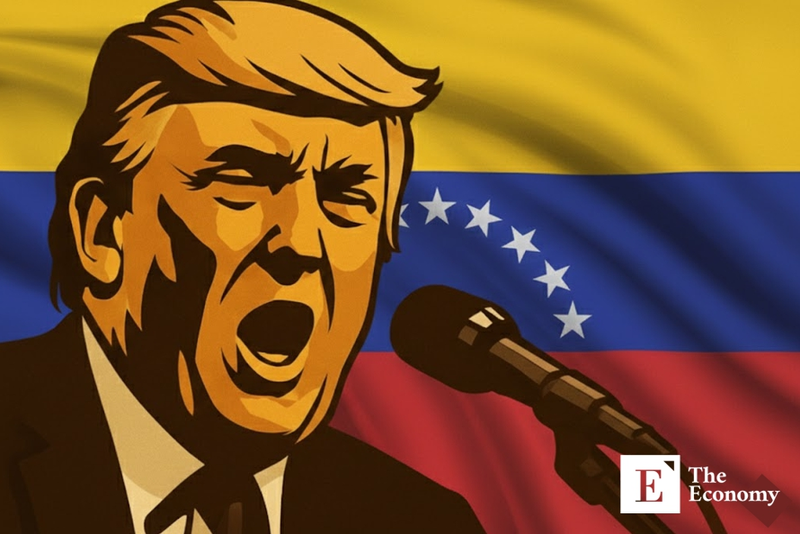
U.S. President Donald Trump has designated Venezuela’s government as a Foreign Terrorist Organization (FTO) and stepped up military and economic pressure—including a sweeping oil-tanker blockade—while deploying what he described as the largest U.S. naval force ever assembled in South American history. Washington claims the Venezuelan government is closely linked to drug cartels and human-trafficking networks, but parts of the international community are raising concerns that the move amounts to overreach without clear evidence, warning of violations of international law and infringement on sovereignty.
Trump Uses FTO Label to Legalize Military Sanctions
On the 16th (all dates hereafter local time), Trump said in a post on his social media platform Truth Social that “Venezuela is now completely surrounded by the largest U.S. fleet in South American history,” adding, “This fleet will grow even larger, and they will be shocked like they have never seen before.” He went on to say, “For stealing U.S. assets, as well as terrorism, drug trafficking, human trafficking, and many other reasons, I have designated the Venezuelan regime a Foreign Terrorist Organization,” and declared, “I hereby order a total and complete blockade of every oil tanker going into Venezuela or coming out of Venezuela.”
The U.S. government has long argued that Venezuela’s government maintains close ties with drug cartels and human-trafficking networks. Citing that claim, Trump denounced the government as an FTO and intensified military and economic pressure. In September, the administration designated Latin American drug cartels as FTOs, creating a legal basis to justify military action and sanctions. Since then, airstrikes and interdiction operations targeting drug-smuggling vessels have taken place in the Caribbean and the Pacific, and on September 15 a vessel departing Venezuela was struck, with illicit narcotics seized and three combatants eliminated—part of more than 20 operations in total.
In particular, the decision to label the Venezuelan government itself as a terrorist organization is seen as a step beyond prior measures, expanding the scope of sanctions to the level of a state. In connection with the move, the Pentagon said it seized a sanctioned oil tanker on the 10th with support from the Federal Bureau of Investigation (FBI), Homeland Security Investigations (HSI), and the U.S. Coast Guard. It added that it has deployed a force of 20,000 personnel in waters near Venezuela, including a nuclear-powered aircraft carrier, B-1B and B-52 strategic bombers, F-35 stealth fighters, and MQ-9 Reaper attack drones. Experts assess the move as a signal that goes beyond sanctions, potentially laying groundwork for military confrontation.
Fentanyl Classified as a Weapon of Mass Destruction, Offensive Broadens
A terrorist designation is not merely symbolic. Designated entities face sweeping sanctions, including the freezing of assets within the United States, restrictions on entry for members, and broad prohibitions on support and transactions by U.S. individuals and companies. Under relevant law, the U.S. State Department reviews the appropriateness of each designation every five years to maintain or adjust the blacklist. The mechanism functions as a core tool through which the United States can exert international, legal, economic, and military leverage over targeted entities, framed as protecting the security and economic interests of the United States and its allies.
Trump’s consistently expanding counterterror posture since taking office can be understood in the same context. The Trump administration has designated a wide range of actors—drug cartels, far-left groups, and ideological and religious organizations—as terrorist entities when deemed threats to the U.S. security order. The terrorist designation of foreign states, including Venezuela, is likewise positioned as an extension of that approach. The administration is widening the concept of terrorism beyond violent actors alone, extending it to encompass forces broadly perceived as undermining Washington’s geopolitical and ideological order.
More recently, the administration has broadened its pressure on neighboring countries by classifying fentanyl, a new synthetic drug, as a weapon of mass destruction (WMD). On the 15th, Trump awarded medals to U.S.-Mexico border patrol personnel and said, “To protect Americans from the catastrophe of deadly fentanyl pouring in, I am officially classifying fentanyl as a WMD.” He added, “We are designating drug cartels as terrorist organizations, and this is a very significant step from a legal and military standpoint,” stressing, “The catch-and-release policy is over.”
The definition of terrorism is also being extended to perceived threats to the ideological order. In September, Trump signed an executive order designating the anti-fascist left-wing movement Antifa as a domestic terrorist organization. It was the first time the United States formally labeled a domestic group as a terrorist organization. He described Antifa as a “militaristic, anarchist group” seeking to overthrow the U.S. government and the rule-of-law system, and ordered federal agencies to treat Antifa activity as “domestic terrorism,” investigate and dismantle it, and identify, probe, and prosecute funders.
Criticism That Trump Is Seeking Credit by Installing a Pro-U.S. Government
Internationally, however, critics argue Trump’s counterterror push amounts to excessive escalation. The U.S. practice of linking another country’s government to specific organizations and naming it the mastermind of terrorism can be perceived as an attempt to violate sovereignty through military force and economic coercion. Especially in cases like Venezuela—where a government and an organization are treated as one without clear proof—international tensions are likely to rise. Experts say, “Even if measures targeting drug cartels and extremist groups remain within the bounds of lawful self-defense, if they expand into attempts to influence another country’s domestic politics, they may violate international law and diplomatic norms.”
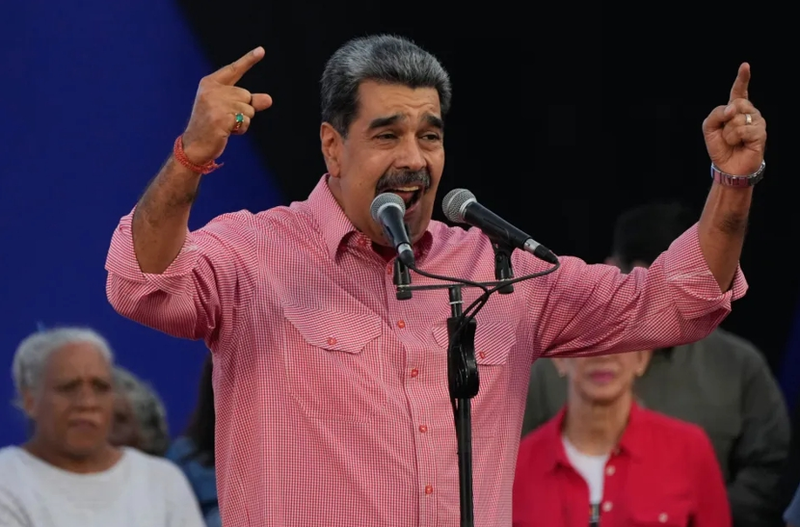
Some observers also suggest Trump is using drug eradication as a pretext, while pursuing different objectives. CNN noted that “if President Nicolás Maduro is ousted, Trump will claim a victory that previous administrations failed to achieve,” adding that Washington could “install a new pro-U.S. leader to cooperate on drugs and migration, and also trade oil.” Others argue that internal power struggles within the administration are driving the hardline posture. The UK’s Guardian reported that Secretary of State Marco Rubio prevailed over Richard Grenell, the U.S. special envoy for Venezuela, who had argued for a more pragmatic approach. According to the report, Maduro proposed oil transactions and other arrangements to deter U.S. intervention, but Rubio took a harder line.
Still, Trump left open the possibility of a diplomatic solution even after the terrorist designation. He said, “President Maduro wants to talk to us and the United States can talk to them.” Asked about next steps, he said he had “more or less made up” his mind, but many interpreted the tone as softer than his earlier rhetoric. Maduro, too, posted a video on TikTok on the 16th showing him and supporters singing John Lennon’s “Imagine.” The song centers on peace and human solidarity, and Maduro said in the video that he was “appealing to the American people that there should be no war in the Caribbean and South America.”
Similar Post