EU auto policy pivots as the notion of electric vehicles as the “only answer” officially unravels

Niamh O’Sullivan is an Irish editor at The Economy, covering global policy and institutional reform. She studied sociology and European studies at Trinity College Dublin, and brings experience in translating academic and policy content for wider audiences. Her editorial work supports multilingual accessibility and contextual reporting.
Authored On
Modified
EV skepticism expands into the policy arena
Subsidy-dependent structures expose vulnerabilities
Industry-wide shakeout begins in earnest
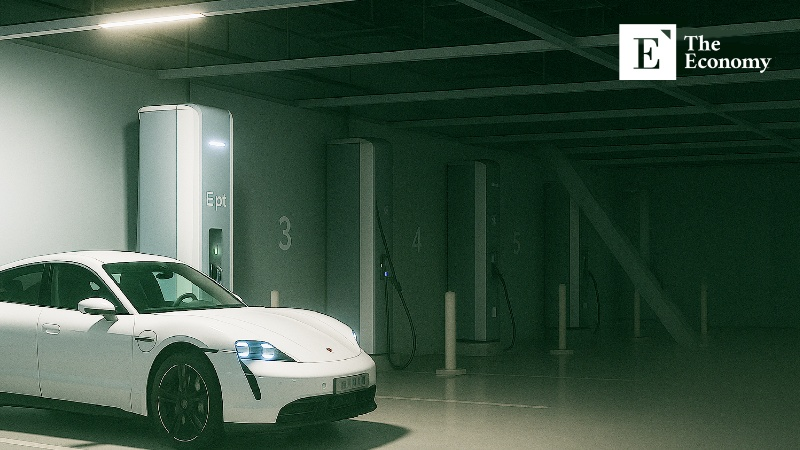
The European Union (EU) has stepped back from its previous plan to effectively ban internal combustion engine vehicle sales by mandating zero carbon emissions for all new cars from 2035. Taking into account carbon emissions during EV production, weakening demand, and the growing burden on industry, the bloc has shifted toward a more flexible approach that allows alternative fuels and existing technologies to coexist. At the same time, warning signs around the profitability and competitiveness of EV businesses are becoming increasingly concrete in the market.
Transition pace adjusted by allowing parallel technologies
According to The Washington Post on the 17th (local time), the European Commission announced a revised proposal in Brussels the previous day that conditionally allows the continued sale of internal combustion vehicles. Under the 2023 European Green Deal, the EU had required all new cars sold from 2035 onward to have zero carbon emissions, effectively banning ICE vehicles. The revision, however, allows automakers to continue producing and selling ICE and hybrid vehicles after 2035 as long as they achieve a 90% reduction in emissions compared with 2021 levels.
The core of the revision is that up to 10% residual carbon dioxide emissions per vehicle will be permitted after 2035, provided they are offset through credits such as the use of synthetic fuels, sustainable biofuels, or low-carbon steel. This marks a departure from the previous principle that zero emissions must be achieved solely through vehicle technology, instead recognizing emissions reductions across fuels, materials, and production processes. It reflects an effort to move beyond the notion of EVs as the sole solution and broaden technological options by allowing ICE-based technologies and alternative fuels to coexist.
Underlying this policy shift is a fundamental question about the actual carbon-reduction effect of EVs. For EV adoption to translate into decarbonization, emissions from power generation must also decline. In Europe, where coal and gas still account for a significant share of electricity generation and national power mixes vary widely, EV expansion has not always translated directly into lower greenhouse gas emissions. Skepticism—long voiced by industry—over whether EVs can truly be considered “zero-emission” given production-stage emissions has resurfaced as a basis for policy judgment.
Industrial realities also pressured the EU’s decision. Automakers in Germany and Italy have repeatedly warned that a rapid EV transition increases the burden of maintaining both legacy ICE technologies and new EV production bases. Slower charging infrastructure rollout, shrinking purchase subsidies, and weakening EV demand further strengthened arguments that a 100% zero-emission target would be difficult to achieve. This explains why the revision also lowered the 2030 CO₂ reduction target for vans from 50% to 40% and introduced flexibility measures allowing credit borrowing and banking between 2030 and 2032.
These changes prompt a broader reassessment of global automakers’ EV-centric decarbonization strategies. Hyundai Motor and Kia, for example, are expanding their hybrid lineups in the short term while seeking to strengthen competitiveness in hydrogen-powered commercial vehicles over the longer term to target the European market. They also plan to actively leverage alternative-fuel ICE technologies they have steadily developed. In this context, the EU’s move away from the premise that EVs are the only answer is seen as a turning point where decarbonization policy begins to more closely reflect technological realities and industrial structures.
From policy product to market product
Recent EV markets are increasingly defined by price competition overwhelming performance and technology competition. As battery costs, charging infrastructure expenses, and subsidy rollbacks converge, the limits of EV competitiveness—viable largely in subsidy-supported environments—have become more apparent. Against this backdrop, Europe and the United States have openly criticized China’s EV subsidies and overcapacity, arguing that low-priced Chinese EVs distort markets.
China has pushed back forcefully. In September 2023, Vice Premier He Lifeng told EU Executive Vice President Valdis Dombrovskis that the EU’s EV subsidy probe amounted to excessive use of trade remedies, insisting that Chinese EV price competitiveness stems from industrial ecosystem development rather than subsidies. The China Association of Automobile Manufacturers likewise denounced the EU’s actions as protectionist and unfair, underscoring how EV disputes have expanded beyond technology into trade and policy arenas.
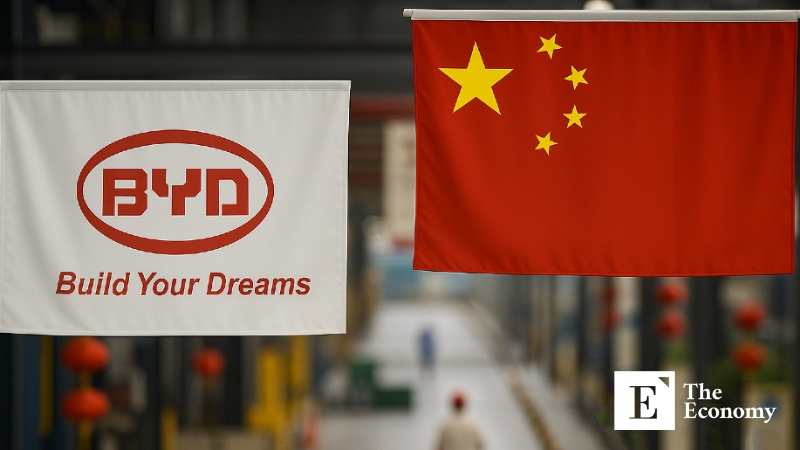
The U.S. has been even more direct. In a March 2024 speech, former Treasury Secretary Janet Yellen warned that China’s overproduction of EVs is distorting global prices and production patterns, harming workers and companies worldwide. She added that since 2009, Chinese government subsidies to EV manufacturers totaled about $22.7 billion, with BYD alone receiving roughly $1.0 billion—criticizing a market structure built on subsidies.
Intensifying competition, entry into a prolonged war of attrition
As Western countries recalibrate EV support policies, China’s EV industry now faces profitability and sustainability challenges long obscured by rapid growth. Strategies reliant on subsidies and massive volume expansion are no longer functioning in advanced markets, forcing a comprehensive reassessment of business viability. With most firms failing to generate profits, confidence in continued market-expansion strategies is eroding.
Profitability pressures are evident in the data. According to the Korea Automotive Technology Institute, China once had more than 500 EV automakers, but brutal price competition since 2023 has reduced that number to around 100. Of these, only four—BYD, Tesla China, Li Auto, and Geely—are reportedly profitable. China’s EV production capacity reached 55.07 million units annually last year, while domestic sales totaled just 26.9 million. Even including exports, roughly 20 million units of capacity remain idle, putting utilization rates near 50%.
Oversupply is eroding margins across the industry. Some parts suppliers report annual price-cut demands of 10–15%, with payment delays stretching up to six months. Automakers’ dealers are often forced to sell vehicles below purchase prices, deepening losses as volumes rise. Within China, criticism has mounted that intensifying competition without qualitative improvement has worsened the so-called “involution” phenomenon.
Quality risks are also surfacing. From October through early this month, BYD issued recalls covering more than 200,000 vehicles, including Tang midsize SUVs and Yuan Pro compact SUVs produced between 2015 and 2022, due to battery output degradation, sealing defects, and motor control issues. Investigations found cases where reduced waterproofing caused sudden power loss during driving or motor controller failures cut power at high speeds—suggesting that rapid market expansion outpaced quality verification.
Against this backdrop, Chinese EV makers are increasingly targeting global south markets as a new outlet. Bloomberg reports that Chinese EV sales in Thailand rose more than 20% year on year. However, this expansion again hinges on price competition, further pressuring profitability. BYD cut the price of its Seal electric sedan in Thailand by up to 38%, while SAIC discounted the MG4 hatchback by 27%. With policy retrenchment in advanced markets, quality controversies, and cutthroat competition in emerging markets converging, China’s EV industry appears to be entering a survival phase beyond simple volume growth.
Niamh O’Sullivan is an Irish editor at The Economy, covering global policy and institutional reform. She studied sociology and European studies at Trinity College Dublin, and brings experience in translating academic and policy content for wider audiences. Her editorial work supports multilingual accessibility and contextual reporting.
Similar Post