[FSD Myth] Court Rules Tesla’s ‘FSD’ an Exaggerated Claim, “No More Than Driver Assistance”

Matthew Reuter is a senior economic correspondent at The Economy, where he covers global financial markets, emerging technologies, and cross-border trade dynamics. With over a decade of experience reporting from major financial hubs—including London, New York, and Hong Kong—Matthew has developed a reputation for breaking complex economic stories into sharp, accessible narratives. Before joining The Economy, he worked at a leading European financial daily, where his investigative reporting on post-crisis banking reforms earned him recognition from the European Press Association. A graduate of the London School of Economics, Matthew holds dual degrees in economics and international relations. He is particularly interested in how data science and AI are reshaping market analysis and policymaking, often blending quantitative insights into his articles. Outside journalism, Matthew frequently moderates panels at global finance summits and guest lectures on financial journalism at top universities.
Authored On
Modified
Judiciary Puts the Brakes on Tesla’s Autonomous Driving Marketing
Gap Confirmed Between Technological Reality and Advertising Claims
Regulatory Tightening Poised to Spread Across the EV Industry
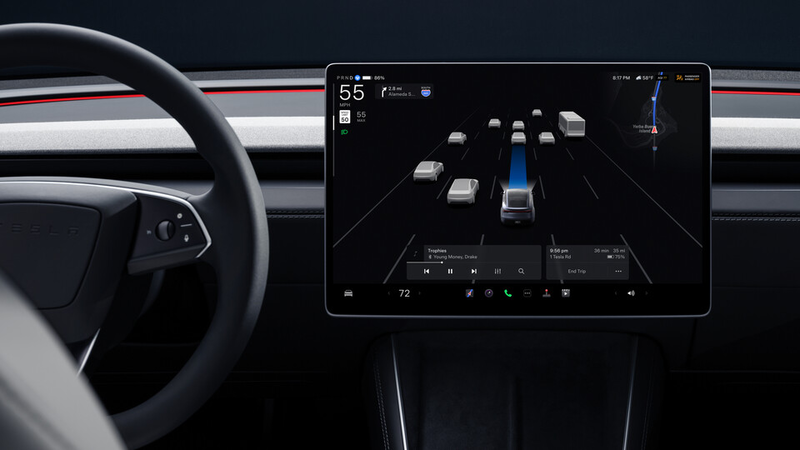
A California court has delivered a heavy blow to Tesla, ruling that the company’s autonomous driving terminology constitutes false and exaggerated advertising and ordering the suspension of its manufacturing and sales licenses. The decision marks the first judicial recognition of the gap between the actual state of autonomous driving technology and its marketing. The ruling is expected to become a watershed moment, not only triggering class-action lawsuits against Tesla but also fundamentally reshaping global regulatory standards and promotional practices for autonomous driving across the electric vehicle industry.
California DMV Lawsuit Ruling
According to the California Department of Motor Vehicles (DMV) on the 17th (local time), a state administrative law judge concluded, following a hearing on the DMV’s lawsuit against Tesla, that the company had engaged in false advertising. The issue centered on Tesla’s use of terms such as “Autopilot” and “Full Self-Driving (FSD)” to describe its advanced driver assistance systems (ADAS).
The court held that while the term “Autopilot” could not be categorically deemed false, Tesla had “intentionally exploited ambiguity to mislead consumers while attempting to evade legal responsibility,” constituting an unlawful practice. Consumers could reasonably believe that continuous driver attention is unnecessary when Autopilot is engaged—an assumption the court found to be untrue. An even harsher judgment was rendered on “Full Self-Driving.” The court stated that the term is “plainly false and inconsistent with reality.” Tesla argued that a reasonable consumer would not interpret “Full Self-Driving” literally, but the court rejected that claim.
The administrative judge concluded that such advertising misled consumers in violation of state law and ordered a 30-day suspension of Tesla’s manufacturing and sales licenses. The DMV said it would accept the ruling but mitigate the punishment by immediately staying the suspension of Tesla’s manufacturing license and granting the company a 60-day period to correct its use of the Autopilot terminology. Tesla argued that the license suspension was excessive, but the court countered that without meaningful sanctions, false or exaggerated claims would likely continue.
Tesla’s Autonomous Driving Technology Falls Short of Promises
The origins of the lawsuit date back two years. In November 2023, the DMV filed a complaint requesting the suspension of Tesla’s manufacturing and dealer licenses, arguing that Tesla had erred by stating in marketing materials that Autopilot and FSD were “designed to be able to drive without any intervention.” The DMV noted that while consumers could activate the FSD program for about $12,500, gaining features such as automatic lane changes, automated parking, and traffic signal recognition, no existing technology allows a vehicle to operate without a human driver in the seat.
The DMV also pointed out that Elon Musk, Tesla’s chief executive officer, had recently claimed that FSD would achieve such capabilities next year, adding that he is “well known for expressing optimistic timelines.” It argued that Tesla may still be far from a point where the FSD label is justified. Advertising features that have not yet been realized—and may only be feasible in the distant future—was therefore inappropriate. The DMV further stated that although Tesla warns drivers not to remove their hands from the wheel while using Autopilot or FSD, such disclaimers are insufficient as liability shields.
Tesla faced a similar issue in 2016 with Germany’s Federal Motor Transport Authority, which instructed the company not to use the term “autopilot” in advertising due to concerns that consumers might misinterpret the vehicle’s capabilities. Last year, U.S. Senators Ed Markey and Richard Blumenthal also urged South Korea’s Fair Trade Commission to investigate whether Tesla’s marketing of Autopilot and FSD was misleading.
The latest ruling is significant in that the judiciary has now delivered a clear verdict on Tesla’s long-running autonomous driving marketing controversy. The branding attached to Tesla’s driver assistance systems symbolized technological innovation, but it has also fueled persistent conflicts with regulators and consumer groups worldwide. In practice, despite being promoted under the Autopilot or FSD names, these systems amount to no more than Level 2 or Level 3 “driver assistance” under the Society of Automotive Engineers (SAE) classification. They require constant driver attention and intervention and remain far removed from true full autonomy, which entails no driver involvement at all.
The outcome of this lawsuit is also expected to affect class-action suits brought by consumers against Tesla. These cases are divided into two groups: the first consists of California residents who purchased the FSD package between October 2016 and May 2017, while the second includes FSD owners from 2017 through mid-2024 who rejected Tesla’s arbitration clause. The lawsuits seek not only damages but also injunctions barring Tesla from making similar claims in the future. Tesla attempted to invalidate the class actions, but the court rejected the effort. Judge Rita Lin of the U.S. District Court for the Northern District of California allowed the suits to proceed, citing Tesla’s inability to achieve full autonomy due to hardware limitations and its failure to demonstrate long-distance autonomous driving.
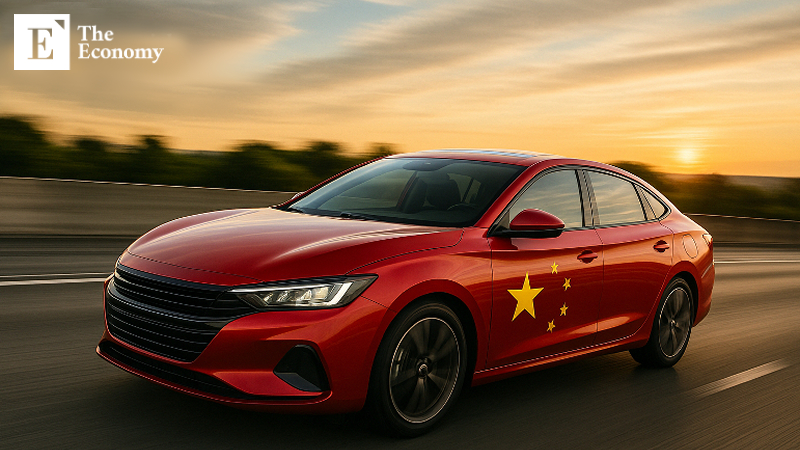
Exaggerated Claims Also Plague China, Wide Gap With Reality
Chinese automakers, which have been gaining ground in the global EV market, face similar accusations of exaggerated advertising. A joint real-world road test of advanced driver assistance systems (ADAS) conducted by Chinese automotive outlet Dongchedi and state broadcaster CCTV found that most Chinese EV brands failed to perform adequately in key safety scenarios. The test simulated 416 real driving situations on a 15-kilometer closed course, including 183 highway scenarios and 233 urban ones.
Under highway conditions, the overall success rate was just 24%. In scenarios where a lead vehicle suddenly disappeared, 70% of the cars crashed, while 53% failed to avoid road construction vehicles at night. In a test simulating a wild boar abruptly crossing the road, only four to five vehicles out of 100 successfully recognized the hazard or came to a stop. In urban settings, the average success rate was 44.2%, but 42% of vehicles failed to respond appropriately when a child suddenly ran into the roadway.
Although the test vehicles were equipped with advanced sensors such as LiDAR and millimeter-wave radar, frequent accidents were attributed to poor system integration and immature algorithms. For example, Huawei’s electric SUV Aito M9 failed to avoid obstacles in construction zones due to conflicts between its automatic emergency braking (AEB) system and navigation-assisted driving (NOA). Most Chinese EVs remain at SAE Level 2 autonomy, requiring constant driver supervision. Notably, survival rates in accidents occurring while ADAS was engaged stood at just 17%, underscoring serious safety concerns.
Amid mounting concerns over autonomous driving systems, the Chinese government has moved to significantly tighten regulations. In April, the Ministry of Industry and Information Technology announced new advertising requirements at a meeting attended by around 60 automotive executives. As a result, the use of potentially misleading terms such as autonomous driving, self-driving, and smart driving has been completely banned in China. In addition, improving existing ADAS features or adding new ones via over-the-air (OTA) software updates is no longer permitted. Any functional enhancement or new ADAS feature must now undergo separate testing and receive prior government approval before being distributed via OTA.
Matthew Reuter is a senior economic correspondent at The Economy, where he covers global financial markets, emerging technologies, and cross-border trade dynamics. With over a decade of experience reporting from major financial hubs—including London, New York, and Hong Kong—Matthew has developed a reputation for breaking complex economic stories into sharp, accessible narratives. Before joining The Economy, he worked at a leading European financial daily, where his investigative reporting on post-crisis banking reforms earned him recognition from the European Press Association. A graduate of the London School of Economics, Matthew holds dual degrees in economics and international relations. He is particularly interested in how data science and AI are reshaping market analysis and policymaking, often blending quantitative insights into his articles. Outside journalism, Matthew frequently moderates panels at global finance summits and guest lectures on financial journalism at top universities.
Similar Post