H&Q Moves to Acquire Five Guys, Targeting a Turnaround After Failed Bets, Japan Expansion, and Capital Recovery

As one of the youngest members of the team, Tyler Hansbrough is a rising star in financial journalism. His fresh perspective and analytical approach bring a modern edge to business reporting. Whether he’s covering stock market trends or dissecting corporate earnings, his sharp insights resonate with the new generation of investors.
Authored On
Modified
South Korea’s Five Guys to Be Acquired by H&Q Equity Partners at an Estimated $45–55 Million
After a String of Failed Bets Including Esquire and 11st, Is Five Guys a Comeback Play?
Securing Japan Rights Through Equity Purchase—Could It Become the Next Burger King Japan?
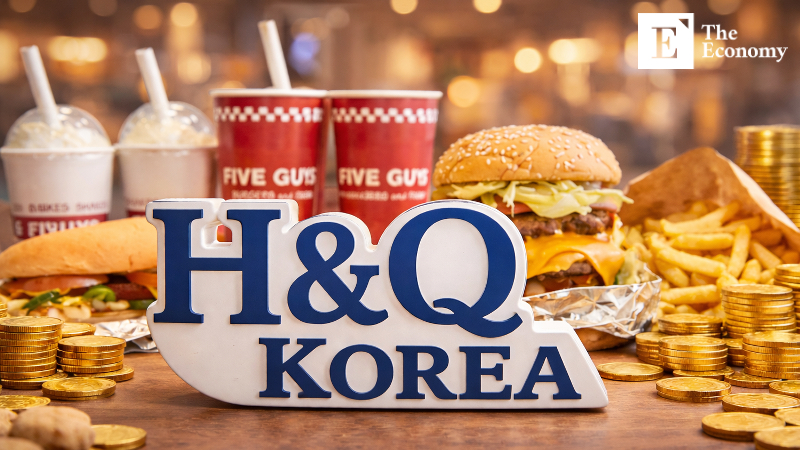
Hanwha Galleria’s Korean operating rights for the U.S. premium burger brand Five Guys are set to be sold to domestic private equity firm H&Q Equity Partners (H&Q). H&Q is said to view the steady top-line growth of Five Guys Korea and the potential for expansion into Japan as key investment attractions. Some observers argue the deal is part of a broader strategy to recover from H&Q’s past investment setbacks and to recoup capital previously deployed to support Hyundai Elevator.
H&Q Gains the Upper Hand in the Five Guys Deal
On the 17th, Hanwha Galleria disclosed that it had signed an MOU with H&Q regarding the sale of its stake. A preferred bidder has now been selected five months after the teaser letter for the sale was circulated in July. Hanwha Galleria plans to name H&Q as the preferred negotiating party, run due diligence, and then sign a final SPA. The sale price is expected to be around $41–48 million.
The industry is paying close attention, as Five Guys has produced an unusually swift outcome at a time when F&B M&A deals have struggled to clear. In fact, multiple companies and investors reviewed the opportunity after the teaser was released, but some are said to have been hesitant to proceed. They viewed the operational risks inherent in franchising and the uncertainty tied to acquiring only the “operating rights” as key concerns. Five Guys’ structure is such that the U.S. headquarters owns the brand, while local operators secure operating rights in each country to run the business.
Against this backdrop, H&Q is said to have offered the highest price among the bidders. During its review, it reportedly took a positive view of the growth prospects of Five Guys Korea. H&Q believes the business is still in a growth phase given that Five Guys entered Korea in 2023, and that there remains meaningful upside even after an acquisition. Since launching in Korea, Five Guys has steadily expanded its footprint, including store count and revenue. Last year, revenue reached about $31.5 million, up 365% year over year, and operating profit turned positive at about $2.3 million.
H&Q’s Track Record of Failed Investments
Some observers argue that H&Q’s bid for Five Guys is a bold attempt to recover from a series of past investment failures. H&Q has suffered multiple setbacks in Korea’s M&A market. A notable case was its 2009 acquisition of footwear company Esquire for about $60 million. After taking control, Esquire posted solid results for several years. Revenue rose from about $77 million in 2009 to roughly $114 million in 2010, then surpassed $150 million in 2011. Operating profit also swung sharply, from a loss of about $4.6 million in 2009 to a profit of around $10.4 million in 2010.
Esquire’s performance began to deteriorate in 2012. Revenue fell from about $153 million in 2011 to roughly $136 million in 2012, then declined again to about $118 million in 2013. The company posted operating losses in both 2012 and 2013, while net losses widened to around $8.9 million and $9.8 million, respectively. Industry sources point to management changes made soon after the acquisition as a key factor behind the downturn. They argue that executives brought in from outside the footwear industry lacked a clear understanding of the sector and the company, resulting in weak strategic execution. Esquire entered court receivership in 2014 and was acquired by Fashion Group Hyungji in 2015.
11st is also widely cited as a representative failure for H&Q. In 2018, the Nine Holdings consortium, comprising H&Q, the National Pension Service, and Saemaul Geumgo, invested about $375 million in 11st. Through a shareholder agreement with SK Square, the investors put in place mechanisms to secure an exit. If an IPO was not completed within five years, SK Square could exercise a call option to buy back the financial investors’ stake. If SK Square declined, the investors would be allowed to sell their shares, including SK Square’s stake, to a third party.
11st failed to go public within the agreed timeframe, and in 2023 SK Group chose not to exercise the call option. The decision reflected concerns that repurchasing the stake at the pre-agreed return, despite a drop in 11st’s valuation, could trigger accusations of breach of fiduciary duty. The Nine Holdings consortium then sought to sell control through a drag-along right, but struggled to find a buyer. When the call option window reopened this year, SK Square ultimately approved the sale of its entire stake in 11st to SK Planet, opting to repay the investors instead.
Japan Expansion Adds to the Appeal
Some analysts see the deal as a move to recover capital deployed in what has been described as a “rescue” of Hyundai Elevator. Between 2006 and 2013, Hyundai Elevator entered into multiple derivatives contracts to defend management control of HMM (formerly Hyundai Merchant Marine). As the share price fell, the company incurred substantial losses. Schindler Holding, then the second-largest shareholder, challenged the transactions and filed a derivative lawsuit. The Supreme Court ultimately ruled in Schindler’s favor, leaving Hyundai Elevator Chairwoman Hyun Jeong-eun liable for significant damages.
At that point, H&Q stepped in. Through a structured finance package, H&Q engineered a sophisticated investment structure that helped stabilize Hyundai Elevator’s management control. As a result, Chairwoman Hyun was able to repay a high-interest, share-backed loan carrying an annual rate of about 12% that had been arranged through M Capital to cover litigation-related compensation, and successfully defend control of the company. H&Q’s financial support, totaling about $240 million, which had been extended to protect management control, was effectively wrapped up at the end of October.
Securing the operating rights for Five Guys in Japan is also seen as a key investment attraction. The Five Guys headquarters determined that the Korean operation had sufficiently proven its execution capabilities and granted the Japan operating rights to FG Korea, the local operator. FG Korea then established a Japanese subsidiary, FG Japan GK, in January and completed a $3.7 million capital increase to prepare for business expansion.
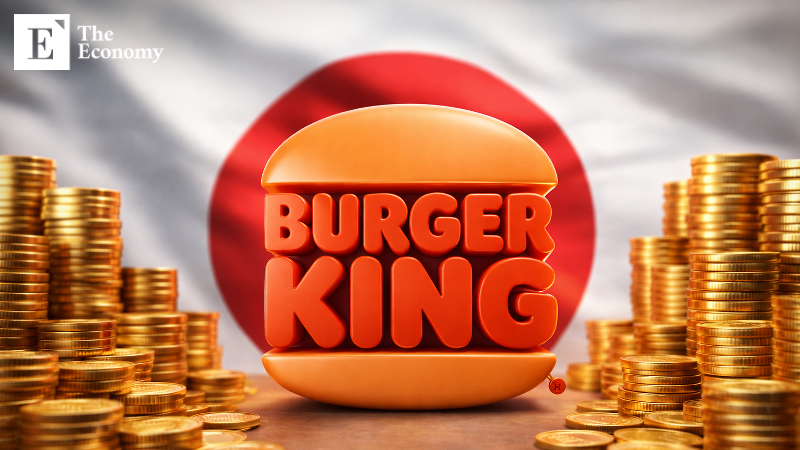
Expectations for the Japan business are reinforced by Affinity Equity Partners’ success with Burger King Japan. In 2016, Affinity acquired 100% of Burger King Japan from Lotte GRS, the operator of Lotteria, entering what was then considered a difficult market for the brand. Last month, Affinity sold its stake to Goldman Sachs at a valuation of about $5.6 billion, roughly 5.8 times its initial investment. During Affinity’s ownership, Burger King Japan’s revenue is estimated to have grown by about 290 times.
As one of the youngest members of the team, Tyler Hansbrough is a rising star in financial journalism. His fresh perspective and analytical approach bring a modern edge to business reporting. Whether he’s covering stock market trends or dissecting corporate earnings, his sharp insights resonate with the new generation of investors.
Similar Post