Japan’s rate-hike countdown puts bitcoin in the yen-carry unwind zone — fear runs ahead, much already priced in

Authored On
Modified
End-of-weak-yen signals heighten market-wide tension
Assessments say incentives for abrupt capital flight remain limited
Capital shifts likely to emerge gradually
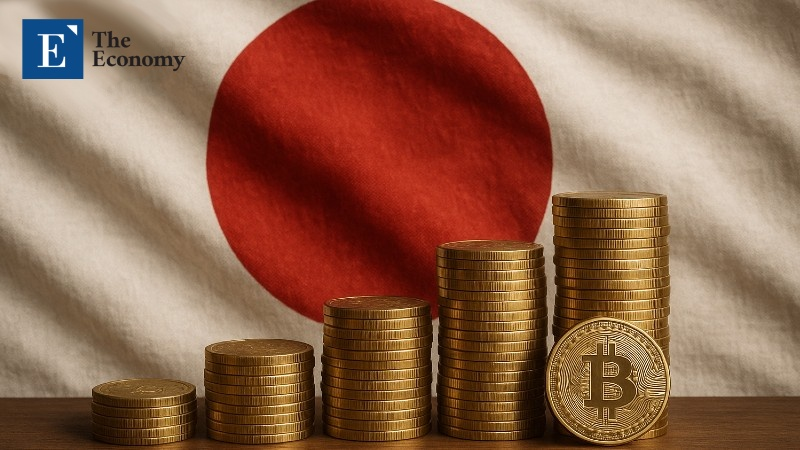
As the Bank of Japan moves closer to raising its policy rate to 0.75%, global financial markets are increasingly focused on the risk of a large-scale unwinding of the yen carry trade. Fears that funds borrowed cheaply in yen and deployed into risk assets could be pulled back all at once are resurfacing, recalling past episodes when Bank of Japan policy shifts coincided with broad asset price corrections. Still, with the scale of the hike modest and much of the signal already priced in, a growing view is that any real impact will surface gradually rather than through an abrupt shock.
Risk-off sentiment strengthens
According to Cointelegraph on the 18th (local time), clearer signals of a Bank of Japan rate hike could push bitcoin prices toward the $70,000 level. The outlet cited crypto research firm AndrewBTC, noting that “bitcoin fell more than 20% the last time Japan exited negative rates,” adding that “further hikes could trigger a large-scale yen carry unwind and sharply drain global liquidity.”
This outlook is grounded in the perception that the Bank of Japan’s policy shift has reached a point of no return. At its policy meeting, the central bank is widely expected to raise rates by 25 basis points from 0.5% to 0.75%, with five of nine board members reportedly in favor. Given that a simple majority is sufficient, markets have already moved past the question of whether rates will rise and are instead focused on the aftermath. If confirmed, a 0.75% rate would mark Japan’s highest policy level in roughly 30 years.
Concerns over yen carry trades stem from Japan’s long-standing role as a global liquidity provider. For years, investors borrowed yen at ultra-low rates to invest in higher-yielding assets, spanning equities, bonds, real estate, and cryptocurrencies including bitcoin. A rate hike raises borrowing costs and amplifies currency risk, increasing the incentive to unwind positions simultaneously.
Past episodes reinforce these fears. When Japan ended negative rates in March 2024, bitcoin dropped about 23%. A subsequent hike in July that year saw another 26% decline, and an increase to 0.5% earlier this year was followed by a roughly 31% correction. Against this backdrop, forecasts of a drop toward $70,000 reflect accumulated precedent. Bitcoin is currently trading around $85,000.
Tension across broader financial markets has also intensified. The Bank of Japan’s tightening push is widely seen as a response to prolonged yen weakness. While the yen has hovered around ¥155 per dollar, rate hikes have been positioned as a tool to curb import-driven inflation and stabilize consumer prices. Japan’s October CPI rose 3.0% year-on-year, exceeding the central bank’s 2% target for 43 consecutive months. With inflation pressures unresolved, markets see little room for the Bank of Japan to reverse course, amplifying fears of carry trade unwinds.
Likely limited to position adjustments
Counterarguments to worst-case scenarios are gaining traction. Despite the symbolic significance of a rate hike, Japan’s absolute rate level remains among the lowest globally. Even at 0.75%, 10-year Japanese government bond yields are expected to stay near 2%, insufficient to meaningfully narrow yield differentials with the United States. Many market participants therefore argue that modest rate adjustments alone are unlikely to prompt an immediate, wholesale reversal of yen-funded investments.
Currency movements also suggest limited scope for a sharp reversal. Bloomberg reported that despite repeated rate-hike signals this month, the yen-dollar exchange rate has only eased slightly from last month’s peak near ¥158. Analysts noted that Governor Kazuo Ueda’s hints of tightening failed to trigger sustained yen strength, underscoring that interest rate differentials — rather than policy signaling alone — continue to dominate currency dynamics.
Options markets echo this view. Recent trading shows call option volumes on the yen-dollar pair exceeding puts by roughly 40%, reflecting expectations of only modest yen appreciation. Sagar Sambhani, a senior FX options trader at Nomura Securities, said investors still view the Bank of Japan as dovish, interpreting the hike not as the start of aggressive tightening but as a technical adjustment within an accommodative framework.
Capital flow composition further tempers fears of a mass unwind. HSBC data show that from January to October, Japanese investors purchased roughly $75 billion in foreign bonds, far exceeding the prior year’s total. Much of this flow came from pension funds, insurers, and long-term investment accounts, which are less sensitive to short-term currency swings and less likely to be liquidated abruptly.
Gradual, directionless volatility ahead
Markets are therefore increasingly focused on a “slow absorption” scenario, where the effects of the hike play out over time. DB Financial Investment recently described the move as the next step in Japan’s monetary normalization while noting limited room for further hikes. The firm estimates Japan’s nominal neutral rate around 1.0% to just above 2%, but argues that weak real wage growth makes a rapid move toward the upper bound unlikely. It characterized 0.75% not as a starting point, but as a level close to the end of the adjustment path.
Exchange rate behavior supports this view. The yen briefly strengthened from the high-¥157 range to the mid-¥154s earlier this month, only to retreat again toward ¥156. This pattern suggests that despite the symbolic weight of a 30-year-high rate, yen appreciation is prone to reversals. Many traders believe the hike is already priced in, leaving currency moves constrained absent new information.
Still, lingering risks remain. A sharper upward revision in expectations for Japan’s terminal rate, or a simultaneous U.S. slowdown and renewed Japanese inflation, could amplify volatility. In such a scenario, a sharper dollar-yen move and renewed carry trade unwinds cannot be ruled out. Overall, however, markets increasingly expect the Bank of Japan’s rate hike to exert its influence gradually over the next two to three months rather than through a single disruptive shock.
Similar Post