Korean refiners and petrochemical makers adopt self-generation to cut costs, explore biofuels to reduce carbon output

Aoife Brennan is a contributing writer for The Economy, with a focus on education, youth, and societal change. Based in Limerick, she holds a degree in political communication from Queen’s University Belfast. Aoife’s work draws connections between cultural narratives and public discourse in Europe and Asia.
Authored On
Modified
Korea’s Refining and Petrochemicals Sector Builds In-House Power Plants to Cut Energy Costs
Using Lower-Carbon Fuels Like LNG to Boost Clean-Competitiveness
GS Caltex Speeds Up Decarbonization by Building a Palm-Oil-Based Biodiesel Value Chain
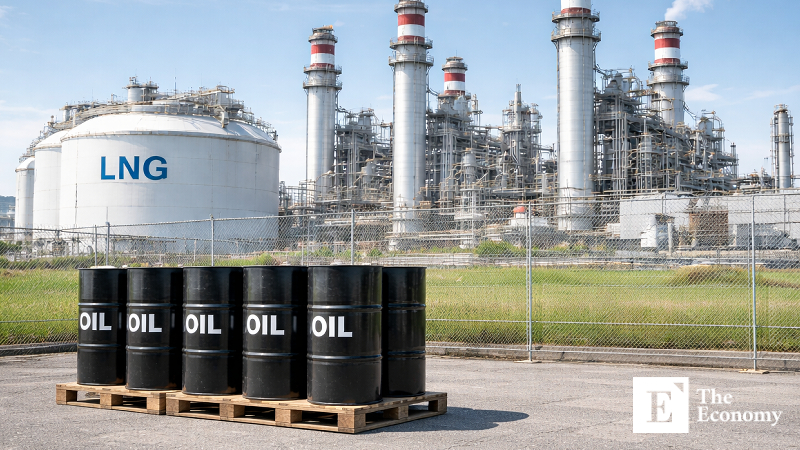
Korean refining and petrochemical companies are moving to build their own power plants. As industrial electricity rates have surged over the past few years, these firms are seeking to cut costs by generating the large volumes of power needed to run their facilities in-house. More recently, a growing number of companies have also begun actively using biofuels such as palm oil to strengthen their environmental competitiveness.
Refiners and Petrochemical Firms Rapidly Shift to In-House Power Generation
According to the refining industry on the 19th, HD Hyundai E&F, a wholly owned subsidiary of HD Hyundai Oilbank, is building an LNG power plant to supply electricity and steam to HD Hyundai Chemical’s Daesan complex in Seosan, South Chungcheong Province. The facility will have a maximum capacity of 290 MW, with commercial operations targeted for March next year. The generation cost is said to be in the low-to-mid $0.07–0.10 per kWh range. By comparison, KEPCO’s Power Data Open Portal shows the industrial electricity tariff in the first half of this year at about $0.12 per kWh.
S-Oil is also constructing two LNG-based power facilities at its Onsan plant in Ulsan. The plan is to operate a total of four units from the end of next year, producing 121 MW of electricity in-house and feeding all of it into the Onsan site. If implemented, S-Oil’s self-generation ratio at the Onsan plant is expected to rise to as high as 42% from around 10% today. SK Innovation E&S has installed a 300 MW LNG-based combined heat and power plant at its Ulsan Complex (CLX), and GS Caltex is operating an in-house facility at its Yeosu plant that generates 15 MW of electricity per day.
Demand for in-house power plants in the refining and petrochemicals sector has been visible for some time. In 2001, the Yeosu plant of Honam Petrochemical—now Lotte Chemical—signed a contract with Lotte Engineering & Construction to build a combined-cycle power facility to ensure a stable supply of high-quality steam and electricity across its production processes. A combined-cycle facility first generates electricity using a gas turbine, then uses the exhaust heat to produce steam. The facility began commercial operations in August 2003, after which the Yeosu plant’s power self-sufficiency ratio rose to 90%.
Meeting Decarbonization Demands Through In-House Power Generation
In-house generation is being used not only as a cost-cutting tool but also as a way for the industry to respond to decarbonization pressures. The power plant HD Hyundai E&F is building is a low-carbon facility fueled by LNG and blue hydrogen, and is seen as part of the company’s transition strategy because it can significantly reduce carbon emissions versus coke-based generation. GS Caltex’s existing self-generation facility is also an LNG-fueled combined heat and power plant with relatively low emissions. Starting this year, GS Caltex has begun investing in additional CHP capacity and plans to spend about $167 million by 2028.
S-Oil is pushing ahead with its gas turbine generation project (the GTG project) as part of a mid- to long-term roadmap to cut carbon emissions. Investment began last year, with about $50.2 million deployed through the first half of this year, and an additional $127.5 million slated to be invested through 2026. S-Oil expects the project to improve energy efficiency and help build a foundation for carbon neutrality. SK Energy is estimated to be generating benefits through its CHP facility at the Ulsan Complex, including a roughly 40,000–50,000-ton annual reduction in CO₂ emissions and about $12.9 million in boiler operating-cost savings per year.
Since last year’s amendments to the Petroleum and Petroleum Alternative Fuels Business Act (the Petroleum Business Act) took effect—aimed primarily at promoting the production and use of petroleum alternative fuels—the potential to expand the use of biofuels has also come into sharper focus. The amendments allow the input of “environmentally friendly refining feedstocks” in the petroleum refining process and explicitly define eco-friendly fuels to include biofuels and renewable synthetic fuels, among others. The law also includes government support measures such as policies to expand the development, use, and distribution of eco-friendly fuels and to help secure feedstock supplies.
GS Caltex Focuses on Biofuels
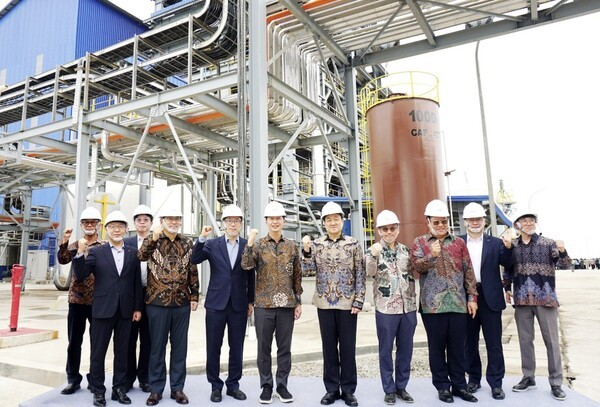
In Korea’s refining sector, GS Caltex is often cited as a leading player pushing bio-based power and fuels. In 2023, GS Caltex and POSCO International set up a joint venture, ARC, in Indonesia—the world’s largest palm oil producer—and decided to invest about $176 million to build a palm oil refining facility on a 300,000-square-meter site in the Balikpapan industrial complex in East Kalimantan. Construction began in May last year and the plant was completed last month. Using crude palm oil (CPO) as feedstock, the facility produces refined palm oil, edible oils and fats, and biodiesel feedstocks (including palm stearin), with annual refining capacity of roughly 500,000 tons.
POSCO International will supply crude palm oil produced at Indonesian plantations to ARC, and plans to sell ARC’s refined palm oil not only locally but also to nearby markets such as Korea and China. GS Caltex will use its operational know-how to improve the efficiency of ARC’s refining operations and supply the resulting biodiesel feedstock products to the domestic market. Through this, GS Caltex has effectively built a biodiesel value chain spanning feedstock procurement through production and sales.
Some critics argue that palm oil—the core raw material for ARC—runs counter to carbon neutrality, claiming that large volumes of CO₂ are emitted during cultivation to secure palm oil supplies. Industry stakeholders, however, say that assessment is inaccurate. Indonesia’s palm oil producers association estimates that CO₂ emissions from palm oil production account for only about 5% of Indonesia’s annual CO₂ emissions, and that a single oil palm tree can absorb 161 tons of carbon per year while releasing 18.7 tons of oxygen.
The Intergovernmental Panel on Climate Change (IPCC)—an international body established by the UN Environment Programme (UNEP) and the World Meteorological Organization (WMO)—also recognizes that biofuel crops absorb a meaningful amount of CO₂ during growth and can deliver lifecycle CO₂-reduction benefits. This is cited as a reason countries have broadly accepted palm oil as a suitable feedstock for emissions reduction and are expanding biodiesel adoption. The argument follows that if refiners and petrochemical companies, including GS Caltex, produce and use palm oil on their own, they can secure meaningful advantages in environmental competitiveness.
Aoife Brennan is a contributing writer for The Economy, with a focus on education, youth, and societal change. Based in Limerick, she holds a degree in political communication from Queen’s University Belfast. Aoife’s work draws connections between cultural narratives and public discourse in Europe and Asia.
Similar Post