U.S. Capacity Prices Surge Tenfold, Big Tech Packs Up for Asia to Escape Regulation

Anne-Marie Nicholson is a fearless reporter covering international markets and global economic shifts. With a background in international relations, she provides a nuanced perspective on trade policies, foreign investments, and macroeconomic developments. Quick-witted and always on the move, she delivers hard-hitting stories that connect the dots in an ever-changing global economy.
Authored On
Modified
U.S. PJM capacity prices jump 1,000% to $333, spreading “techlash” amid data center–driven power hikes
Political and regulatory pressure mounts as OpenAI, Microsoft pivot investment to power-rich India and Southeast Asia
Asia rises as a global data hub, but water shortages and carbon emissions risks intensify
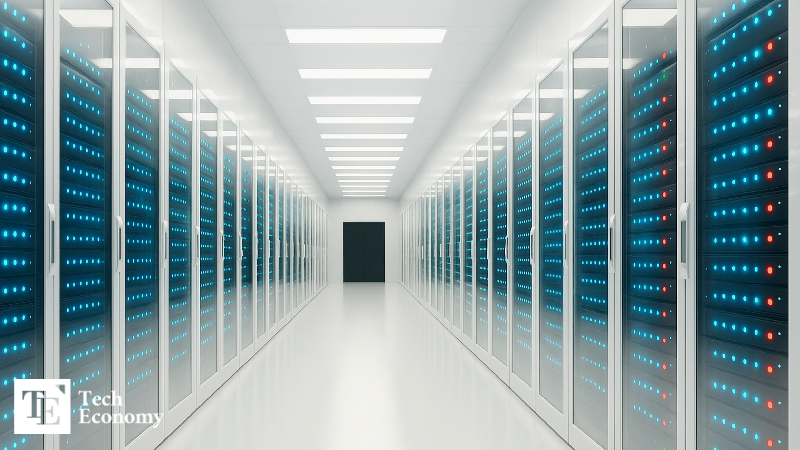
Capacity market prices at PJM Interconnection, the largest power grid operator in the United States, have surged by an unprecedented 1,000% to a record high, turning a looming “power shock” into reality. As astronomical costs stemming from data centers’ voracious electricity consumption overwhelm supply chains and are passed on to households, a backlash against technology companies—dubbed “techlash”—is sweeping through U.S. politics and regulatory bodies. Unable to withstand power shortages and intensifying regulatory pressure, Big Tech firms are now embarking on a large-scale exodus from the United States, seeking “power oases” in India and Southeast Asia. Yet Asia, the new land of opportunity, is confronting its own dilemma, facing mounting bills in the form of water scarcity and rising carbon emissions.
PJM Clearing Prices Jump 1,000%, Techlash Spreads as Politicians Demand Big Tech Pay the Bill
On the 18th (local time), PJM announced that clearing prices in its 2027–2028 Capacity Auction hit the price cap at $333.44 per megawatt-day. This marks a more than tenfold increase from the $29.92 recorded in the 2024–2025 auction, the highest level on record. As a result, the total cost of procuring capacity that consumers will ultimately bear is estimated at $16.4 billion, a burden expected to translate into sustained upward pressure on retail electricity rates.
Data centers have been identified as the epicenter of the price surge. Stu Bresler, PJM’s vice president, stated that the results demonstrate how data center electricity demand is outpacing the speed of new supply, urging governments and industry to collaborate urgently on solutions. The most critical issue is that supply is failing to keep up with demand. The auction revealed a reserve margin shortfall of 6.6 gigawatts below PJM’s reliability target—equivalent to roughly six large-scale nuclear reactors—raising concerns over power reliability during extreme weather events.
The spike in wholesale prices is now hitting household finances with a lag, fueling the techlash. The Center for American Progress and the Natural Resources Defense Council estimate that proposed electricity and gas rate hikes from 2025 to 2027 will impose an additional $85.8 billion burden on households. In Virginia, a major data center hub, residential electricity rates jumped 13% year on year, while Illinois and Ohio saw increases of 15.8% and 12%, respectively, far exceeding the national average of 5.1%. The Union of Concerned Scientists criticized the situation, arguing that data center connection costs are being unfairly shifted onto ordinary consumers. Combined with noise pollution and massive water consumption, environmental concerns have intensified, transforming data centers from once-coveted local investments into unwanted facilities. According to Bloomberg, Georgia has halted tax incentives for data centers, while protests against new construction have escalated in areas such as Altoona, Iowa, over water shortages.
Voter anger over soaring power bills has begun to reshape political and regulatory responses. Abigail Spanberger, the governor-elect of Virginia, pledged to ensure Big Tech “pays its fair share,” while New Jersey governor-elect Mikie Sherrill campaigned on freezing utility rates. In Washington, Senator Bernie Sanders and others sent letters to the White House urging countermeasures, accusing the Trump administration of shifting data center costs onto consumers. Regulators have also intervened. Reuters reported that the Federal Energy Regulatory Commission recently instructed PJM to revise rules governing co-location of data centers near power plants, seeking to block cost pass-throughs to consumers.
“There Is No Power in America”: The Great Data Migration to Asia
Facing stricter regulation and a saturated power grid, Big Tech companies are increasingly turning overseas, particularly to Asia. On September 1, Bloomberg reported that OpenAI is seeking local partners to build a data center in India with at least 1 gigawatt of capacity—roughly equivalent to the output of a nuclear reactor. Having already registered an Indian subsidiary, OpenAI is expanding its $500 billion Stargate project under CEO Sam Altman, using India—the world’s second-largest ChatGPT market—as a strategic hub. This move extends the company’s broader shift away from the United States, following expansions into the United Arab Emirates and Norway.
India has emerged as a prime battleground for next-generation hyperscale investment. Microsoft plans to invest $17.5 billion over four years starting in 2026, Google $15 billion, and Amazon Web Services $12.7 billion by 2030 to build massive infrastructure. Domestic conglomerates are also joining the fray. Gautam Adani’s Adani Enterprises is constructing a $15 billion campus in partnership with Google, while Mukesh Ambani’s Reliance Industries is collaborating with Brookfield and others on a 1-gigawatt data center, accelerating India’s transformation into a vast AI cluster.
Southeast Asia is also gaining traction as an investment destination, leveraging low electricity costs, competitive labor, and generous tax incentives. According to Nikkei, data center capacity across six Asian countries is expected to grow 2.5 times over the next three to five years, reaching 4,185 megawatts. Google, Amazon, and Microsoft are pouring vast sums into hubs in Malaysia, Thailand, and Singapore, while Nvidia has established a key base in Malaysia. The appeal is clear: abundant hydropower keeps electricity prices low relative to advanced economies, labor costs are competitive, and governments offer sweeping regulatory relief.
Northeast Asia is witnessing a parallel surge. Taiwan has attracted investments from Apple, Google, and Nvidia, leveraging its semiconductor ecosystem to position itself as an AI hardware testbed. Japan, backed by massive government subsidies, has secured large-scale investments from Microsoft and Amazon Web Services, while SoftBank is converting a former Sharp factory into an AI data center. Chinese firms are also pushing back aggressively. Alibaba is advancing a $53 billion global expansion, Tencent is targeting Japan and Indonesia, and Tibet is reinventing itself as a domestic AI data center hub with facilities such as the Yajiang-1 advanced computing center. Cushman & Wakefield projects that by 2030, Asia-Pacific data center capacity will exceed 29 gigawatts, making it the world’s second-largest market after the Americas. Under the emerging logic that “where power and government support exist, headquarters will follow,” the center of gravity in global data dominance is rapidly shifting toward Asia.

Asia’s Growing Shadow: Water Scarcity and Carbon Emissions
Beneath the investment boom, however, Asia is accumulating environmental and structural liabilities. Malaysia’s Johor state has tightened approval standards for lower-tier data centers as water usage pressures intensify. AI data centers require vast quantities of cooling water, competing directly with agricultural and household needs. Even if electricity constraints are resolved, water scarcity could become a binding physical limit on growth.
An even larger concern is the “balloon effect” of carbon emissions. Energy think tanks such as Ember warn that Asia’s power generation mix remains heavily reliant on coal and gas, raising the risk that data center expansion will drive global carbon leakage. A report by PwC estimates that by 2030, renewable energy will meet less than one-third of incremental power demand. While companies such as YTL and Samsung Electronics are exploring alternatives, including solar power and offshore data centers, shifting capacity to fossil-fuel-dependent regions could ultimately increase global emissions rather than merely easing U.S. power shortages. The PJM crisis serves as a preview of the costs incurred when growth outpaces environmental capacity.
Structural challenges remain unresolved. Southeast Asia’s AI sector still faces shortages of advanced talent, while legal frameworks for data protection and ethics lag behind. Digital disparities between countries are widening, with investment concentrating in Singapore and Malaysia while nations such as Laos and Cambodia are left behind. Some warn that overheated infrastructure investment could morph into an AI bubble, though others disagree. Jitesh Kale, head of Asia-Pacific data center research at JLL, told Forbes that with AI adoption accelerating across healthcare, education, and defense, supply shortages are likely to be a greater concern than a bubble in the near term. Despite mounting obstacles, there is broad consensus that Asia will cement its position as a critical pillar and vast market in the global AI innovation landscape.
Anne-Marie Nicholson is a fearless reporter covering international markets and global economic shifts. With a background in international relations, she provides a nuanced perspective on trade policies, foreign investments, and macroeconomic developments. Quick-witted and always on the move, she delivers hard-hitting stories that connect the dots in an ever-changing global economy.
Similar Post