“Live-Action Has Clear Limits”: Korean Webtoon Firms Turn to Animation to Boost Profitability

Aoife Brennan is a contributing writer for The Economy, with a focus on education, youth, and societal change. Based in Limerick, she holds a degree in political communication from Queen’s University Belfast. Aoife’s work draws connections between cultural narratives and public discourse in Europe and Asia.
Authored On
Modified
Korea’s Webtoon Industry Weakens Amid Content Oversupply; IP “Virtuous Cycle” Benefits Flow to OTT Hits
Actor Fees Too High for Webtoon Firms to Move into In-House Production
Animation Emerges as the Next Growth Engine, with Kakao and Naver Making Back-to-Back Big Bets

Korean webtoon companies such as Kakao Entertainment and Naver Webtoon are shifting their focus beyond live-action dramas and films to animation production. As actor fees continue to climb, driving up the cost burden of live-action adaptations, and as box-office gains from adapted titles have become increasingly concentrated at OTT platforms, these firms are looking for new ways to monetize their IP in an effort to improve profitability.
Live-Action Webtoon Adaptations Deliver Limited Profit Upside for Webtoon Firms
According to the webtoon industry on the 22nd, a string of hit dramas and films based on web novels and webtoons this year has created what is often called a “virtuous cycle” for IP—where successful screen adaptations also lift demand for the original titles. One example is JTBC’s drama The Story of Manager Kim, Who Lives in Seoul and Works at a Major Company, which ended late last month. In the two weeks after the drama first aired, views of the Naver Webtoon of the same name jumped about 30-fold compared with the period right before the release. Dear X, which became the biggest hit on domestic OTT platform TVING, also drove a 17-fold increase in views for its original Naver Webtoon after the drama premiered last month.
Kakao Entertainment has also said views of its popular webtoon series Taxi Driver surged 64-fold after the broadcast of Taxi Driver 3. Disney+’s original drama series Fine: Country Bumpkins, released in July, likewise boosted views of its source webtoon Fine by 58 times. An industry official noted that while view counts for completed webtoons typically decline gradually, they are often “rediscovered” during an adaptation’s run, resulting in sharp spikes.
The problem is that this virtuous-cycle effect is inherently temporary. As new titles flood the market each year, the hit cycle for screen content has shortened, and the indirect benefits enjoyed by the original IP are starting to diminish. Another chronic concern is that even successful adaptations do not significantly improve webtoon companies’ profitability. Under the common contract structure—where OTT platforms such as Netflix and Disney+ fund production costs in full and webtoon companies act mainly as IP intermediaries—most of the revenue generated by adaptations ultimately accrues to the OTT platforms.
Soaring Production-Cost Burden
For webtoon companies, moving into in-house production to secure profitability comes with an overwhelming cost burden. From 2019—when Netflix’s Kingdom debuted—to 2024, the average production budget for Korean dramas released by broadcasters and OTT platforms reached about $26–27 million, with per-episode costs nearing $2.3–2.5 million. That represents an increase of at least two to three times—and in some cases three to four times—compared with a decade ago. As cost pressures have mounted, the number of dramas produced has also declined, from 141 titles in 2022 to 123 in 2023 and around 100 last year, with output expected to fall further to roughly 80 this year.
The main driver behind rising production costs has been actor fees. Pay for Korean actors accelerated alongside the entry of global OTT platforms such as Netflix. Actor Lee Jung-jae is reported to have earned more than $750,000 per episode for Netflix’s Squid Game Season 2. Last year, one actor was said to have demanded about $1 million per episode, putting producers in a difficult position. Actor Kim Ji-hoon also remarked on a web variety show that because OTT productions operate on a much larger scale, “superstar-level actors are paid far more than on terrestrial TV,” adding that OTT budgets can feel “almost unlimited.”
As actor fees have climbed and production costs surged, producers have increasingly turned their attention to Japan. While leading Korean actors command several hundred thousand dollars per episode, comparable fees in Japan are closer to $20,000–25,000. Industry sources say content can be produced in Japan at roughly half the cost of Korea. Against this backdrop, Netflix produced the Korea–Japan co-production original drama Romantic Anonymous, starring Korean actor Han Hyo-joo and Japanese actor Shun Oguri. The series was directed by a Japanese filmmaker, produced in Japan by a Korean team, and categorized as a “Japanese drama.
Webtoon Industry Accelerates Push into Animation Production
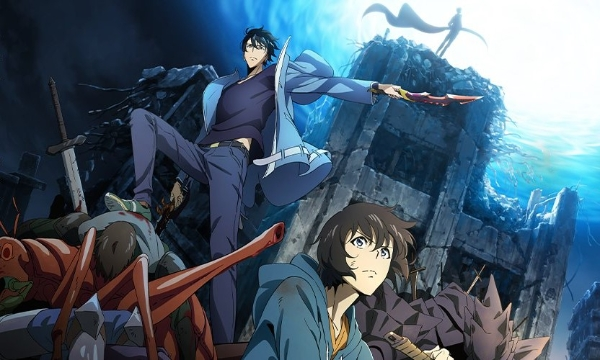
As the bar for live-action dramas and films has risen sharply in Korea, webtoon companies plan to improve profitability by expanding in-house production of screen adaptations and animation. When an animation becomes a hit, it can attract a loyal fan base and deliver longer-lasting IP momentum. Japan’s anime Demon Slayer underscored that potential this year, drawing more than five million moviegoers in Korea with its theatrical release. Kakao Entertainment’s hit webtoon Solo Leveling was adapted into an anime last year, with both Seasons 1 and 2 achieving global success and earning the title of “Anime of the Year” from Crunchyroll, the world’s largest anime streaming platform with more than 17 million subscribers.
Naver Webtoon is also stepping up efforts to adapt web novels and webtoons into animation. A total of 15 titles are currently in production or slated for development. In Korea, projects include Tiger Brother, Electronic Arcade Guardians, The Antique Shop of the Future, and Denma. In Japan, Naver Webtoon has begun work with local studios to animate popular titles such as Mercenary Enrollment, Eleceed, Altar of the Moon, Gosu, and Omniscient Reader’s Viewpoint. To support these efforts, the company plans to actively participate in Japanese animation production committees.
In September, Naver Webtoon also unveiled Cuts, a user-created short-form animation service under its umbrella. The platform allows anyone to create and watch animations under two minutes, lowering barriers to entry in line with growing demand for short-form video. Through Cuts, users can view highlight clips from popular Naver Webtoon originals as well as new animated works by creators such as Lee Yoon-chang (Zombie Daughter), Gaspard (The Sound of Your Heart), and Rangto (Gadamhangseol).
Last month, Webtoon Entertainment, Naver Webtoon’s U.S. headquarters, announced plans to develop animation projects with Warner Bros. Animation. The two companies will sign an agreement to jointly produce 10 webtoon-based animated titles for global distribution. The projects will be selected from webtoons serialized on Naver Webtoon’s Korean- and English-language platforms, with support from Webtoon Production, which oversees global IP business, and the company’s Japan IP team. The partnership is expected to significantly expand Webtoon Entertainment’s animation pipeline.
Aoife Brennan is a contributing writer for The Economy, with a focus on education, youth, and societal change. Based in Limerick, she holds a degree in political communication from Queen’s University Belfast. Aoife’s work draws connections between cultural narratives and public discourse in Europe and Asia.
Similar Post