Triple Shock of a Weak Currency, High Inflation, and Sluggish Growth: Fears of Stagflation Reignite

Matthew Reuter is a senior economic correspondent at The Economy, where he covers global financial markets, emerging technologies, and cross-border trade dynamics. With over a decade of experience reporting from major financial hubs—including London, New York, and Hong Kong—Matthew has developed a reputation for breaking complex economic stories into sharp, accessible narratives. Before joining The Economy, he worked at a leading European financial daily, where his investigative reporting on post-crisis banking reforms earned him recognition from the European Press Association. A graduate of the London School of Economics, Matthew holds dual degrees in economics and international relations. He is particularly interested in how data science and AI are reshaping market analysis and policymaking, often blending quantitative insights into his articles. Outside journalism, Matthew frequently moderates panels at global finance summits and guest lectures on financial journalism at top universities.
Authored On
Modified
Consumer inflation remains in the 2% range
Limited prospects for a reversal in currency weakness
Persistent risks of a prolonged strong-dollar environment
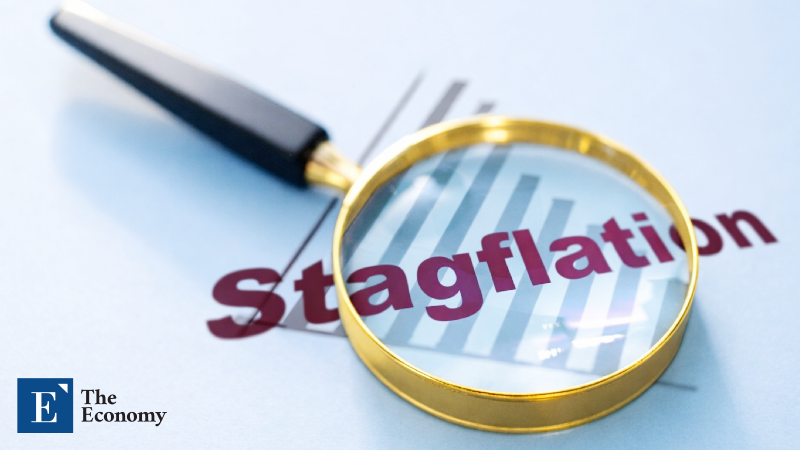
While the United States and other major economies are enjoying the rare combination of solid growth and subdued inflation, South Korea’s economy is moving in the opposite direction, trapped in a triple bind of currency weakness, elevated inflation, and anemic growth. The dynamism that once allowed Korea to outperform the United States in growth has faded, while the inflation-adjusted exchange rate has fallen to levels seen shortly after the Asian financial crisis, underscoring the erosion of economic fundamentals. Notably, even a record-high current account surplus has failed to stem capital outflows, fueling concerns that the Korean economy is entering a phase of structural deterioration.
Korea’s Growth Below Global Average for Four Consecutive Years
According to data compiled from the Bank of Korea and international organizations as of the 22nd, South Korea’s gross domestic product growth has lagged the global average for four straight years since 2021, a trend expected to persist through this year and next. The Bank of Korea last month projected growth of 1.0% this year and 1.8% next year, while the OECD forecast growth of 1.0% and 2.1%, respectively.
By contrast, the OECD projects global economic growth of 3.2% this year and 2.9% next year. It expects China to grow by 5.0%, the United States by 2.0%, and Japan by 1.3% this year. The outlook for the U.S. economy is even more optimistic. U.S. Treasury Secretary Scott Bessent has said the American economy could close the year with growth of 3.0%. The configuration in which Korea once outpaced the United States in growth has been completely reversed. The Federal Reserve, after cutting its policy rate on the 10th, also indicated that U.S. growth would accelerate next year while inflation moderates.
Against this backdrop, overseas analysts increasingly argue that the global economy is entering a full-fledged “Goldilocks” phase—neither too hot nor too cold—characterized by robust growth, low inflation, and low unemployment. In its “2026 Global Macroeconomic Outlook” released on the 15th, global asset manager Baring Asset Management projected that the world economy would sustain stable growth without falling into recession.
South Korea, however, is facing renewed inflationary pressure. Consumer price inflation rose to 2.1% in September and remained at 2.4% in October and November. Prices of everyday necessities have risen even faster: the living cost index climbed 2.5% in September and October before accelerating to 2.9% in November, marking the steepest increase in one year and four months. Rising prices erode household purchasing power, suppress consumption, and feed through to weaker corporate earnings and employment, potentially stalling any economic recovery and raising the risk of a renewed downturn.
Currency Weakness Feeding Into the Real Economy
At the same time, a persistently strong dollar has added upward pressure on prices. According to the Bank of Korea’s economic statistics system, the average monthly closing exchange rate last month stood at roughly $1.08 per dollar, the weakest inflation-adjusted level since March 1998. Despite three rounds of stabilization measures by the government and monetary authorities, the trend has continued. On the 22nd, the exchange rate reached about $1.09 per dollar in afternoon trading, surpassing recent highs again.
The currency’s underperformance stands out even in global comparison. While the Korean currency depreciated about 0.5% against the dollar this month, other major currencies—including the Australian dollar, Canadian dollar, euro, British pound, and Japanese yen—posted gains.
This confluence of currency depreciation, inflation, and weak growth is already evident on the ground. In a survey of the country’s top 1,000 companies by revenue conducted by the Korea Employers Federation, a majority of respondents said business conditions next year would be “difficult,” citing heightened exchange-rate volatility, inflationary burdens, and delayed recovery in domestic demand. Exporters are grappling with cost pressures, while domestic-oriented firms face weakening demand.
The same concerns emerged in a Korea Chamber of Commerce and Industry outlook, which projected retail market growth of just 0.6% in 2026, pointing to constrained consumer spending under a strong dollar and high inflation. These risks are also visible in hard data. The Bank for International Settlements’ real effective exchange rate index (2020=100) has fallen to around 87, approaching levels seen immediately after the Asian financial crisis, signaling a sharp erosion in real currency value.
Capital Outflows and Structural Vulnerabilities
A deeper issue lies in Korea’s import-dependent economic structure, which ensures that currency depreciation continuously feeds into inflation. In November, import prices rose 2.6% month-on-month, marking a fifth consecutive increase and the steepest rise in nearly two years. Import prices typically affect consumer prices with a lag of three to six months, raising the likelihood of further inflation ahead. Persistent foreign capital outflows, deteriorating corporate profitability, and weaker investment could follow.
At this stage, currency weakness is no longer merely reflecting fundamentals—it is actively undermining them. Rising exchange rates lift prices, squeezing real incomes and consumption, depressing growth, and further eroding the attractiveness of Korean assets, perpetuating a vicious cycle. Breaking this cycle would require a revival of investment through stronger corporate competitiveness, yet China’s rapid advance has already eroded profitability and market share across Korea’s core industries, from semiconductors and batteries to shipbuilding.
China’s competitive pressure is set to intensify. According to the Korea Employers Federation, China is expected to widen its lead in sectors where it already dominates, while even areas where Korea currently holds an edge—such as semiconductors, electronics, shipbuilding, petrochemicals, and biohealth—are projected to tip in China’s favor. China already outperforms Korea in pricing power, productivity, government support, talent, and core technologies, with branding the sole remaining Korean advantage, one that is also expected to reverse within five years.
Experts increasingly attribute Korea’s fading global presence not to cyclical downturns but to weakening industrial foundations. Excessive regulation, legislative overreach, and low labor productivity are cited as key drags on competitiveness. Rigid labor markets, heavy quasi-tax burdens, and complex regulatory frameworks inflate costs relative to global standards. Confidence in the broader economy has also eroded. Through November, Korea recorded a current account surplus of about $90 billion, yet roughly $150 billion flowed out through direct and portfolio investment. The persistence of currency weakness despite a record surplus underscores structural fragility rather than temporary imbalances, as investors and exporters alike grow increasingly pessimistic about the future value of the currency.
Matthew Reuter is a senior economic correspondent at The Economy, where he covers global financial markets, emerging technologies, and cross-border trade dynamics. With over a decade of experience reporting from major financial hubs—including London, New York, and Hong Kong—Matthew has developed a reputation for breaking complex economic stories into sharp, accessible narratives. Before joining The Economy, he worked at a leading European financial daily, where his investigative reporting on post-crisis banking reforms earned him recognition from the European Press Association. A graduate of the London School of Economics, Matthew holds dual degrees in economics and international relations. He is particularly interested in how data science and AI are reshaping market analysis and policymaking, often blending quantitative insights into his articles. Outside journalism, Matthew frequently moderates panels at global finance summits and guest lectures on financial journalism at top universities.
Similar Post