[ESS] Global ESS Market Surges on AI and Renewables, Korean Batteries Move to Counter China’s Dominance

As one of the youngest members of the team, Tyler Hansbrough is a rising star in financial journalism. His fresh perspective and analytical approach bring a modern edge to business reporting. Whether he’s covering stock market trends or dissecting corporate earnings, his sharp insights resonate with the new generation of investors.
Authored On
Modified
Surging ESS Demand Driven by Renewables and Data Centers, Reshaping the Power Market
Battery Makers Hit by the EV “Chasm” Turn to ESS as the Next Growth Engine
China’s Price Edge Helps It Dominate the Global Battery Market, Korea Moves to Catch Up
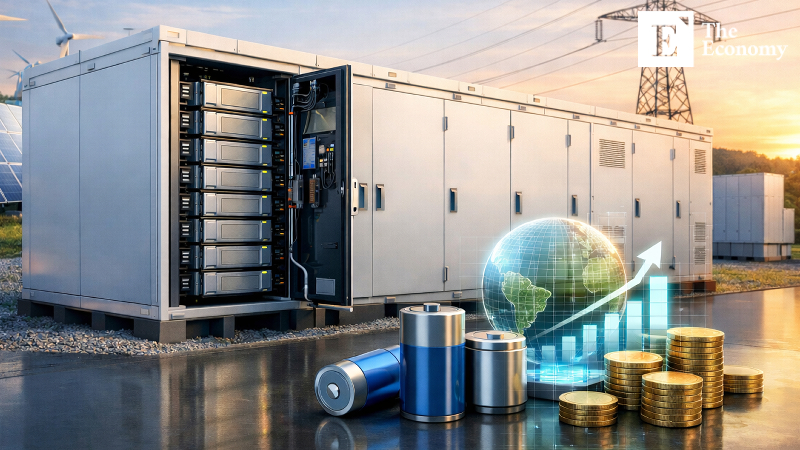
The global power market is being reshaped around energy storage systems (ESS). As the transition to renewable energy and the rapid buildout of AI data centers accelerate in parallel, demand for ESS is surging. In response, Korean companies are moving to overhaul their ESS manufacturing base and are taking on China, which has come to dominate the global battery market on the back of strong price competitiveness.
Ever-Growing Demand for ESS
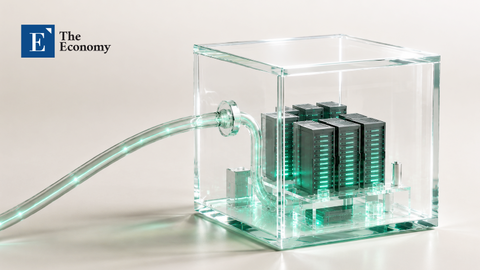
On the 21st (local time), energy outlet OilPrice reported that ESS is emerging as a key engine of the carbon-neutral transition, serving as an “energy dam” that offsets a critical weakness of renewable power. ESS is a system that stores electricity in advance and releases it when needed. With ESS, surplus power from intermittently generated renewables can be stored and then discharged when electricity is needed—during peak hours—helping stabilize the grid and maximize asset efficiency.
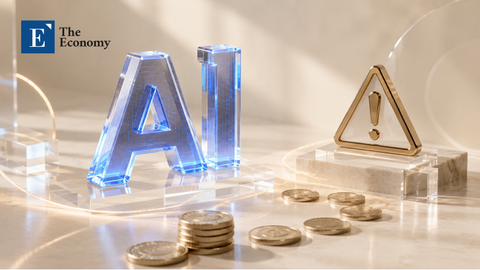
The rapid rise of AI data centers is further accelerating ESS demand. AI data centers require vastly more electricity than traditional industrial infrastructure. In the case of AI training centers, there are facilities that consume power on the order of several hundred megawatts within a single site. According to the International Energy Agency (IEA), global electricity use by data centers is projected to more than triple, rising from 460 TWh in 2024 to 1,300 TWh in 2035. That would be more than double Korea’s total power generation in 2024 (595 TWh).
As a result, global tech companies are increasingly pairing AI data-center buildouts with energy investment. Microsoft said it will invest $10 billion in renewable-energy development projects to supply electricity to its data centers. AWS plans to source all of its electricity consumption from renewable energy by next year, and Google has already established initiatives to secure clean energy supplies. To operate these “renewables-based” data centers reliably, securing ESS is effectively essential. Some in the industry argue that renewable procurement and ESS integration should be viewed as a packaged approach.
The benefits of ESS are not limited to supporting renewable integration. ESS can supply power immediately when a data center experiences an outage or voltage fluctuation, preventing server downtime. Using ESS to smooth loads can also reduce electricity costs and improve grid stability. As the AI market expands and data centers multiply, ESS demand is set to surge. BloombergNEF (BNEF) projects that global ESS installed capacity will expand from 89.5 GW in 2023 to 789.8 GW by 2030.
Korean Battery Industry Moves to Target the ESS Market
With the EV market—its core downstream demand—slumping and pushing the battery industry toward a downturn, Korean battery makers are also turning to ESS as their next growth engine. POSCO Future M said on the 16th that it will build an LFP cathode-material plant to meet rising ESS demand. Construction is set to begin next year, with mass production scheduled to start in the second half of 2027. All LFP cathode materials produced at the facility will be supplied exclusively for ESS.
SK On will begin mass-producing ESS-dedicated LFP batteries in the United States in the second half of next year. It plans to rapidly build production capacity by converting part of its EV battery lines at SK Battery America’s plant in Georgia into ESS lines. Samsung SDI also signed an ESS-dedicated LFP battery supply contract worth about $1.4 billion on the 10th with a U.S. energy infrastructure developer and operator, and is converting part of its U.S. production lines for ESS. LG Energy Solution, meanwhile, converted EV lines at its Holland plant in North America into ESS lines in May and has begun mass production of related battery products.
Calls for institutional support are also growing across the industry. At a discussion forum titled “Strategies to Activate the ESS Demand Market and Grow the Battery Industry,” hosted by the National Assembly’s secondary-battery forum and held on the 16th at the National Assembly Members’ Office Building in Yeongdeungpo, Seoul, the battery industry urged swift legislation for a tax credit designed to promote domestic production and expand Korea’s ESS manufacturing base. With investment in LFP ESS supply chains accelerating, the industry argues that introducing a domestic production tax credit would speed up related investment and strengthen the country’s energy-security response capacity.
There were also calls for government-backed links to project financing (PF)—including policy-finance packages, export finance, and guarantees—to win large-scale ESS projects overseas. Given the up-front investment and long payback periods typical of such projects, the industry argues the private sector cannot shoulder the burden alone and that a so-called “Team Korea” approach is needed. Industry players said, “Global ESS tenders are competition not in batteries alone but in system, finance, and operations packages,” adding that a dedicated consortium for ESS bids—bringing together batteries, power equipment, system integration, operations, and finance—is necessary.
China Signals Determination to Foster Its ESS Industry
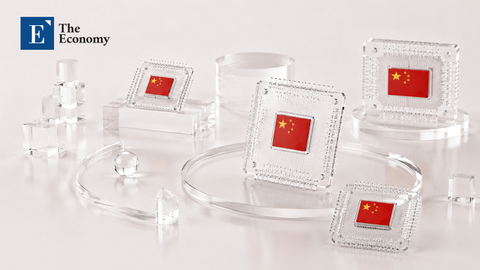
The key question going forward is whether Korean battery makers can push back Chinese players and regain a foothold in the market. Korean companies’ share of the global ESS market slipped from 55% in 2020 to around 6% in 2024 and has remained in the single digits, largely as a result of China’s low-priced battery offensive. According to market tracker SNE Research, Chinese firms now control more than 70% of the global ESS market, led by CATL (37%), EVE (13%), BYD (9%), CALB (7%), and Gotion (6%).
China is expected to nurture ESS as core infrastructure for grid stability, pursuing a strategy that upgrades ESS from a supplementary facility into an independent income-generating asset. In the “Guiding Opinions on Promoting the Consumption and Regulation of Renewable Energy” announced this year, China stated that the key to expanding renewable generation is to develop capacity “within the range that can be absorbed.” The message is widely read as a shift away from simply maximizing installed capacity toward prioritizing grid acceptance and consumption capability. As a result, the pace of new renewable project construction may moderate, while ESS is likely to evolve from a mere add-on to renewables into an asset that can generate revenue on a standalone basis. Some observers even suggest that ESS “power plants” could eventually be added to asset-allocation menus for institutional investors and insurance funds, much like solar power plants.
As China publicly underscores its commitment to building up the ESS industry, Korean companies plan to focus on the North American market, where China’s presence is relatively smaller and growth prospects are seen as strong. BloombergNEF forecasts that the U.S. ESS market will expand from 51 GWh in 2023 to 485 GWh in 2030 and 976 GWh in 2035. Meanwhile, Korea’s domestic ESS market is also preparing for a “fresh start.” The market grew rapidly through 2018 but then stagnated for a period due to weak project economics and safety controversies. More recently, however, conditions have been gradually improving, with the government indicating it will hold annual ESS tenders with a goal of supplying 23 GW by 2038.
As one of the youngest members of the team, Tyler Hansbrough is a rising star in financial journalism. His fresh perspective and analytical approach bring a modern edge to business reporting. Whether he’s covering stock market trends or dissecting corporate earnings, his sharp insights resonate with the new generation of investors.
Similar Post