[Battery R&D] Huawei ESS Passes Extreme Fire Test, Accelerating Safety Competition in the Battery Industry

Authored On
Modified
Battery market shifts from shipment race to safety-centered competition
Huawei ESS verifies fire safety under the industry’s latest standards
Chinese companies including WeLion move into solid-state battery development
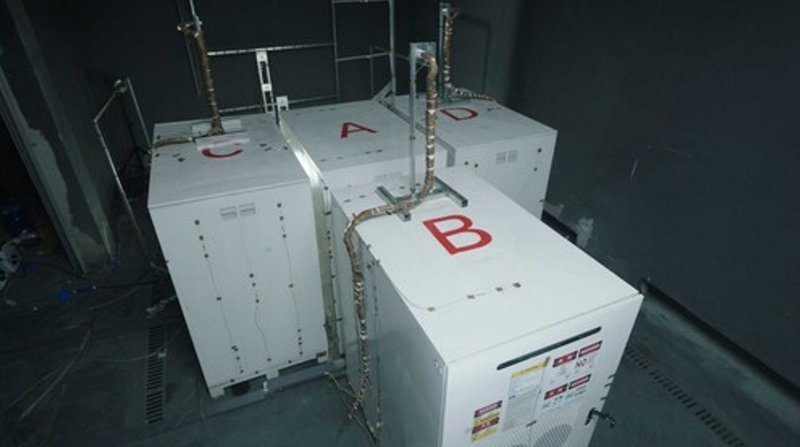
Huawei Digital Power’s Commercial and Industrial Hybrid Cooling Grid Forming Energy Storage System (C&I GFM ESS) has become the first in the industry to pass a high-intensity extreme fire ignition test conducted under the latest evaluation standards. As the global battery market moves away from a shipment-driven race and reorganizes around safety and operational capabilities—particularly in energy storage systems (ESS)—competition in related technological development is visibly accelerating.
Huawei ESS Demonstrates Outstanding Performance in Preventing Fire Propagation
On the 21st (local time), UK-based battery industry publication Energy Storage reported that Huawei’s C&I GFM ESS successfully passed a high-intensity extreme fire ignition test conducted under the supervision of TÜV Rheinland, a global testing and certification body headquartered in Germany. The test was carried out at a national core fire safety research laboratory and represents the first industry case to satisfy the latest international ESS fire safety benchmark, the revised 2025 edition of UL 9540A.
From a test-design perspective, the evaluation environment was configured to be among the most demanding in the industry. A pack-level overcharging method was applied to simultaneously induce thermal runaway in 60 battery cells, enabling assessment of safety performance under extreme ignition scenarios. In line with the latest standards, an open ignition method was adopted to maximize oxygen inflow, while all active and passive fire suppression systems were disabled, forcing the system to withstand the fire solely through its intrinsic design integrity.
According to the test results, Huawei’s ESS maintained exceptional defensive performance even under flames reaching internal temperatures of 961°C. The peak cell temperature of adjacent ESS units remained at just 45.3°C, far below the threshold at which cell vent valves would activate, with no fire propagation observed between units. This outcome was attributed to the combined operation of multiple safety measures, including inter-cell thermal isolation, an all-metal pack enclosure capable of withstanding temperatures up to 1,500°C, positive-pressure oxygen isolation and directional exhaust systems, a fireproof labyrinth design to block flame spread, and a reinforced fire-resistant container. The maximum heat release rate (HRR) was controlled at approximately 3 megawatts, and the system achieved self-extinguishment in under three hours without external intervention, demonstrating superior thermal management capability.
Advancing Pack-Level Thermal Runaway Control
Huawei’s achievement is drawing industry attention as ESS safety emerges as a top-priority issue across the renewable energy sector. Through this test, Huawei demonstrated that it has elevated pack-level thermal runaway control technology—directly managing heat events within battery packs—beyond container-level mitigation to a commercially viable stage. The fact that ESS fire-spread prevention design was structurally verified under international standards is seen as a meaningful step toward enhancing the credibility of ESS as large-scale energy infrastructure.
Industrial demand dynamics within the battery market have also shaped this shift. As growth in the electric vehicle market has slowed amid the so-called chasm phase, battery manufacturers are seeking new growth pathways centered on ESS rather than shipment volumes tied to automaker demand. In particular, grid-forming technology—which actively stabilizes power systems rather than merely following grid signals—has emerged as a key criterion for ESS adoption in commercial and industrial energy markets, given its ability to enhance system resilience during large-scale outages or instability.
The competitive landscape of the ESS market is also being rapidly reshaped. Product performance is increasingly defined by stable operation and sophisticated control capabilities rather than sheer storage capacity. As ESS applications expand into electricity market participation, virtual power plants (VPP), demand response (DR) integration, and artificial intelligence-based power demand management, profitability gaps are widening based on operational efficiency and safety management standards. While declining battery prices have lowered installation barriers, fire risk, charge–discharge efficiency, and long-term lifecycle management capability are becoming decisive competitive variables, according to industry assessments.
Solid-State Batteries Gain Attention for Safety and Efficiency
Against this backdrop, China’s battery industry is intensifying competition to secure leadership in next-generation technologies, particularly the commercialization of solid-state batteries. Solid-state batteries replace the liquid electrolytes used in conventional lithium-ion batteries with solid electrolytes, with commercialization timelines generally projected around 2027. They are widely viewed as reducing leakage and fire risks while maintaining stable performance across high- and low-temperature environments. Improvements in energy density and lifespan further position them as a promising solution applicable to both ESS and electric vehicles.
Recent market attention has focused on reports that Beijing-based solid-state battery unicorn WeLion is preparing for an initial public offering. If the IPO proceeds smoothly, WeLion could become the first solid-state battery company listed on mainland exchanges. Founded in Beijing in 2016, WeLion grew out of an industry–academia–research collaboration on solid-state batteries with the Institute of Physics at the Chinese Academy of Sciences and specializes in solid-state battery research, development, and manufacturing. In the “2025 Global Unicorn List,” the company was valued at approximately $2.9 billion.
WeLion’s battery products have already entered mass production and real-world application. Its high-energy-density power cell, with an energy density of 360 watt-hours per kilogram, entered mass production in 2023 and was supplied to electric vehicle startup NIO that same year. Road tests demonstrated a single-charge driving range exceeding 1,000 kilometers. A 280-ampere-hour ultra-safety energy storage cell has also been in mass production since the second half of 2023 and supplied to multiple ESS projects, while a 320 watt-hour-per-kilogram low-altitude economy power cell is being deployed across drones, robots, and portable power devices.
Established liquid-electrolyte battery manufacturers—including CATL, BYD, and Gotion—are also accelerating development. CATL has produced solid-state battery samples with energy densities around 500 watt-hours per kilogram and is conducting customer tests, targeting mass production in 2027. BYD has outlined plans to deploy sulfide-based solid-state batteries across its electric vehicle lineup by 2029 and has already commercialized semi-solid batteries in select models. Gotion has likewise unveiled solid-state battery samples and aims to begin pilot production in 2027, formally joining the commercialization race.
Similar Post