Türkiye’s nuclear cooperation pitch to South Korea and the U.S. carries calculations to weigh before any deal

Authored On
Modified
Parallel push for large reactors and SMRs
Power supply instability, economics remain hurdles
Energy diversification strategy takes clearer shape
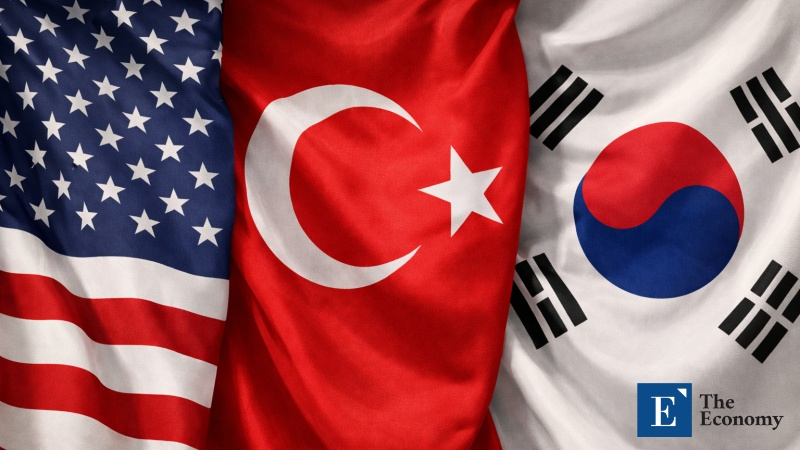
Türkiye has proposed nuclear power cooperation to South Korea and the United States, revealing the direction of its mid- to long-term energy strategy. Seeking to move away from an energy structure heavily dependent on Russia, Türkiye is pursuing a parallel approach that combines large-scale nuclear power plants and small modular reactors (SMRs), while also factoring in technology transfer and long-term industrial development. Within the nuclear industry, the prevailing view is that Türkiye is attempting to leverage South Korea’s cost competitiveness and project execution experience alongside the United States’ financial capacity and diplomatic credibility.
Energy security intertwined with diplomatic strategy
According to energy industry publication Energy Intelligence on the 22nd (local time), the Turkish government has recently requested cooperation from South Korean and U.S. companies to build large-scale nuclear power plants and deploy SMRs with a combined capacity of 5 gigawatts (GW). Rather than limiting cooperation to construction or technology adoption, Türkiye aims to absorb advanced nuclear technologies from both countries, complete its own SMR designs, and ultimately export them to third countries. This move is widely interpreted as benchmarking South Korea’s growth model, which achieved both technological self-reliance and global expansion following the Barakah nuclear power plant project in the United Arab Emirates.
Türkiye’s latest push comes just one month after it signed memoranda of understanding (MOUs) with South Korea covering cooperation in three areas: veterans’ affairs, nuclear energy, and road infrastructure. The nuclear cooperation MOU signed in November broadly covers all aspects of nuclear project implementation, including technology cooperation, site selection, regulatory approvals, financing, and business models. It explicitly calls for deeper collaboration from the early stages through measures such as the formation of joint working groups, the sharing of information, experience, and expertise, and reciprocal visits by professional personnel. As a result, the simultaneous outreach to South Korea and the United States is viewed as a follow-up step that builds on an existing cooperation framework.
In October, Alparslan Bayraktar, Türkiye’s Minister of Energy and Natural Resources, stated during a meeting with Kim Dong-cheol, CEO of Korea Electric Power Corporation, that “a trilateral model could exist” in relation to Türkiye’s nuclear plans. The remark is interpreted as reflecting a calculation to avoid dependence on a single country while securing both price competitiveness and project credibility. Another Turkish government official added that “if proposals meet localization goals while remaining cost-competitive, an international agreement on new nuclear power plant construction could be concluded within the year.”
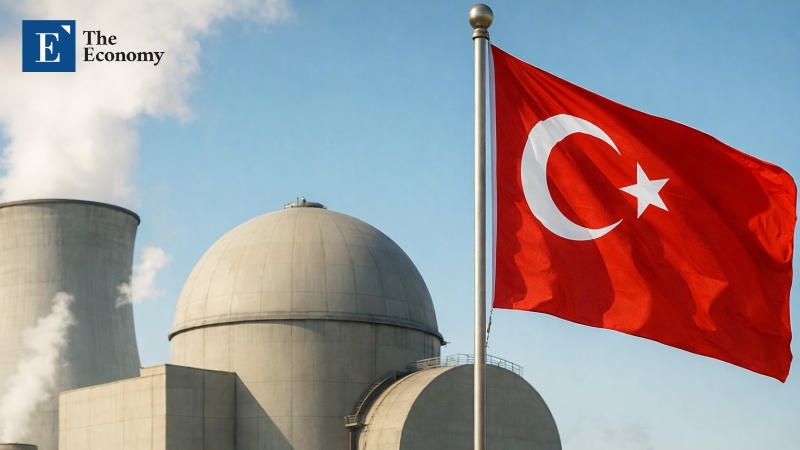
Türkiye’s active search for new nuclear partners is rooted in changes in its energy relationship with Russia. While Türkiye is currently building its first nuclear power plant at Akkuyu in Mersin province along the Mediterranean coast in cooperation with Russia’s state-owned nuclear company Rosatom, the project has faced disruptions across multiple stages following Western sanctions on Russia. Supply interruptions of key components have exposed the risks of excessive reliance on a single country for critical energy infrastructure. At the same time, natural gas imports from Russia are no longer seen as an option that is as affordable or reliable as in the past, in terms of both price and supply stability.
Against this backdrop, Türkiye has made supply-chain diversification a core principle for its second and third nuclear power projects planned for the Sinop and İğneada regions. With relations with Russia no longer as stable as before, balancing through Western partners is increasingly viewed as unavoidable. Combined with rising power demand and ambitions to become a nuclear technology exporter, the proposed “triangular nuclear cooperation” has taken on the character of a convergence between energy security and diplomatic strategy. South Korea is positioned as a partner offering cost competitiveness and execution experience, while U.S. participation would bolster financial and diplomatic trust.
Economic viability remains a prerequisite
Türkiye’s renewed focus on nuclear expansion stems from accumulated power supply disruptions. Repeated blackouts in major industrial and commercial areas, including Istanbul, have elevated power demand growth from a temporary issue to a long-term structural challenge. The Turkish government projects that national electricity demand will roughly triple over the next 30 years and is pursuing a simultaneous roadmap to expand generation capacity across renewable energy and nuclear power. Ensuring grid stability has become the starting point of nuclear expansion discussions, as failure to do so would impose broad costs on industrial competitiveness and everyday life.
However, expanding nuclear capacity does not automatically translate into a solution. Türkiye lies along the Alpine–Himalayan seismic belt, requiring nuclear plants to meet safety standards far more stringent than conventional seismic requirements. Stronger seismic design directly increases land requirements, structural scale, and associated equipment, driving construction costs higher. Globally, there are only a handful of examples of nuclear plants built in major seismic zones, such as South Africa’s Koeberg Nuclear Power Station, which began commercial operation in 1984. Since international regulatory standards have tightened significantly since Koeberg entered service, Türkiye’s nuclear projects are widely seen as facing simultaneous risks of construction delays and cost overruns.
Financing is another major constraint. Both large-scale nuclear plants and SMRs require substantial upfront investment and involve long payback periods. Without long-term power purchase agreements (PPAs) guaranteeing revenue, nuclear-generated electricity would have to compete directly with gas-fired generation in wholesale power markets. Given Türkiye’s historical access to relatively inexpensive Russian natural gas via pipeline, nuclear power would need to demonstrate cost competitiveness against gas-based generation to gain policy acceptance.
The collapse of the Sinop nuclear project serves as a clear reminder of these realities. In 2010, Türkiye pursued an intergovernmental agreement (IGA) to build four Korean-designed APR1400 reactors, but negotiations ultimately broke down over electricity pricing and government guarantees. Türkiye sought the lowest possible power prices, while South Korea demanded safeguards to ensure investment recovery, and the gap proved irreconcilable. This experience is frequently cited as evidence that economic viability remains the most critical prerequisite in current nuclear expansion discussions.
A layered energy strategy taking shape
For these reasons, market participants generally view it as premature to interpret the current nuclear cooperation talks as an imminent contract phase. At this stage, the process is seen as one in which Türkiye’s energy and diplomatic strategy is taking clearer shape rather than moving directly toward deal execution. Türkiye’s state-owned energy company BOTAŞ has already entered discussions to extend its gas supply contract with Russia’s Gazprom, which is set to expire at year-end, negotiating price terms while seeking to maintain annual supply volumes of around 22 billion cubic meters. The overlap between intensified nuclear talks and gas contract renegotiations suggests that nuclear power is being used as leverage at the negotiating table rather than treated solely as a power generation project.
Efforts to draw the United States into the cooperation framework are interpreted in the same context. While Türkiye recently signed an LNG supply agreement with the United States, it has rejected interpretations that this signals a replacement or suspension of Russian gas imports. Türkiye’s Directorate of Communications stated that “the U.S. LNG agreement is a technical choice aimed at supply diversification and increased competition,” adding that “gas supplies from Russia are continuing as planned.” This underscores Türkiye’s multi-layered energy strategy, in which nuclear power and LNG are simultaneously employed as negotiating tools.
When combined with growing engagement with Eastern European countries, the scope of Türkiye’s nuclear discussions broadens further. Recently, President Recep Tayyip Erdoğan stated that Türkiye would “continue to guarantee supplies of Russian oil and natural gas to Hungary,” highlighting Türkiye’s potential role as an intermediary and hub in negotiations with Russia. Supporting this position, Russia’s gas exports to Türkiye totaled approximately 21.6 billion cubic meters last year. This positioning allows Türkiye to maintain a degree of leverage in dialogue with Russia while strategically calibrating cooperation with Western partners.
Similar Post