U.S. Sanctions Expose Limits of Tencent’s Cloud Workarounds, Accelerating China’s Technological Autonomy

Matthew Reuter is a senior economic correspondent at The Economy, where he covers global financial markets, emerging technologies, and cross-border trade dynamics. With over a decade of experience reporting from major financial hubs—including London, New York, and Hong Kong—Matthew has developed a reputation for breaking complex economic stories into sharp, accessible narratives. Before joining The Economy, he worked at a leading European financial daily, where his investigative reporting on post-crisis banking reforms earned him recognition from the European Press Association. A graduate of the London School of Economics, Matthew holds dual degrees in economics and international relations. He is particularly interested in how data science and AI are reshaping market analysis and policymaking, often blending quantitative insights into his articles. Outside journalism, Matthew frequently moderates panels at global finance summits and guest lectures on financial journalism at top universities.
Authored On
Modified
Tencent Secures $1.2 Billion in Nvidia Compute Access via Japanese Cloud Network
U.S. DOJ Indicts H100/H200 Smuggling, Tightens Physical Controls While Remote Cloud Access Remains a Gap
U.S. Congress Proposes Remote-Access Controls; Nvidia Faces Uncertainty Over China Demand
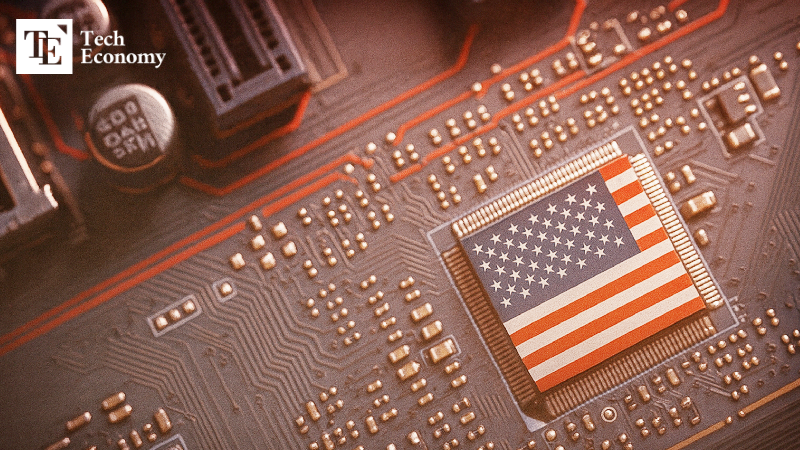
U.S. semiconductor sanctions on China have entered a new phase, moving beyond physical controls. As direct chip imports were blocked, a new workaround emerged in the form of borderless cloud-based “compute leasing.” While China’s tech giant Tencent secured access to the latest Nvidia chip performance via Japan, the United States has struggled to formulate a response amid legislative delays and practical constraints. In response, China has rejected even U.S. conciliatory signals and moved decisively to build an independent technology ecosystem backed by massive capital.
Tencent Exploits U.S. Regulatory Gaps, $1.2 Billion ‘Compute Exile’ via Japan
According to the Financial Times (FT) on the 22nd (local time), Tencent secured access to 15,000 units of Nvidia’s latest Blackwell B200 graphics processing units through Japan-based data center operator Datasection. The three-year contract is valued at $1.2 billion, allocating a substantial share of Datasection’s available capacity to Tencent. On the back of this long-term deal, Datasection has secured a stable revenue structure to finance the $272 million initial investment required to build a 5,000-unit B200 cluster.
Rather than owning the chips directly, Tencent opted to lease compute power remotely, partnering with Tokyo-based IT firm NowNaw. A key backdrop to the deal was a shift in U.S. policy. The previous Biden administration sought to block such cloud-based workarounds through the “AI Diffusion Rule,” but the Trump administration repealed the rule in May, creating a regulatory vacuum. Datasection reportedly moved quickly to finalize the Osaka contract amid this opening.
This form of “compute offshoring” is expanding beyond Japan to Australia. Datasection, which has rapidly emerged as a so-called “neo-cloud” provider—alongside U.S.-based CoreWeave and Europe’s Nebius—leasing large volumes of Nvidia GPUs, is pursuing the construction of a hyperscale AI data center housing more than 100,000 Nvidia processors. In particular, its second data center in Sydney, backed by an $800 million investment, is set to operate tens of thousands of Nvidia’s next-generation B300 chips, with Tencent again expected to be the anchor client.
FT sources report that other Chinese tech giants, including Alibaba and ByteDance, are employing similar offshore strategies—training AI models at overseas data centers and reselling surplus compute capacity. FT described this as a “geopolitical gray zone,” noting that sanctions designed to block the movement of physical products are increasingly ineffective in a borderless cloud environment. The paper argued that the regulatory paradigm is inevitably shifting from “chip movement control” to “compute access control.”
The U.S. strategy of offering downgraded chips has also run into limits. Nvidia CEO Jensen Huang has stated that “China no longer wants performance-reduced chips,” dismissing the effectiveness of regulatory easing. As China pivots toward self-reliance and cloud-based workarounds, existing control mechanisms have been undermined. Compounding the challenge, the U.S. Commerce Department’s effort to mandate know-your-customer (KYC) checks for cloud users has faced enforcement difficulties, forcing a comprehensive reassessment of U.S. sanctions strategy in the virtual domain.
U.S. Catches Smugglers but Faces Legislative Gridlock and Strategic Drift
While virtual barriers remain porous, the U.S. government has taken unprecedentedly tough action against physical smuggling attempts. The U.S. Department of Justice recently announced indictments against four individuals accused of illegally exporting Nvidia GPUs to China via Malaysia and Thailand. The group allegedly shipped more than 400 A100 GPUs and attempted to smuggle H100-equipped supercomputers and H200 GPUs before being apprehended. Investigators also detected the inflow of $3.89 million in Chinese funds tied to the operation.
Alongside enforcement, physical control technologies are being upgraded. According to Reuters, Nvidia is developing “location verification” technology capable of identifying the approximate whereabouts of high-performance chips. In parallel, U.S. lawmakers are gaining momentum on the proposed “Chip Security Act,” which would mandate location tracking and reporting of circumvention risks—signaling a shift toward technical surveillance of chips themselves.
As sanctions intensify, however, the gap between legislative ambition and market realities is widening. In response to cloud-based workarounds, lawmakers have introduced the “Remote Access Security Act,” aimed at restricting technical access, and the “SAFE CHIPS Act,” which would limit licenses for adversary nations for up to 30 months, seeking to block executive-branch concessions. Yet these hardline proposals have encountered industry resistance and procedural hurdles. The “GAIN AI Act,” which would have required prioritization of domestic customers, was ultimately stripped from the final National Defense Authorization Act after criticism over excessive market intervention.
More fundamentally, the downgraded-chip strategy is losing traction in China. Speaking recently in Washington, D.C., Huang expressed skepticism that China would accept H200 chips even if restrictions were eased. “We can no longer sell artificially downgraded chips to China,” he said, underscoring Chinese resistance to lower-spec offerings. As China accelerates domestic development or secures full-performance compute through cloud channels, U.S. export controls face mounting questions over their effectiveness. Adding to the strain, the Commerce Department’s proposed KYC requirements are colliding with high costs and enforcement challenges, pushing U.S. sanctions policy toward a critical inflection point.
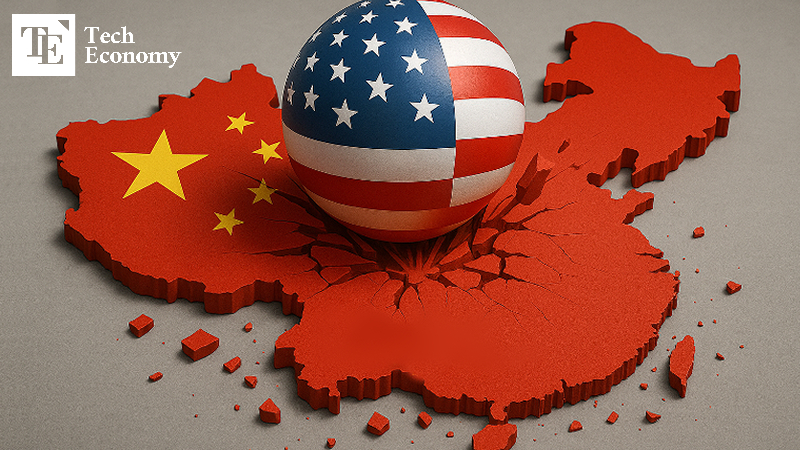
‘U.S. Chips as Trojan Horses’: China Fortifies Its Tech Stronghold with a $70 Billion Fund
As Washington oscillates between conciliation and confrontation, Beijing has locked in a course toward full technological independence, casting U.S.-made chips as potential security threats. Although the Trump administration has hinted at allowing exports of Nvidia’s H200 to China, Chinese leaders have responded with caution, citing concerns over embedded “kill switches” or tracking capabilities.
The National Interest reported that China has resolved not to leave its technological fate to U.S. unpredictability, convening executives from Tencent, Alibaba, and other tech giants to mandate the replacement of foreign chips while launching antitrust investigations into Nvidia. Reuters similarly noted that while Nvidia is preparing shipments ahead of the Lunar New Year, a combination of hardline U.S. legislative moves and stringent Chinese approval processes leaves the resumption of supplies uncertain.
These security concerns have translated into concrete self-sufficiency policies backed by massive capital. China has established a $70 billion national fund to nurture its semiconductor industry and has removed foreign chips from government procurement lists, signaling an all-out push to build an independent ecosystem. Unlike the U.S., where private capital leads, China has opted for a state-driven model—directly funding high-risk, long-term R&D and mandating the use of domestic chips to create early markets. Buoyed by these policy signals, shares of emerging GPU firms such as Moore Threads have surged, as Beijing maintains that half-hearted U.S. concessions merely buy China time to close the technology gap.
Some industry observers warn that stringent Western controls may ultimately accelerate China’s self-reliance. At the FT’s AI Future Summit in London last month, Huang remarked that Western regulations are speeding up China’s independence, noting that China is offsetting performance gaps with cost efficiency enabled by energy subsidies and cheap power. As U.S. export controls tighten, China is likely to escalate capital投入 and pursue its own path, deepening the bifurcation of the two countries’ technology ecosystems.
Matthew Reuter is a senior economic correspondent at The Economy, where he covers global financial markets, emerging technologies, and cross-border trade dynamics. With over a decade of experience reporting from major financial hubs—including London, New York, and Hong Kong—Matthew has developed a reputation for breaking complex economic stories into sharp, accessible narratives. Before joining The Economy, he worked at a leading European financial daily, where his investigative reporting on post-crisis banking reforms earned him recognition from the European Press Association. A graduate of the London School of Economics, Matthew holds dual degrees in economics and international relations. He is particularly interested in how data science and AI are reshaping market analysis and policymaking, often blending quantitative insights into his articles. Outside journalism, Matthew frequently moderates panels at global finance summits and guest lectures on financial journalism at top universities.
Similar Post