“Another Automotive Bet” — Samsung’s M&A Clock Speeds Up After Legal Overhang Clears, Stirring Both Hopes and Concerns

As one of the youngest members of the team, Tyler Hansbrough is a rising star in financial journalism. His fresh perspective and analytical approach bring a modern edge to business reporting. Whether he’s covering stock market trends or dissecting corporate earnings, his sharp insights resonate with the new generation of investors.
Authored On
Modified
Harman to Buy ZF ADAS Unit for €1.5bn, Stepping Up SDV Push
Samsung Electronics on M&A Spree With Fläkt, Sound United, Xealth
Legal Risks Cleared, New M&A Team in Place — Questions Linger Over Scale and Direction
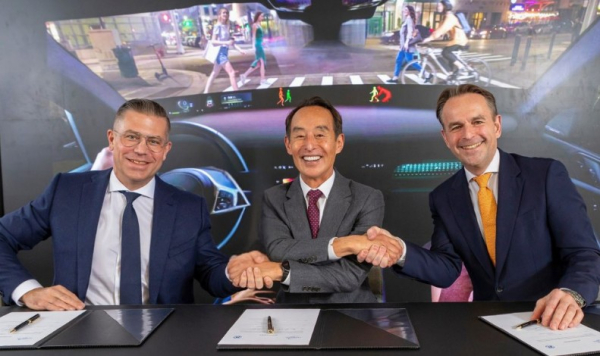
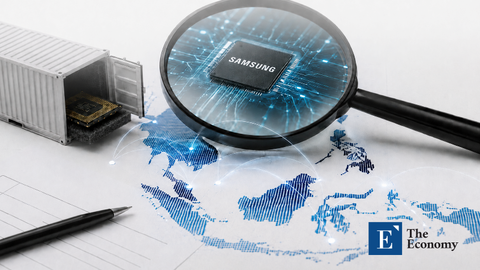
Samsung Electronics will acquire ZF Friedrichshafen’s advanced driver-assistance systems (ADAS) business through its subsidiary Harman. The deal marks Samsung’s second major acquisition in automotive electronics, eight years after it bought Harman in 2017. As Samsung steps up efforts to pursue big-ticket M&A this year, the market is increasingly viewing the easing of Chairman Lee Jae-yong’s legal overhang as a factor accelerating the company’s deal-making strategy.
Harman to Absorb German Automotive Electronics Business
On the 23rd, Harman said it will acquire ZF’s ADAS business for about $1.6 billion. Founded in Germany in 1915, ZF is a global automotive technology supplier with businesses spanning ADAS, transmissions, chassis systems, and electric vehicle drivetrains. The ADAS unit being acquired has more than 25 years of operating history, supplies ADAS products to major global automakers, and holds the top position in the global smart camera market for ADAS.
Through the acquisition, Harman will secure core technologies including smart cameras, radar, central compute platforms, and ADAS software, along with roughly 3,750 ZF employees. The deal lays the groundwork for integrating a centralized ADAS controller architecture into Harman’s flagship digital cockpit products, strengthening its position in the software-defined vehicle (SDV) market. ZF, meanwhile, plans to ease its financial burden and refocus on its core businesses in drivetrains, chassis systems, and commercial vehicle technologies. The transaction is expected to close in the second half of 2026, subject to regulatory approvals.
Christian Sobottka, President and CEO of Harman and Head of its Automotive division, said the acquisition adds ADAS to Harman’s product portfolio and creates a strategic foothold to supply centralized integrated controllers at a technological inflection point where digital cockpits and ADAS are converging. He added that Harman will combine its automotive expertise with Samsung’s IT leadership to support automakers’ transition to SDVs and next-generation centralized controllers. ZF CEO Matthias Miedreich said Harman is the ideal partner to unlock the potential of the ADAS business and expressed confidence that the unit will continue its growth and innovation alongside Harman.
Samsung Electronics Accelerates M&A Push
Markets are focusing on Samsung Electronics’ increasingly aggressive M&A moves this year. In May, the company signed an agreement to acquire a 100% stake in FläktGroup from U.K.-based private equity firm Triton for about $1.6 billion. Headquartered in Herne, Germany, FläktGroup is a more than 100-year-old HVAC specialist and a European market leader in central air-conditioning solutions for large-scale facilities requiring high-precision control, including data centers, hospitals, airports, and factories. The deal was completed last month.
In the same month, Harman agreed to acquire Sound United, the audio division of U.S.-based Masimo, for $350 million. Sound United houses well-known premium audio brands such as Bowers & Wilkins, Denon, Marantz, Polk, and Definitive Technology. The acquisition closed in September, with Sound United operating as an independent strategic business unit within Harman’s Lifestyle division to preserve each brand’s identity and expertise. Beyond this, Harman has continued to pursue smaller deals since becoming a Samsung subsidiary, investing in companies including Savari, Apostera, Caresoft, Flux, and Roon over the 2020s.
Samsung Electronics also signed an acquisition agreement in July with U.S. digital healthcare company Xealth. Based on Xealth’s platform, Samsung plans to roll out “Connected Care” services in the U.S. market. Xealth partners with more than 500 hospitals and over 70 digital healthcare solution providers in the United States, enabling health data sharing between clinicians and patients and offering personalized health management services. The acquisition price was not disclosed, but industry estimates put the deal at least in the hundreds of millions of dollars.
Samsung’s ability to step up its M&A drive is widely attributed to the easing of legal uncertainty surrounding Chairman Lee Jae-yong. Earlier this year, Lee was acquitted at the appellate level in a case involving allegations of an improper merger and accounting fraud, reducing concerns over legal risk. In July, South Korea’s Supreme Court upheld the acquittal, fully clearing Lee of charges related to illegal succession of management control and effectively removing the long-standing legal overhang.
Market: “Still Not Enough Compared With Global Big Tech”
Samsung Electronics’ M&A expansion is expected to continue, as it has now built an organizational base for dealmaking. An M&A team was newly set up within the Business Support Office, which launched last month to serve as the company’s control tower. Samsung appointed Executive Vice President Ahn Joong-hyun to lead the team. Ahn is widely seen internally as a key M&A specialist who spearheaded the 2017 acquisition of Harman, and has worked on major deals since 2015 across the Future Strategy Office and the Business Support Task Force. The team also includes Vice President Lim Byung-il, who previously oversaw M&A at the Business Support TF, and Vice President Choi Kwon-young, formerly of Samsung Display’s planning team.
Still, some in the industry argue Samsung’s M&A strategy remains cautious compared with global big tech peers. Apple, Google, Microsoft, and Meta have consistently completed at least five to 10 acquisitions a year. Even Apple—often viewed as relatively conservative—has carried out around 50 M&A deals of various sizes since 2017. Over the same period, Intel, which has struggled amid foundry setbacks, pursued 13 acquisitions. These companies tend to use M&A to secure talent and technology, explore new growth engines, and shape competitive positioning.
Questions also persist about Samsung’s investment direction. Recent additions to its M&A portfolio—including Rainbow Robotics, Sound United, and FläktGroup—are seen as aligned with current industry trends. But some investors criticize Samsung for remaining anchored in a traditional manufacturing mindset. One investment industry source said that for a company generating roughly $224 billion in annual revenue, acquiring ordinary manufacturing firms is unlikely to meaningfully move the needle in scale or deliver standout gains in technology and talent. The source argued Samsung needs to identify targets more strategically and place bets on potential “game changers” that could reshape the market.
As one of the youngest members of the team, Tyler Hansbrough is a rising star in financial journalism. His fresh perspective and analytical approach bring a modern edge to business reporting. Whether he’s covering stock market trends or dissecting corporate earnings, his sharp insights resonate with the new generation of investors.
Similar Post