The U.S. blocks DJI drones as perceptions shift from civilian gear to battlefield weapons

Authored On
Modified
FCC halts approvals for new drone equipment
Reconnaissance, strike, expendable drones gain battlefield role
Supply-chain competition opens a new front
The United States has moved to effectively shut the door on new market entry by placing all foreign-made drones and core components under regulatory scrutiny. Rather than a narrow trade action aimed at a specific country, the measure underscores Washington’s view that drones should be treated as assets directly tied to national security. As battlefield experience has demonstrated their military utility, production and procurement strategies are shifting rapidly across countries.
Security concerns cited as the official rationale
According to the U.S. Federal Communications Commission (FCC) on the 23rd local time, the White House, following an interagency review convened the previous day, added all foreign-made unmanned aircraft systems (UAS, drones) and key components to the Covered List. The list applies to communications equipment and services deemed to pose unacceptable risks to U.S. national security or public safety. Once listed, products cannot obtain FCC certification required for importation, distribution, or sale in the United States, effectively barring market entry.
A notable feature of the move is its scope: it targets all drones and core components manufactured outside the United States, rather than singling out specific countries. The FCC said that numerous national security agencies have raised concerns that foreign-made drones could be used for attacks, disruption, unauthorized surveillance, sensitive data leakage, and other homeland security threats, adding that heavy reliance on foreign equipment could also undermine the foundations of the U.S. drone industry. The rules apply to newly certified equipment, meaning drones already purchased and in use may continue operating.
The restrictions extend beyond finished products to encompass core components. The FCC said the list includes data transmission devices and communications systems, flight controllers, ground control stations, and navigation systems, as well as sensors and cameras, batteries including battery management systems, motors, and the software that controls them. To lift restrictions, the Department of Defense or the Department of Homeland Security must notify the FCC that a specific product or component does not pose a security risk.
As a result, several manufacturers are directly affected, including DJI, the world’s largest drone maker, and Autel Robotics. DJI said that more than 80 percent of the roughly 1,800 state and local law enforcement and emergency response agencies operating drone programs in the United States use its technology, warning that losing access to the most cost-effective drone solutions could put those programs at immediate risk. The FCC, however, emphasized that distribution of models already certified will not be halted immediately, reiterating that the decision is unavoidable in the interest of national security and public safety.
Potential for U.S.–European cooperation on military drone production and deployment
Washington’s decision to block foreign drones aligns with a broader shift toward viewing drones not as civilian equipment but as core battlefield assets. Conflicts in Ukraine and the Middle East have repeatedly demonstrated their military effectiveness in real combat conditions. On the Ukrainian front, drones ranging from small reconnaissance platforms to loitering munitions have been deployed for real-time surveillance and strike missions, complementing or even replacing traditional artillery and missile systems. Russia has also used tactics involving simultaneous deployment of dozens of Iranian-designed Shahed drones to overwhelm air defenses.
The Wall Street Journal reported that drawing on these battlefield lessons, the United States and NATO allies have moved to develop low-cost, high-efficiency drones similar to the Shahed. The Shahed combines a range exceeding 1,600 kilometers with a triangular wing design, carbon-fiber airframe, and propeller engine to significantly reduce production costs. Russia’s domestically produced simplified Shahed is estimated to cost about USD 35,000 per unit, dramatically lower than long-range drones sold by U.S. defense contractor Anduril, which are priced at USD 1,000,000 or more per unit.
In Europe, the prolonged Russia–Ukraine war has accelerated efforts to cultivate drones as core assets for full-scale warfare rather than auxiliary tools. Poland signed a contract with domestic defense firm WB Group to purchase about 10,000 Warmate loitering munitions and established a dedicated drone unit to strengthen operational capabilities. Romania has also designated military drone production as a national priority, leveraging the European Union’s ReArm Europe defense package, which aims to boost military capabilities across the bloc with USD 943 billion in funding.
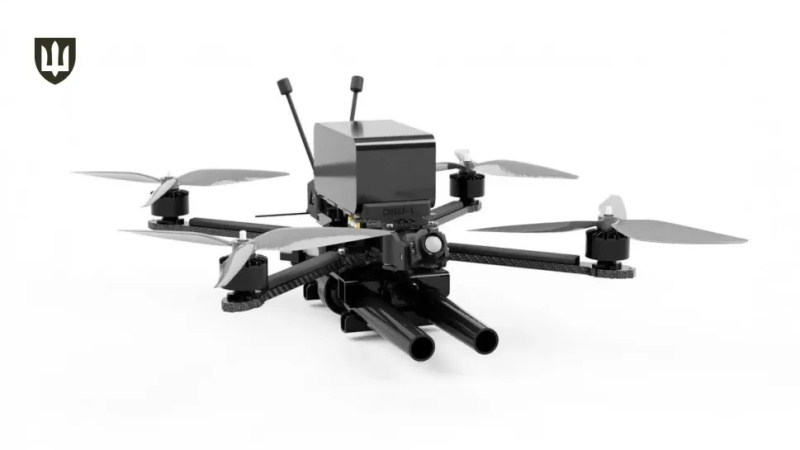
The United States is moving in the same direction. The U.S. Army has formally launched its Purpose Built Attritable Systems (PBAS) program, classifying expendable drones as consumables on the battlefield, and has begun defining requirements for swarm operations that do not assume recovery. At the same time, Washington is easing export restrictions on military drones to expand supplies to allies. The approach reflects a response to competitors such as China, Iran, and Türkiye, which have expanded drone exports under relatively looser controls. The battlefield-proven value of low-cost, mass-produced, expendable drones has become a shared premise across defense policies.
Defense market reshaping and China’s response
Against this backdrop, growth in the defense market centered on military drones is becoming more pronounced. The Defense Post projected that the global military drone market will exceed USD 22 billion within five years, while MarketsandMarkets estimated expansion from USD 15.8 billion this year to USD 22.2 billion by 2030. With the overall drone market currently estimated at USD 26.1 billion, military drones already account for 60.5 percent of demand, underscoring the clear shift in market focus.
On the battlefield, both order volumes and delivery timelines differ markedly from the past. Ukraine’s Ministry of Defense said last month that it ordered roughly 17,000 drones through German and domestic suppliers in September, with an additional 13,000 units delivered separately. A ministry official noted that average delivery times range from five to ten days, highlighting the treatment of drones as mass-producible, rapidly deployable consumables. The price of the small first-person-view attack drones widely used by Ukraine is reported to be about USD 400.
These changes are redefining the basis of defense technology competition itself. The emphasis is shifting away from expensive stealth drones and precision weapons toward the ability to rapidly mass-produce and maintain stable supply chains. Axon, a global public safety technology firm, said in a recent report that a USD 500 drone can destroy an F-35 fighter jet worth USD 82.5 million, pointing to a dramatic shift in battlefield cost structures. Estimates that low-cost drones account for 60–70 percent of destructive attacks in the Ukraine war reinforce the same point.
The expansion of defense markets naturally feeds into supply-chain and geopolitical responses. As the United States and Europe block foreign drones and strengthen domestic and allied production networks, China is moving in the opposite direction by using drone components as leverage. Bloomberg reported that Chinese manufacturers of motors, batteries, and flight controllers began restricting or halting shipments to the United States and Europe late last year, and considered measures in the first half of this year to place most drone components under licensing or prior notification requirements.
Given the heavy reliance of Ukraine and many other countries on inexpensive, high-performance Chinese components, the drone industry is increasingly viewed as another front in U.S.–China technology competition and supply-chain realignment. With production speed hinging more on access to motors and flight controllers than on finished airframes, tighter export controls could undermine the stability of low-cost, mass-expendable drone supply. As drones entrench themselves as cost-effective weapons of war, market participants broadly expect national strategies to become more explicit around production capacity, component control, and alliance-based cooperation.
Similar Post