[DRAM Hike] “Samsung Up to 70%” Apple Memory Chain Reshaped as Commodity DRAM Hits a Supply Cliff, Pressure Builds on PCs and Smartphones

Aoife Brennan is a contributing writer for The Economy, with a focus on education, youth, and societal change. Based in Limerick, she holds a degree in political communication from Queen’s University Belfast. Aoife’s work draws connections between cultural narratives and public discourse in Europe and Asia.
Authored On
Modified
Samsung Electronics Seen Supplying Up to 70% of Mobile DRAM for iPhone 17
HBM Production Focus Triggers Broad DRAM Shortage, Driving Sharp Price Gains
Rising Memory Costs Set to Push PC and Smartphone Prices Higher
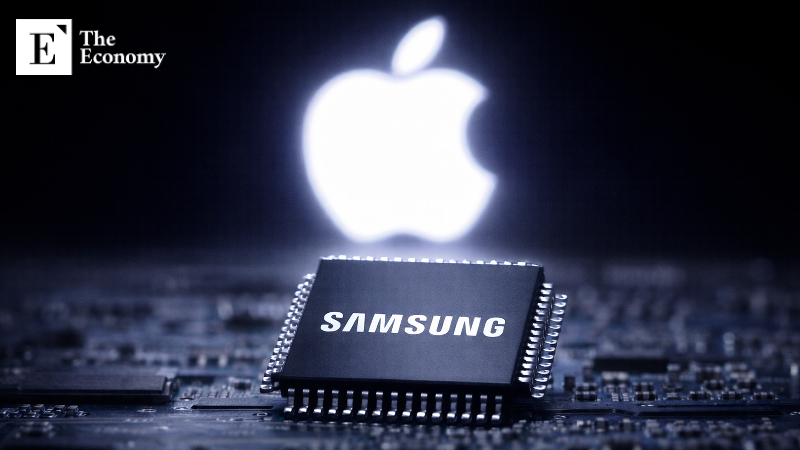
Samsung Electronics has secured an estimated 60% to 70% share of Apple’s mobile DRAM supply chain for the iPhone 17, as other memory suppliers including SK hynix and Micron shift capacity toward high-bandwidth memory (HBM), deepening shortages in mainstream DRAM and expanding Samsung’s market influence as one of the few vendors able to ensure stable supply. Markets see greater room for Samsung to improve profitability amid tightening DRAM supply and surging prices, while downstream sectors such as smartphones and PCs are likely to face heavier cost pressure, intensifying expectations of price hikes.
Samsung to Supply Majority of DRAM for iPhone 17
On the 23rd (local time), DigiTimes, citing industry sources, reported that Samsung Electronics has emerged as the top supplier by providing up to 70% of the LPDDR5X used in the iPhone 17. Apple’s memory supply chain is understood to be shared by three companies: Samsung Electronics, SK hynix, and Micron. Analysts say that as SK hynix and Micron have recently shifted more capacity toward high-bandwidth memory (HBM), their ability to produce mainstream DRAM has shrunk significantly, leading Apple to increase its reliance on Samsung to secure sufficient volumes.
The market is also focusing on the sharp decline in SK hynix’s influence within Apple’s supply chain. Apple has never officially disclosed supplier-by-supplier shares, but the prevailing view had been that SK hynix either held an edge over Samsung or at least stood on similar footing. That changed quickly as SK hynix moved to meet memory demand from the artificial intelligence (AI) market. Apple is estimated to produce about 230 million iPhones annually, and market research firms forecast iPhone shipments in 2025 will reach 247 million units. With SK hynix prioritizing HBM, Samsung is viewed as effectively the only supplier capable of providing such massive volumes on a stable basis.
Samsung is seen as meeting Apple’s demanding requirements not only on volume, but also on quality and specifications. The iPhone 17 Air, Pro, and Pro Max models are set to adopt 12GB of LPDDR5X—the largest memory capacity ever used in an iPhone. Samsung’s 12GB LPDDR5X chip is 0.65mm thick, making it the thinnest among current LPDDR5 products, while improving heat generation by about 21.2% and power efficiency by about 25% versus the previous generation—advantages regarded as well suited to next-generation iPhone designs where thin form factors and battery efficiency are critical. U.S. tech outlet Wccftech also said Samsung’s technological edge leaves Apple with little reason to consider other suppliers.
Industry Sees Winners and Losers as Commodity DRAM Shortage Deepens
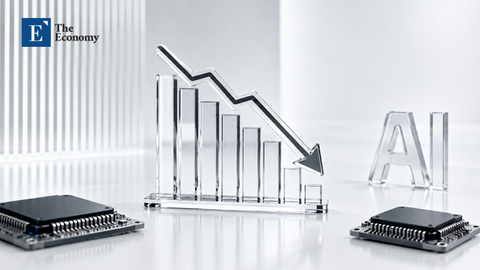
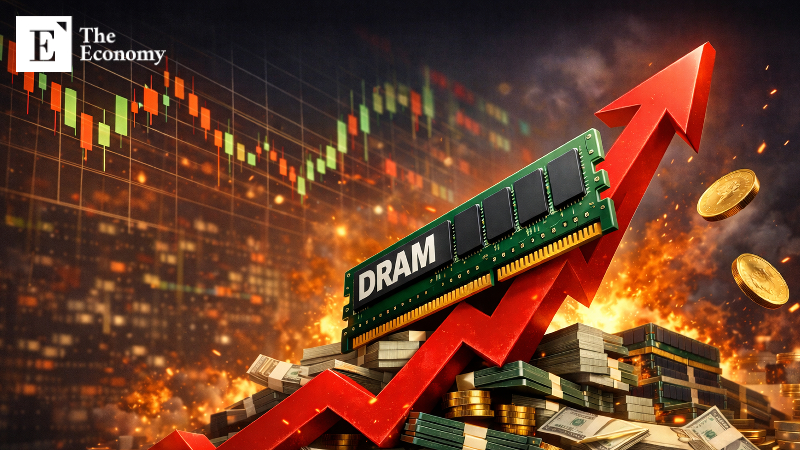
Samsung Electronics is expected to see a meaningful boost in profitability from this supply momentum, as prices for commodity DRAM have surged amid worsening shortages. According to DRAMeXchange, the average contract price for PC commodity DRAM (DDR4 8Gb) in November rose to $8.1, up 15.7% from a month earlier. Prices topping the $8 mark for the first time since September 2018 have prompted growing complaints across the supply chain that chips are “unavailable at any price.” As of the fourth quarter of 2025, customers are said to be meeting only about 60% of their DRAM demand. Global DRAM production capacity is projected to rise 7.7% year on year next year, but with most of the incremental capacity going into HBM expansion, the commodity DRAM crunch is unlikely to ease.
The shock is rippling through downstream markets, particularly PCs, where commodity DRAM and NAND flash are estimated to account for roughly 10% to 18% of laptop manufacturing costs. Some analysts expect sharp increases in consumer prices for PC products. In a recent report, IDC said memory supply-demand imbalances are creating a multifaceted hit to the PC industry, projecting PC shipments could fall 5% to 9% through 2026 while average selling prices could rise 4% to 8%. The burden may be even heavier for AI PCs, which require larger memory configurations and have been a key development focus for manufacturers since last year.
Some brands have already moved to raise prices. Dell Technologies, which ranked third in global PC and notebook market share last year behind Lenovo and HP, is a notable example. On the 17th, Dell raised prices across its entire lineup of business laptops by roughly 10% to 30%. Prices for Dell Pro and Pro Max notebooks and desktop models equipped with 32GB of RAM rose by $130 to $230, while notebook models with 1TB internal SSD storage saw price increases of $55 to $135. Dell is also reportedly prioritizing shipments to major enterprise customers and instructing sales teams to scale back discounts previously offered to bulk buyers.
Smartphone Prices Likely to Rise Further
This trend is expected to have a significant impact beyond the PC market and spill into smartphones, as DRAM accounts for roughly 20% of smartphone component costs and is highly sensitive to price swings. Counterpoint Research projects that the global smartphone average selling price will rise 6.9% next year from the previous year, an upward revision from its September forecast of 3.9%.
Another key variable is the expiration of long-term supply agreements between Apple and DRAM suppliers including Samsung Electronics and SK hynix in January next year. While DRAM LTAs are typically structured to ensure supply stability through multi-year relationships, periods of tight supply tend to shift negotiating power toward suppliers. Some in the industry expect memory makers to seek higher DRAM prices in renewal talks with Apple and other major smartphone manufacturers, raising the risk of further increases in consumer prices.
Some smartphone makers have already moved to adjust pricing as component cost pressure intensifies. Vivo raised prices for its X300 series by roughly $14 to $43 from the previous model, while Oppo’s Find X9 climbed by about $28 and Realme’s GT8 by roughly $43 to $57. Xiaomi’s newly launched budget Redmi K90 series also saw prices rise by around $14 from the prior generation. Samsung Electronics has signaled potential price increases, noting in its third-quarter report that prices for mobile application processor solutions rose 9% from the prior year’s average, while Apple raised the iPhone 17 Pro price by $100 in September.
Aoife Brennan is a contributing writer for The Economy, with a focus on education, youth, and societal change. Based in Limerick, she holds a degree in political communication from Queen’s University Belfast. Aoife’s work draws connections between cultural narratives and public discourse in Europe and Asia.
Similar Post