[FSD] China’s Autonomous Driving Ambitions Stalled by Safety Controversies, Global Expansion Faces Red Light

Authored On
Modified
Limits of Technology Verification Emerge Beneath Rapid Growth
Design Flaws in Autonomous Driving Safety Systems Surface
‘Made in China’ Autonomous Vehicles See Trust Erode
China’s goal of mass-producing autonomous vehicles by the end of this year has effectively been pushed back. Following fatal accidents involving autonomous driving systems, road access approvals for Level 3 autonomous vehicles have been sharply curtailed, dealing an unavoidable setback to China’s broader push for autonomous driving leadership. Repeated accident records, in particular, are expected to provide global regulators with strong justification for tighter entry barriers, creating formidable obstacles to overseas expansion by Chinese firms.
Level 3 Approval Granted to Only Two of Nine Applicants
According to The New York Times (NYT) on the 23rd (local time), the Chinese government last week granted conditional road access approval for Level 3 autonomous vehicles developed by Changan Automobile and Arcfox. Although nine manufacturers submitted plans to sell autonomous vehicles, only these two secured Level 3 authorization. Each company has been permitted to operate autonomous taxis on three designated road sections near their respective headquarters, but the operating scope is so limited that the approval is widely seen as little more than authorization for additional test runs.
China’s Ministry of Industry and Information Technology said the newly approved models are restricted to predefined zones. Changan’s vehicles are allowed to operate autonomously at speeds of up to 50 km/h on sections including Chongqing’s Inner Ring Expressway, New Inner Ring Expressway, and Yudu Avenue. Arcfox models may drive autonomously at speeds of up to 80 km/h on designated stretches such as Beijing’s Jingtai Expressway and the Beijing–Xiong’an Expressway leading to Daxing International Airport.
Autonomous driving technology is classified from Level 0 to Level 5. Level 3 allows drivers to refrain from active control while seated in the driver’s seat, but requires them to remain ready to intervene immediately when necessary. Unlike Level 2, where driving responsibility rests entirely with the driver, Level 3 allows manufacturers to be held liable for accidents.
The NYT assessed the government’s move by noting that “lane changes are not permitted under computer control, and drivers must take over on all other roads,” adding that the decision effectively acknowledges that China’s goal, set nearly five years ago, to begin mass production of autonomous vehicles for general consumers by the end of this year was excessively ambitious.
Shift to ‘Caution Mode’ After Spate of Autonomous Driving Accidents
Previously, the Chinese government had set a target of raising the share of autonomous vehicles (Level 3 and above) in new passenger car sales to over 70% by 2035, backed by substantial subsidies for companies. By 2040, the plan envisioned Level 4 vehicles—capable of operating without a driver under certain conditions—dominating the new car market, alongside full commercialization of Level 5 vehicles that require no driver in any scenario.
On the assumption that Level 3 systems would soon be approved, some automakers, including Geely, had already begun mass production of vehicles equipped with the cameras and sensor arrays required for Level 3 autonomy. However, as authorities maintained a cautious stance on approvals, manufacturers are now limited to selling Level 2 vehicles, in which only certain functions are automated and drivers must keep their hands on the wheel at all times.
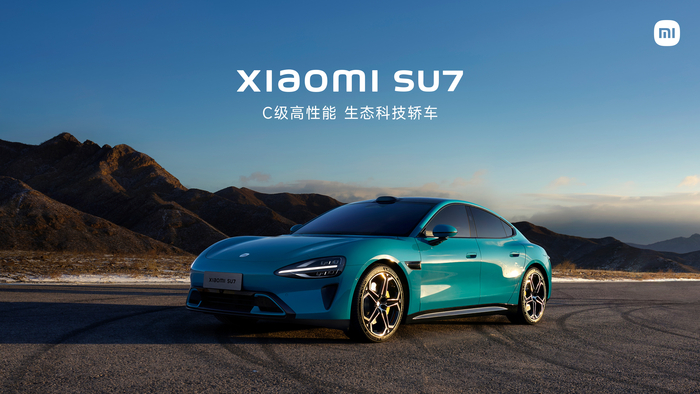
The turning point for China’s autonomous driving push came with fatal accidents. On March 29, Xiaomi’s electric SU7, operating in “highway autonomous driving” mode, crashed into a highway guardrail, killing three female college students. Xiaomi stated that the vehicle was traveling at 72 miles per hour when it detected a lane closure due to construction and issued a warning to the driver. Although the driver regained control, the car collided with a concrete guardrail structure roughly one second later.
In August, another accident occurred in Chongqing when Baidu’s autonomous robotaxi ignored construction barriers and warning signs, plunging several meters into an excavation pit. According to eyewitness footage, the white vehicle bearing the “Apollo Go” logo entered the construction zone before crashing nose-first into the pit. Despite the area being surrounded by barriers and warning signs, the vehicle reportedly failed to recognize them entirely.
Mounting Pressure to Recalibrate Global Strategy
As accidents mounted, public skepticism over safety spread rapidly within China, amplified by media reports questioning the reliability of autonomous driving systems. In July, state broadcaster CCTV reported on test results conducted by a Chinese automotive media outlet involving 36 models from 20 brands, evaluating whether Level 2 driver-assistance systems could avoid collisions with trucks near nighttime construction zones. Fewer than half of the tested vehicles successfully avoided crashes, and only two Tesla models demonstrated relatively reliable performance across diverse safety scenarios.
In response, Chinese authorities moved to emphasize that driver-assistance technologies installed in mass-produced vehicles are distinct from fully autonomous driving. The government warned drivers that “using mobile phones, sleeping, making calls, or eating while driver-assistance functions are engaged not only violates traffic safety laws but also poses a serious threat to other road users.”
Oversight of autonomous driving features has also been tightened. The Ministry of Industry and Information Technology stated that automakers must clearly define the functional limitations and safety response measures of their driving systems and refrain from exaggerated or misleading promotion. It also banned the use of terms such as “autonomous driving,” “automatic driving,” “smart driving,” and “advanced intelligent driving” in marketing materials. Following this directive, Xiaomi replaced the term “smart driving” with “assisted driving” on its official website and app, while Huawei-affiliated automotive brand Aito specified in showroom pamphlets that its “smart driving” features “cannot replace driver operation.”
Experts say the accumulation of autonomous driving accidents will weigh heavily on Chinese companies seeking global expansion. Regulators in other countries are unlikely to grant road access to technologies with a growing accident history. One electric vehicle specialist noted that “the spread of Chinese autonomous driving technology is likely to remain confined to regions where Chinese capital influence is effectively at work,” adding that “while domestically accumulated driving data and policy support may provide short-term growth momentum, unresolved safety concerns will confront Chinese firms with regulatory barriers and trust verification hurdles as they attempt to enter global markets.”
Similar Post